The Ancient Origins of Braiding
History of Hairdressing · Prehistory & Origins · Chapter 7
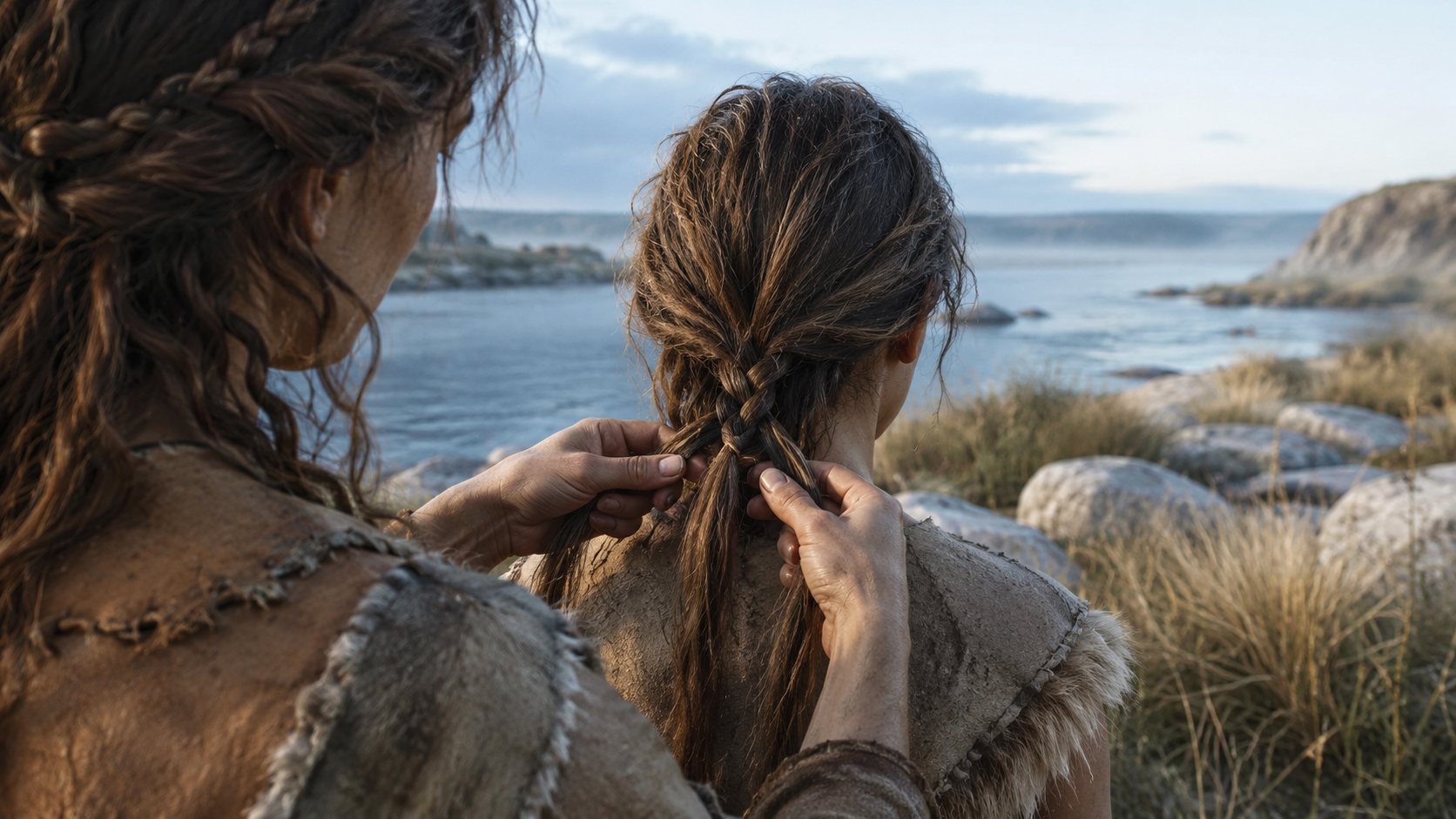
Braiding is one of the simplest ways to transform loose hair into an organised structure.
Separate strands. Cross them in a repeated sequence. Continue the pattern, and individual sections of hair become a single controlled form.
No metal is required.
No scissors are necessary.
No specialised workshop is needed.
This simplicity makes braiding a fascinating subject in the history of hairdressing. The technique could theoretically have existed extremely early in human history, long before written descriptions of hairstyles and long before the appearance of professional hairdressers.
But there is a major archaeological problem.
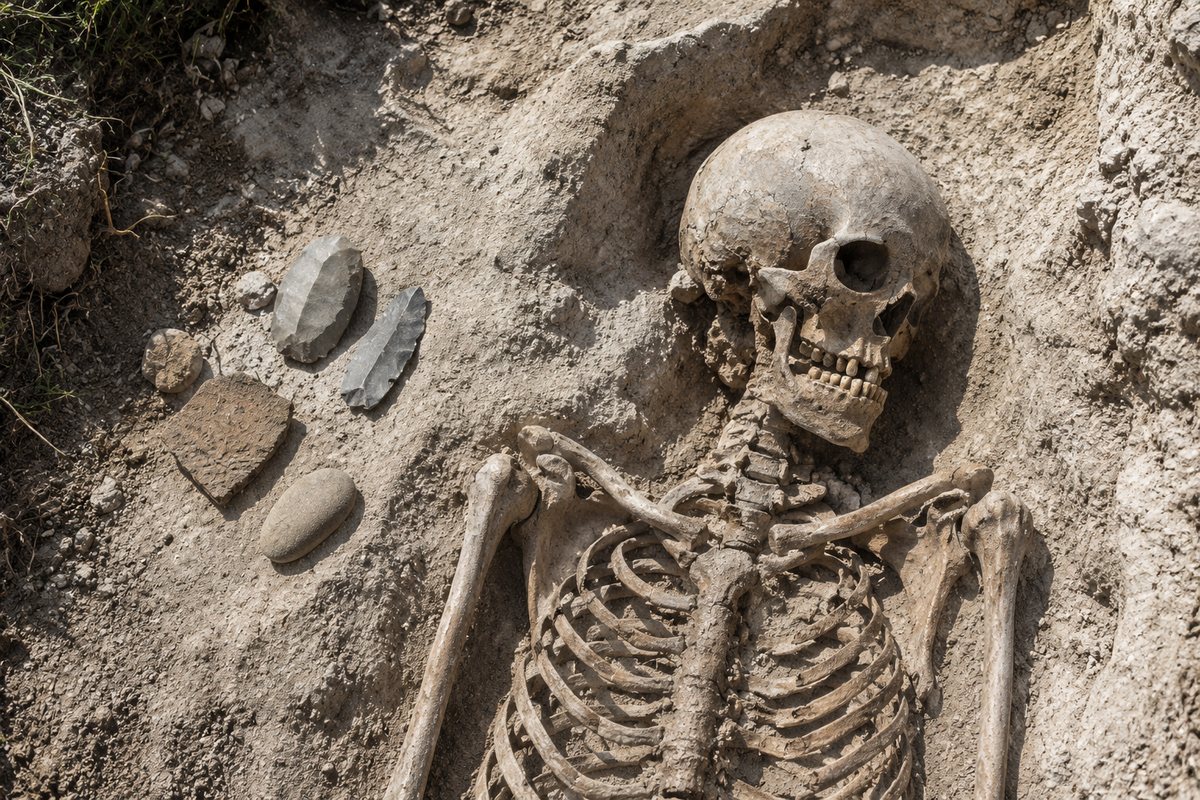
Hair rarely survives.
A braid created thousands of years ago could disappear completely while stone tools, pottery and bones from the same community remained in the ground.
This means that the ancient origins of braiding cannot be traced simply by searching for the oldest surviving braid.
Instead, archaeology gives us different kinds of evidence.
Paleolithic and Neolithic representations sometimes show complex patterns around the human head that may represent hair, hairstyles, coverings or combinations of these features. Technologies for twisting, interlacing and manipulating fibres demonstrate that prehistoric people understood how flexible strands could be organised into stable structures.
Then, under exceptional preservation conditions, actual prehistoric hair survives.
Some of these discoveries finally remove the uncertainty.
The hair itself is braided.
Together, these fragments reveal an ancient story, but not one with a precise beginning.
We cannot identify the first person who braided human hair.
We cannot identify one community that invented the technique.
What we can investigate is how braiding became possible, how early representations may preserve traces of complex hair arrangement, and how later prehistoric remains finally provide direct evidence of the braid itself.
Why the First Braid Is Almost Impossible to Find
Finding the first stone cutting tool is difficult.
Finding the first braid is even harder.
The difference lies in preservation.
Stone can survive for hundreds of thousands of years. Human hair normally cannot.
Hair consists primarily of keratin and, under ordinary burial conditions, organic material gradually deteriorates. Soil chemistry, microorganisms, moisture and other environmental processes usually destroy the hairstyle together with the soft tissues of the body.
The archaeological record is therefore deeply unequal.
A prehistoric person may have braided their hair every day for decades and leave no surviving evidence of that practice.
This creates an important principle for studying the origins of braiding.
The oldest preserved evidence of a technique is not necessarily the moment when the technique began.
Braiding may be considerably older than any surviving example.
But the opposite mistake must also be avoided.
Because a technique could have existed does not prove that it did.
The challenge is therefore to separate technological possibility from archaeological evidence.
That distinction will guide the entire history of early braiding.
Braiding: A Technique That Needed Almost No Technology
Many developments in hairdressing depended on tools.
Cutting hair required an effective cutting edge.
Combing required a tool capable of separating and organising strands.
Later styling techniques increasingly depended on specialised equipment.
Braiding is different.
The essential tools are human hands.
Hair must be sufficiently long to divide into sections. Those sections can then be crossed over one another in a repeated sequence.
The resulting structure helps control loose hair while producing a visibly different form.
This technological simplicity is important.
Once prehistoric humans possessed sufficiently long hair and the manual ability to divide and manipulate flexible strands, the physical requirements for braiding already existed.
A simple braid does not require metallurgy.
It does not require pottery.
It does not even require a manufactured hair tool.
That makes an extremely ancient origin plausible.
But again, plausibility is not a date.
We cannot move backwards from the simplicity of the technique and declare that people were definitely braiding hair at a particular moment in the Paleolithic.
We can only recognise that very little technology stood between humans and the discovery of the braid.
The Origins of Braiding Before Archaeological Evidence
Some human inventions leave a clear archaeological trail.
Braiding probably does not.
Imagine a prehistoric community in which hair was divided and interlaced using only fingers.
What physical evidence would remain?
Perhaps nothing.
If no special tool was required, there may be no object that archaeologists can confidently identify as a braiding implement.
If the hair decomposed, the hairstyle itself would disappear.
If the practice was transmitted by demonstration rather than writing, there would be no instructions.
The technique could therefore exist while remaining almost completely invisible archaeologically.
This is one reason popular claims about the exact origin of braiding should be treated carefully.
Statements that braiding was “invented” by a particular people at an exact prehistoric date often create a level of certainty that the surviving evidence cannot support.
Human populations across different regions possessed hair, hands and knowledge of manipulating flexible materials.
Braiding could have been discovered independently more than once.
It could also have spread between communities.
At present, archaeology cannot reconstruct that first sequence.
The ancient origins of braiding are therefore best understood not as a single event but as a problem of disappearing evidence.
Can Paleolithic Art Show Braided Hair?
When the hairstyle itself does not survive, prehistoric images become especially important.
Upper Paleolithic communities produced representations of the human body in several materials, including stone, ivory and bone.
Some figures contain details around the head.
These patterns have attracted considerable attention because they may provide evidence for prehistoric hairstyles.
But interpretation is difficult.
A carved line is not hair.
A repeated pattern is not automatically a braid.
The artist may have represented hair, a woven covering, a net, a cap, an ornament or a stylised combination of several features.
The problem becomes even greater when an object is tens of thousands of years old and no written explanation survives.
Nevertheless, these representations matter.
They demonstrate that prehistoric artists sometimes treated the human head as an area of visual complexity.
When repeated lines, rows or structured patterns appear around the head, researchers can legitimately ask whether hair arrangement is one possible explanation.
The important word is possible.
Paleolithic art may preserve extremely early representations of complex hair.
It does not automatically provide a photograph of a Paleolithic braid.
The Venus of Willendorf: Hair, Braids or a Woven Cap?
Few prehistoric figures illustrate this problem better than the famous Venus of Willendorf.
Discovered in Austria, the small limestone figure dates to approximately 30,000 years ago.
Its head is covered by carefully organised rows of raised patterns.
To a modern viewer, these patterns can look remarkably similar to arranged hair.
They have been interpreted in different ways.
One possibility is an elaborate hairstyle, potentially involving braiding or another structured arrangement of hair.
Another is a woven, braided or net-like cap covering the head.
The distinction is extremely important.
If the pattern represents hair, the figure could provide remarkable evidence for complex Paleolithic hairstyling.
If it represents a textile or fibre covering, it tells us something different about prehistoric technology and appearance.
The surviving sculpture does not allow us to choose between these interpretations with complete certainty.
For the history of hairdressing, the Venus of Willendorf should therefore be treated as evidence of a sophisticated representation of the head and as a possible representation of complex hair arrangement.
It should not be presented as unquestionable proof of the world’s oldest braids.
Its importance actually becomes greater when the uncertainty is acknowledged.
The figure demonstrates just how complex prehistoric appearance may have been while reminding us how difficult it is to translate visual evidence from deep prehistory.
Other Prehistoric Images of Complex Hair
The Venus of Willendorf is not the only prehistoric representation that has encouraged discussion about hair.
Other Paleolithic human figures contain lines, patterns or shaped surfaces around the head that researchers have considered in relation to hairstyles, head coverings and personal appearance.
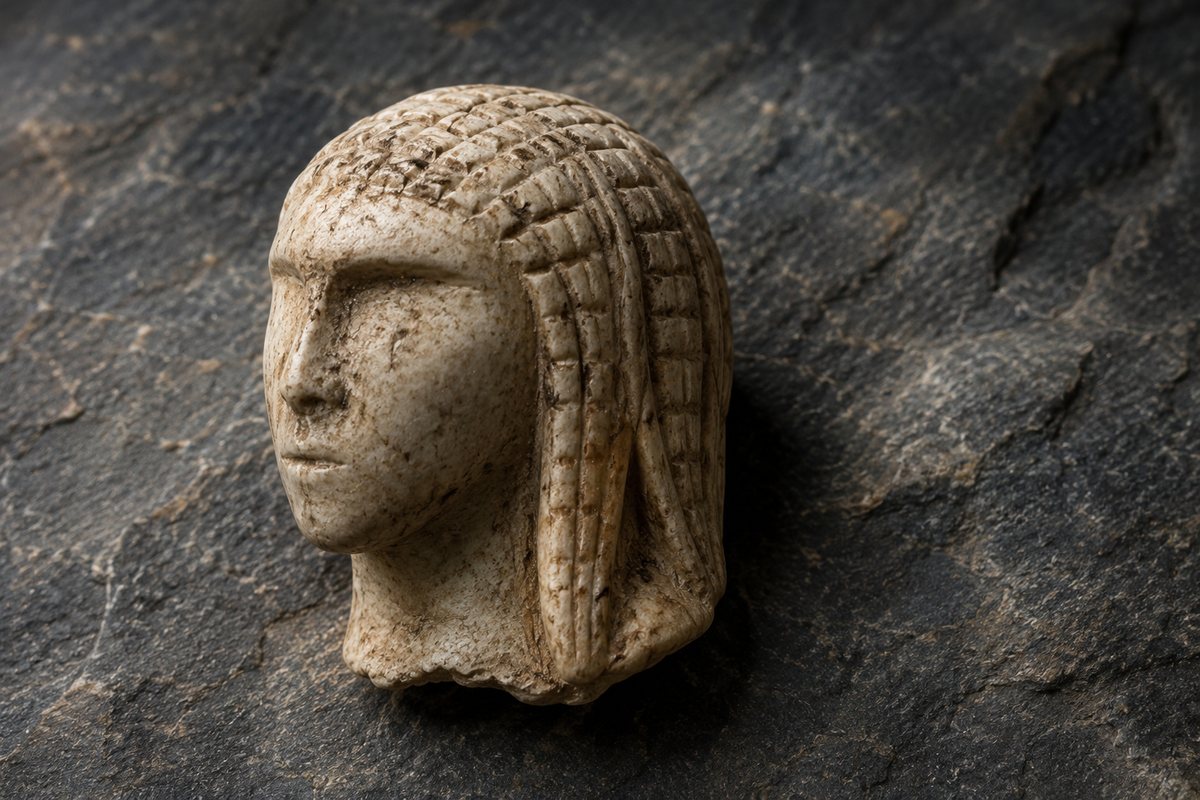
One frequently discussed example is the small ivory head known as the Dame de Brassempouy from France.
Its carefully carved head contains a grid-like pattern.
This has been interpreted as braided hair or as a hood or other head covering.
As with the Venus of Willendorf, the archaeological object preserves a pattern, not an explanation.
Later prehistoric anthropomorphic representations provide additional evidence.
By the Neolithic, figurines from different regions sometimes display increasingly varied treatment of the head.
As discussed in the previous article in this series, examples from the Anzabegovo-Vršnik and Velušina-Porodin cultural milieus in the Balkans include diverse representations that researchers have examined as possible hairstyles and other forms of head treatment.
Some appear to show hair gathered, arranged or divided.
Yet even here caution remains essential.
A prehistoric image can show us that appearance was represented.
It cannot always tell us exactly how the represented hairstyle was constructed.
The evidence gradually becomes richer, but the first braid remains elusive.
From Interlaced Fibres to Interlaced Hair
Hair was not the only flexible material prehistoric humans learned to manipulate.
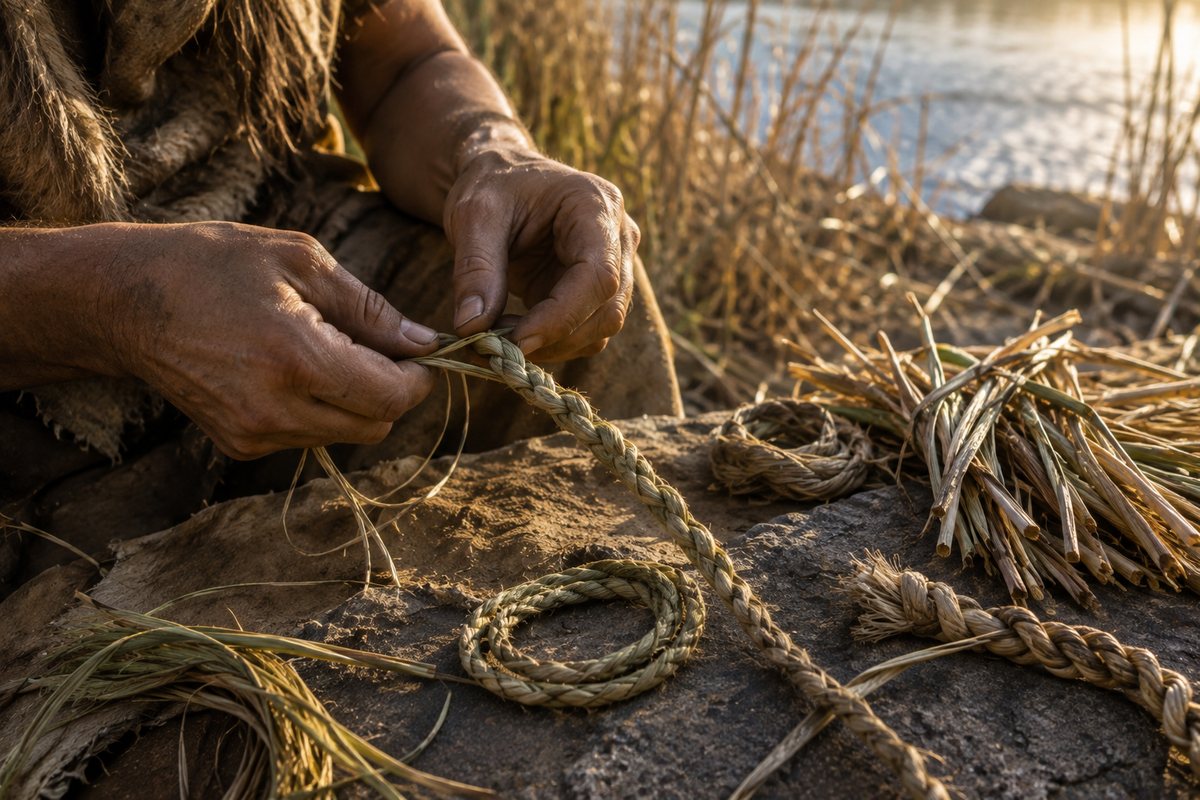
Plant fibres, grasses, bark fibres, sinew and other flexible materials could be twisted, bound, looped and interlaced.
These technologies eventually produced cordage, nets, baskets, textiles and other objects essential to human life.
This wider history of fibre technology is highly relevant to braiding.
The underlying principle is similar.
Separate flexible elements can be organised through repeated movement to create a stronger or more stable structure.
That does not prove that the invention of cordage automatically produced braided hairstyles.
Hair and fibre are different materials used for different purposes.
But the technological relationship is important.
Prehistoric people were capable of understanding repeated patterns of twisting and interlacing.
They possessed the manual dexterity required to work with strands.
Knowledge gained in one material could potentially inform experimentation with another.
The relationship may also have worked in both directions.
Humans could have learned to manipulate hair before some forms of complex fibre technology developed.
The archaeological record cannot currently establish the direction of influence.
What it demonstrates is that the conceptual world necessary for braiding, including dividing, crossing, twisting and organising flexible strands, existed deep in prehistory.
Why Braiding May Have Spread Easily
Once discovered, braiding has an unusual advantage.
It can be taught without language, diagrams or specialised equipment.
One person can simply watch another person’s hands.
A sequence is repeated.
The learner copies it.
The technique can then be practised again and again.
This makes braiding highly transferable knowledge.
It can move between individuals, generations and communities through direct demonstration.
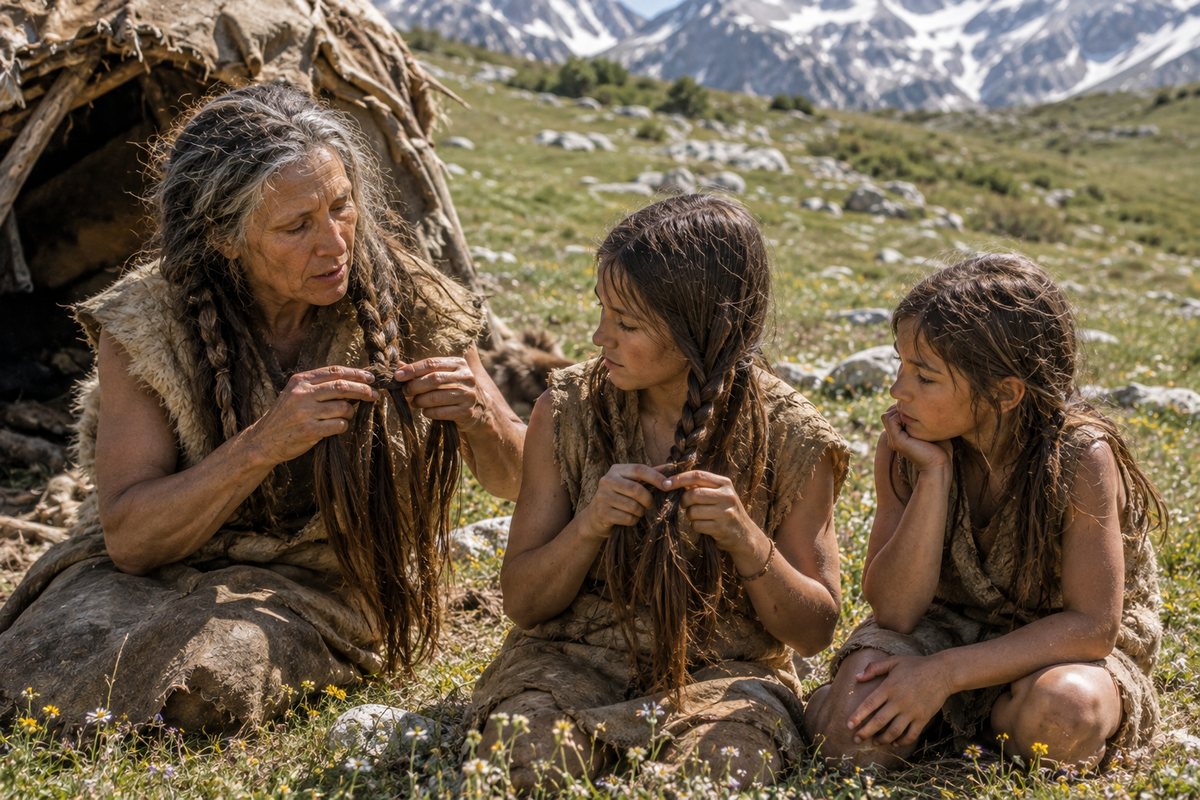
A parent could teach a child.
One member of a community could arrange another person’s hair.
People meeting through exchange, migration or marriage could observe unfamiliar techniques.
None of these specific scenarios can be reconstructed universally for prehistory.
But they demonstrate why a manual technique such as braiding does not require formal institutions in order to spread.
Once learned, it can also develop.
A simple three-part braid can be combined with different ways of dividing the hair, positioning the braid or joining multiple braided sections.
Small changes can create dramatically different appearances.
This creates the possibility of tradition.
A practical technique becomes repeatable knowledge.
Repeatable knowledge can become a recognisable way of arranging hair.
Recognisable arrangements can eventually become part of cultural appearance.
When Real Braided Hair Finally Survives
For most of prehistory, researchers work with indirect evidence.
Then exceptional preservation changes everything.
Certain environments can slow decomposition enough for human hair and other soft tissues to survive for centuries or millennia.
European peat bogs provide some of the most remarkable examples.
The chemistry of these environments can preserve skin and hair that would normally disappear.
When arranged hair survives on a human body, archaeology gains a completely different form of evidence.
Researchers no longer need to decide whether carved lines represent hair.
They can examine the hair itself.
This is the point at which braiding moves from possibility to direct archaeological fact.
Later prehistoric bog bodies demonstrate that people did not simply allow long hair to fall naturally.
Hair could be deliberately divided, controlled and arranged into complex forms.
Among the clearest examples is the Elling Woman from Denmark.
The Elling Woman and Direct Evidence of Braiding
The Elling Woman was discovered in a Danish peat bog in the twentieth century.
Her remains date to the Iron Age, placing her in later European prehistory.
Most important for the history of hairdressing is her preserved hair.
It was long.
It was deliberately arranged into a complex plaited form.
Unlike the patterned head of a Paleolithic figurine, this evidence does not require us to ask whether the visible structure represents hair.
It is hair.
The braid itself survives.
The Elling Woman therefore provides direct evidence that sophisticated braiding was practised in later prehistoric Europe.
But even this extraordinary discovery does not answer every question.
The braid survives.
Its meaning does not.
We do not know whether the arrangement was an ordinary hairstyle, a special preparation, a regional tradition, a personal preference or something connected with the circumstances surrounding her death.
The physical evidence is strong.
The social interpretation remains uncertain.
This distinction is crucial.
Archaeology can sometimes reconstruct how prehistoric hair was arranged much more confidently than why it was arranged that way.
What Prehistoric Braids May Have Meant
Once direct evidence confirms that braiding existed, another question immediately appears.
Why braid hair?
The most obvious answer is practical.
Braiding controls long hair.
Loose strands are brought together into a stable structure that can remain organised during movement and activity.
But practicality and appearance are not opposites.
A functional hairstyle can also become visually distinctive.
Once different braiding methods exist, people can make choices about placement, number, direction, tightness and combination with other hair arrangements.
Those choices can potentially become culturally meaningful.
Braids might have been associated with individual preference.
They might have contributed to group appearance.
In particular contexts, they could possibly have related to age, gender, life stage, status, ritual or other aspects of identity.
But these possibilities must not be turned into universal prehistoric rules.
A braid does not automatically mean marriage.
It does not automatically identify rank.
It does not automatically reveal ethnicity, occupation or religious position.
Those meanings require independent contextual evidence.
What we can establish is simpler and more important.
Braiding gave prehistoric humans another way to transform natural hair into deliberate appearance.

Braiding as Knowledge Passed Between People
Braiding is not only a hairstyle.
It is knowledge.
Someone must understand how to divide the hair.
Someone must know the sequence of movements.
Someone must maintain tension while strands are crossed.
More complex arrangements require memory, coordination and practice.
This makes braiding part of a wider history of human skill.
Skills survive because people transmit them.
Before written manuals, schools and professional academies, techniques were learned through observation, repetition and direct instruction.
Hair practices could have been transmitted in exactly this way.
This does not mean prehistoric communities had professional hairdressers.
Evidence for specialised hair occupations belongs to later stages of the story.
But braiding introduces something important that eventually becomes fundamental to hairdressing.
It introduces technique.
A hairstyle is no longer only the result of cutting or removing hair.
It can be constructed through a learned sequence.
The same basic material, human hair, can produce different forms depending on the knowledge of the person arranging it.
That is a major development in the history of hairstyling.
From Ancient Braiding to the Development of Hairstyling
The ancient origins of braiding remain partly hidden.
The first braid disappeared.
Almost certainly, so did countless others.
We cannot name the person who discovered the technique.
We cannot identify a single birthplace.
We should resist attractive but unsupported claims that assign the invention of braiding to a precise prehistoric date or population.
Instead, archaeology gives us a longer and more interesting story.
Human hands already possessed everything necessary to manipulate hair.
Prehistoric people developed sophisticated knowledge of flexible fibres and interlacing.
Paleolithic images preserve possible representations of complex treatment of the head, although hair and head coverings cannot always be distinguished.
Neolithic representations expand the evidence for deliberately differentiated human appearance.
Exceptional preservation from later prehistory finally gives us the hairstyle itself.
Braided human hair survives.
By this stage, hair had moved far beyond uncontrolled biological growth.
It could be divided.
It could be structured.
It could be transformed through learned technique.
That transformation represents one of the foundations of hairstyling.
The braid may be ancient beyond our ability to prove its beginning.
But once it enters the archaeological record with certainty, it reveals something unmistakable.
Prehistoric humans were already capable of creating sophisticated hairstyles with little more than their hands, their knowledge and human hair.
Next in the History of Hairdressing: Hair, Ritual and Spiritual Meaning Before Written History
Once humans could deliberately cut, comb, remove, arrange and braid hair, appearance could become connected with ideas that archaeology finds even harder to reconstruct.
Hair may have participated not only in everyday grooming and identity, but also in ceremonies, beliefs and relationships with the unseen world.
The evidence is fascinating and particularly vulnerable to exaggeration.
More from History for Hairdressers
 Chapter 1Before the Hairdresser: The Prehistoric Origins of Hair CarePrehistory & OriginsLong before salons, scissors and professional hairdressers, humans were already managing and transforming th...Read chapter →
 Chapter 2The First Haircut: How Prehistoric Humans Cut Their HairPrehistory & OriginsThousands of years before scissors and metal razors, humans already possessed edges sharp enough to cut hair...Read chapter →
 Chapter 3The First Hair Tools: Stone, Flint, Shell and BonePrehistory & OriginsDiscover the earliest materials prehistoric humans could use for hair care, from sharp flint and stone to sh...Read chapter →
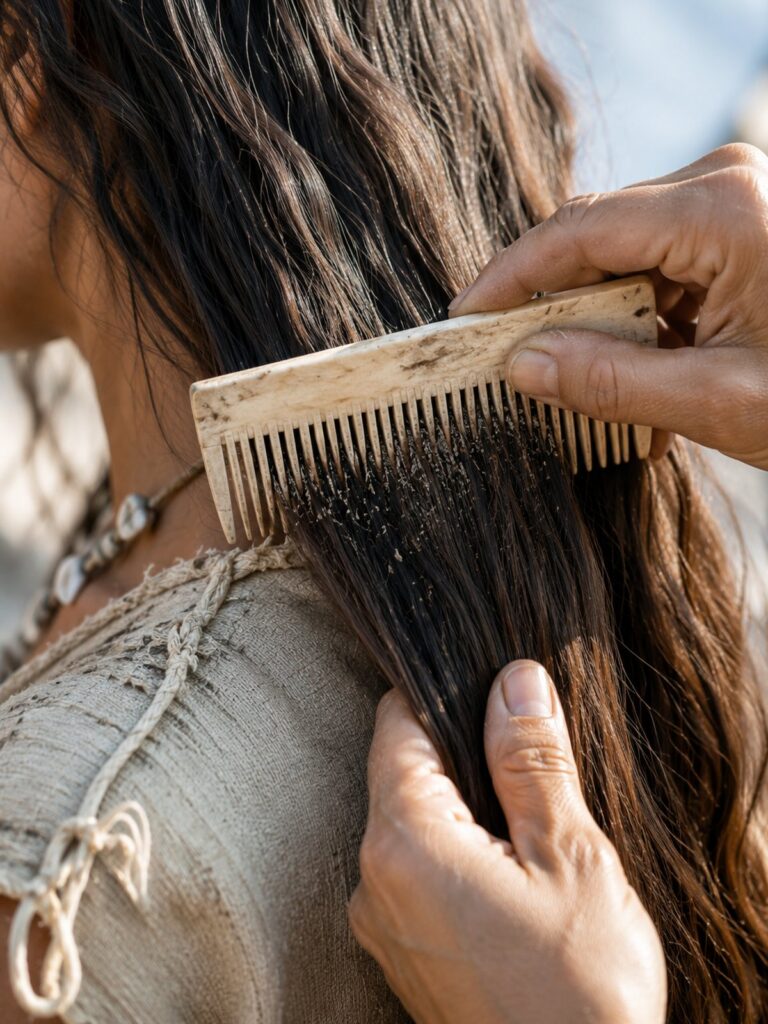 Chapter 4The Origins of Combs: Humanity’s First Hair-Care ToolPrehistory & OriginsDiscover the origins of combs, from prehistoric toothed tools to ancient bone and ivory combs that reveal th...Read chapter →
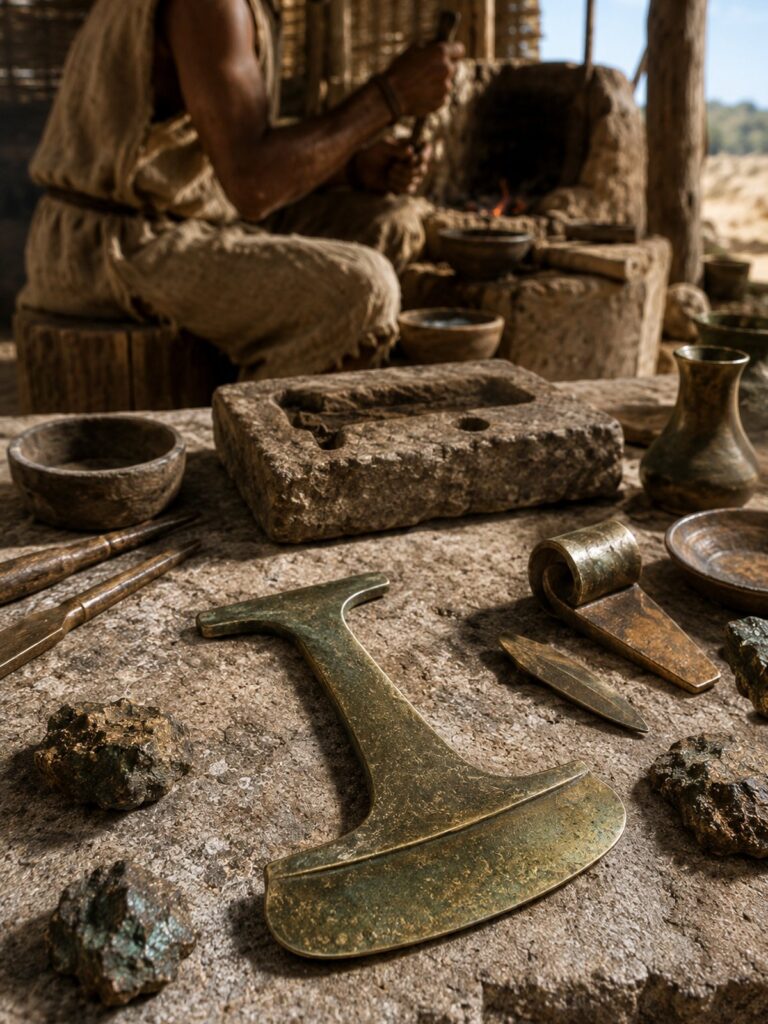 Chapter 5The Origins of Shaving: Before the Metal RazorPrehistory & OriginsExplore the origins of shaving and how sharp stone and flint may have allowed prehistoric humans to remove h...Read chapter →
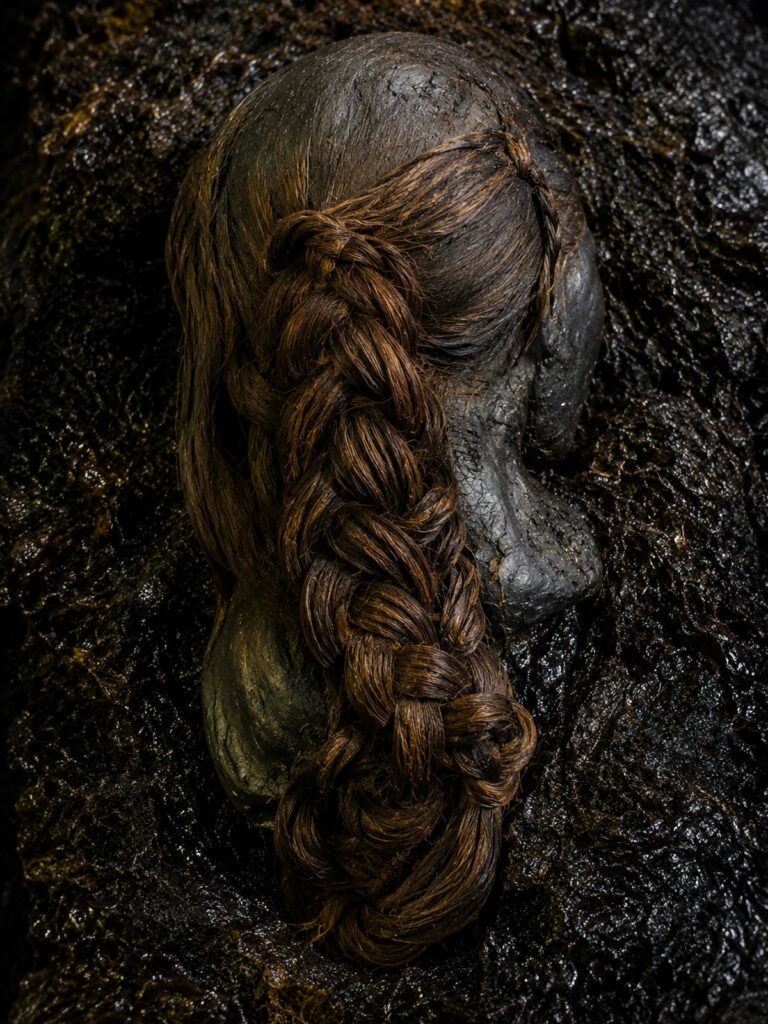 Chapter 6Hair and Human Identity in Prehistoric SocietyPrehistory & OriginsExplore prehistoric hair identity and how hairstyles, grooming and hair representation may have expressed in...Read chapter →