The Origins of Combs: Humanity’s First Hair-Care Tool

History of Hairdressing · Prehistory & Origins · Chapter 4
Long before mirrors, salons, scissors or metal razors, humans were already paying attention to their hair. They cut it, arranged it, decorated it and, at some point in prehistory, began using one of the simplest yet most enduring tools ever created for personal grooming: the comb.
The origins of combs reach deep into a period when written records did not exist. This makes their story both fascinating and difficult to reconstruct. Archaeologists have discovered ancient objects made from bone, antler, horn, ivory and other materials that possess carefully cut teeth and resemble later combs. Yet appearance alone cannot always reveal how an object was used. Some toothed tools may have been designed for working fibres, textiles or other materials rather than human hair.
For this reason, there is no single archaeological discovery that can safely be called “the first comb ever made.”
What the evidence does reveal is something more interesting. By the later stages of prehistory, humans had developed recognisable and sometimes remarkably sophisticated combs. Their construction required planning, craftsmanship and an understanding of how regularly spaced teeth could pass through and organise hair.
The comb represents an important moment in the history of hairdressing: the transformation of grooming from something performed primarily with the hands into an activity assisted by a specialised tool.
Before the Comb: Hair Care With Human Hands
The human hand was almost certainly the first hair-care tool.
Fingers can separate strands, remove debris, untangle hair and arrange it into simple forms. Social grooming between individuals may also have played an important role long before specialised grooming objects appeared.
But fingers have limitations.
Long, thick or tangled hair is easier to organise when multiple narrow points can move through it simultaneously. A toothed object effectively extends the function of the fingers, creating a simple mechanical system for separating and aligning strands.
Exactly when prehistoric humans first recognised this advantage is unknown.
The archaeological record cannot preserve every experiment made from wood, plant material or other perishable substances. The oldest surviving objects therefore represent only the material evidence that happened to endure, not necessarily the beginning of the idea itself.
The conceptual step, however, was significant. Once humans began deliberately manufacturing a row of teeth for grooming, hair care had acquired one of its first specialised technologies.

When Did Humans Make the First Combs?
There is no reliable date for the invention of the comb.
This distinction is essential.
Archaeologists have recovered prehistoric toothed objects from different regions, but identifying their original function can be difficult. An object that resembles a comb might have been used for hair, textile production, fibre processing or another task.
Without sufficient archaeological context or evidence of use, describing every toothed artefact as a hair comb would turn possibility into fact.
What can be said with much greater confidence is that recognisable combs existed thousands of years before the great civilizations of classical antiquity.
By the fourth millennium BCE, archaeological evidence from Predynastic Egypt includes carefully manufactured combs made from materials such as bone, horn and ivory. These are no longer merely crude toothed implements. Some are shaped and decorated in ways that reveal considerable craftsmanship.
The invention itself must therefore have been earlier than many of the best-preserved examples.
How much earlier remains unknown.
Bone, Antler, Horn and Ivory
The materials used for early combs tell us much about prehistoric technology.
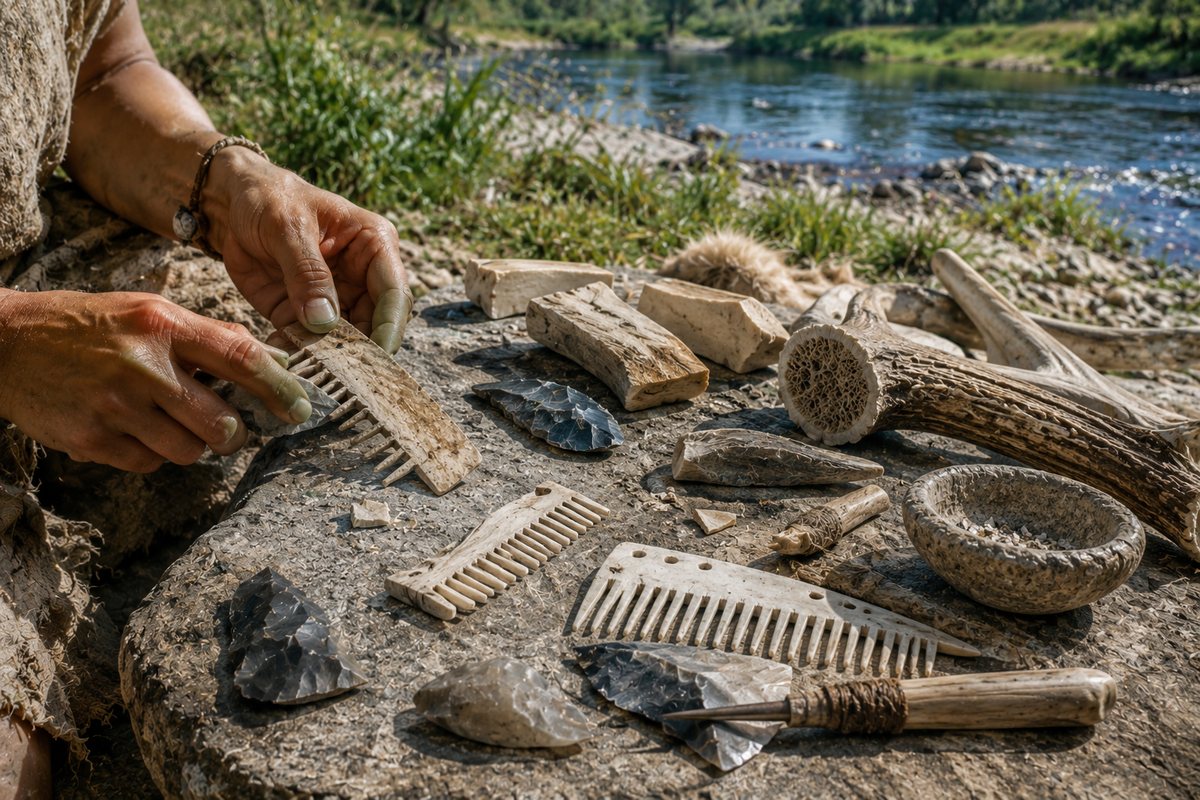
Bone was especially suitable because it could be cut, scraped, polished and shaped while remaining relatively strong. Antler offered similar advantages. Horn could also be worked into useful forms, while ivory provided a durable material capable of supporting extremely fine craftsmanship.
Producing a comb was more complicated than simply finding a piece of bone and cutting a few notches into it.
The maker first had to select appropriate material and prepare a relatively flat working surface. The overall shape then had to be formed before individual teeth were cut or sawn. Those teeth needed enough separation to pass through hair while remaining sufficiently strong not to break immediately.
The finished object could then be smoothed and polished.
Even a simple comb therefore represents several technological decisions.
Its maker understood the material, understood the desired function and could reproduce a repeated geometric structure, a sequence of narrow teeth, with sufficient accuracy for the object to work.
The Comb as a Technological Innovation
Today, the comb appears almost too simple to be considered technology.
In prehistoric society, however, its principle was ingenious.
Instead of separating strands individually with the fingers, a comb allowed multiple strands to be controlled in a single movement. The same basic mechanical idea has survived for thousands of years because there has been little reason to replace it.
Materials changed. Manufacturing changed. Decorative styles changed. Teeth became finer or wider and combs developed into countless specialised forms.
But the fundamental design remained recognisable: a body that supports a sequence of teeth capable of passing through hair.
This makes the comb one of the most persistent designs in the history of personal grooming.
It also marks an important development in the broader history of hairdressing. Hair was no longer being managed only through direct contact with the hands or through cutting. Humans had created an object specifically capable of controlling its structure.
Predynastic Egypt and the Earliest Clear Evidence
Some of the most important evidence for early combs comes from Predynastic Egypt.
Examples associated with the Naqada cultures of the fourth millennium BCE demonstrate that combs were already well-developed objects before the formation of the unified Egyptian state.
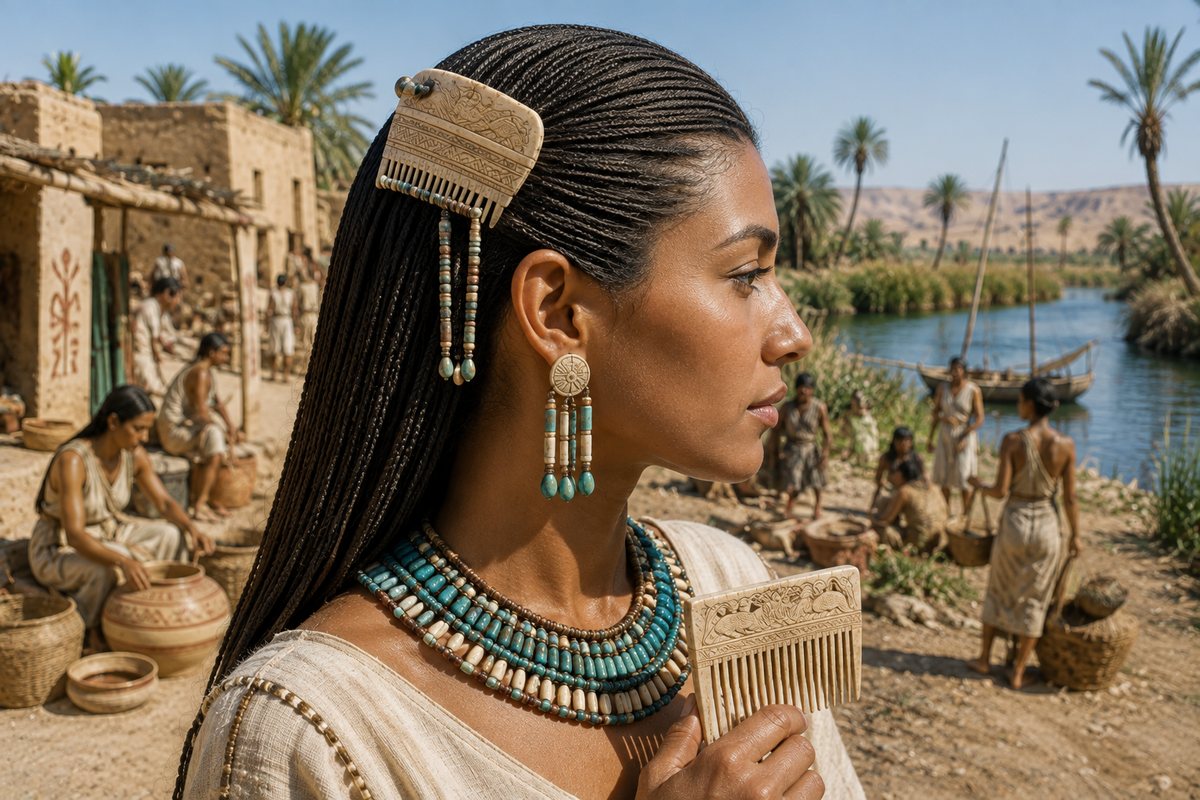
Surviving pieces include combs manufactured from bone, horn and ivory. Some have simple forms, while others include carefully carved animal figures or elaborate decoration.
This matters because these objects provide more than evidence that people possessed toothed implements.
They show craftsmanship.
A comb decorated with an animal figure required considerably more work than was necessary merely to separate hair. The practical object had become a surface for artistic expression.
By this period, therefore, grooming equipment could participate in a wider visual culture. The comb was capable of communicating something beyond its immediate mechanical function.
Exactly what every decorated comb meant to its owner cannot always be recovered, but their sophistication demonstrates that personal grooming objects had already acquired social and aesthetic importance.

Were Early Combs Really Used for Hair?
Not every prehistoric object described as “comb-like” should automatically be placed in the history of hairdressing.
This is one of the most important archaeological cautions surrounding the subject.
Toothed tools can have many functions. Similar forms may be useful for manipulating plant fibres, preparing textiles, decorating surfaces or performing other repetitive tasks.
Archaeologists therefore consider context, construction, wear patterns, associated objects and comparisons with better-understood artefacts when attempting to determine function.
Even then, certainty may not always be possible.
For the history of hairdressing, this means that the most visually convincing object is not necessarily the strongest evidence.
Our knowledge must be built from objects whose archaeological interpretation supports a grooming function, while ambiguous examples remain exactly that: ambiguous.
The earliest history of the comb is therefore not a straight line beginning with a single invention. It is a gradually emerging archaeological picture in which certainty becomes stronger as recognisable grooming objects become better documented.
Grooming, Cleaning and the Problem of Parasites
A comb can do more than arrange hair.
Fine teeth can remove small particles and help inspect or clean the hair and scalp. In later historical periods, specialised fine-toothed combs are strongly associated with removing lice and their eggs.
Could prehistoric people have used combs for the same purpose?
It is certainly possible, and in some later archaeological contexts the interpretation is strong. But we should be cautious about assuming that every prehistoric comb had precisely the same function.
Different tooth spacing suggests different potential uses. Wider teeth are effective for separating and arranging hair, while closely spaced teeth can perform much finer cleaning.
What matters historically is that the comb expanded the possibilities of grooming.
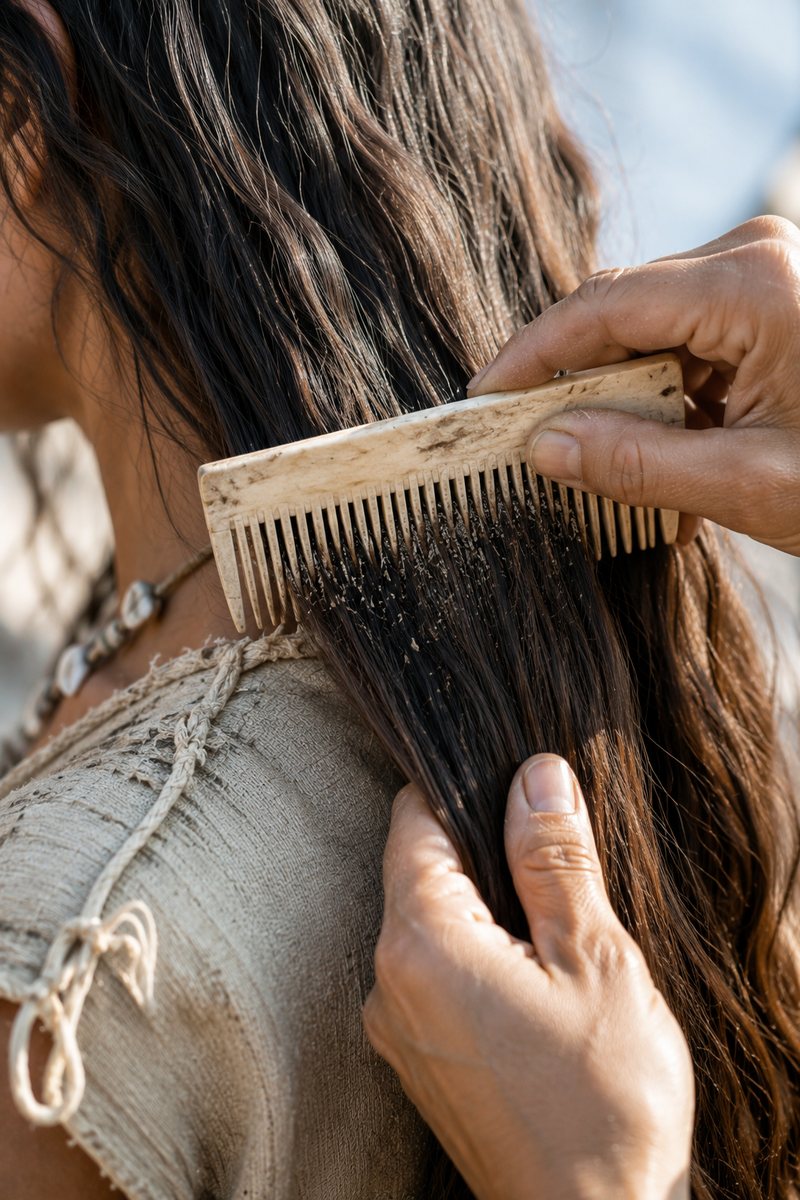
Hair could be separated more systematically, inspected more carefully and potentially cleaned more efficiently than with fingers alone.
This combination of practical benefits may help explain why the basic comb form became so durable across human cultures.
From Practical Object to Personal Possession
Once a tool becomes part of everyday grooming, it can also become personal.
A comb touches the body repeatedly. It can be carried, stored and used over a long period. Unlike a disposable material or improvised object, a carefully made bone or ivory comb could represent considerable investment in craftsmanship.
Decoration strengthens this interpretation.
Some ancient combs were shaped far beyond what basic function required. Animal figures, carved profiles and carefully finished surfaces transformed practical objects into visually distinctive possessions.
We cannot know the personal meaning of every prehistoric example. A decorated comb might have communicated status, identity, symbolic meaning or simply aesthetic preference.
What we can see is the investment.
People spent time creating beauty on an object connected with grooming.
That fact is important for the history of hairdressing because it shows how difficult it is to separate utility from appearance. The tool used to organise hair could itself become an object worth displaying.
What Decorated Combs Reveal About Hair and Identity
Hair is highly visible and easily modified.
It can be cut, arranged, bound, braided, covered or decorated. For human societies, these possibilities eventually made hair an effective means of expressing age, status, group membership, gender, profession, ritual position and personal taste.
We should not project specific later meanings onto prehistoric communities without evidence. A decorated prehistoric comb cannot tell us exactly what hairstyle its owner wore or what that hairstyle represented.
But the object can still tell us something.
When significant craftsmanship is invested in grooming equipment, appearance has clearly become worthy of material attention.
Some elaborate Predynastic Egyptian combs appear to have possessed significance beyond everyday utility. Their decoration suggests that grooming objects could occupy aesthetic, symbolic or ceremonial roles.
This is an important stage in the long transition from basic hair maintenance toward hair as a component of identity and visual culture.
The comb did not create that transformation by itself, but it became one of its most enduring tools.
The Lost History of Wooden Combs
Archaeology is shaped not only by what people made, but by what survives.
This creates a major problem when investigating the origins of combs.
Bone, antler and ivory can survive for thousands of years under favourable conditions. Wood and many plant-based materials usually cannot.
A prehistoric person could have produced a perfectly functional wooden comb, used it for years and discarded it, leaving no archaeological trace that survives today.
This means the earliest preserved comb is not necessarily the earliest comb that existed.
It may simply be the earliest example made from a material that survived in a context favourable to preservation and was later discovered by archaeologists.
This missing evidence prevents us from confidently identifying the birthplace of the comb.
It also reminds us that prehistoric technology was probably richer than museum collections alone can show.
Entire traditions of grooming equipment may have disappeared because they were manufactured from organic materials.
Did the Comb Have One Inventor?
The search for “the inventor of the comb” is probably asking a question that prehistoric evidence cannot answer.
There is no known individual inventor and no written account describing the moment of invention.
It is also possible that comb-like grooming tools developed independently in more than one community.
The principle is relatively accessible: several narrow projections arranged beside one another can separate fibres or hair more efficiently than a single point. Communities already experienced in working bone, wood, antler and other materials could potentially discover this solution without receiving it from one original source.
Whether this happened once or many times remains unknown.
What archaeology eventually reveals is not the inventor but the spread of a successful idea.
Across later cultures and civilizations, combs appear in numerous materials, sizes and designs. Their enormous geographical and chronological persistence demonstrates the effectiveness of the underlying concept.
The individual who first conceived it has disappeared from history.
The invention did not.
A Tool That Changed the Possibilities of Hairstyling
The importance of the comb extends beyond detangling.
Once hair can be systematically divided and aligned, more controlled arrangements become possible.
Sections can be separated. Strands can be smoothed. Hair can be prepared for binding or more elaborate manipulation. Later hairstyling traditions would depend heavily on precisely these actions.
We cannot reconstruct specific prehistoric hairstyles merely from the existence of a comb. Nor can we assume that prehistoric comb users practised the sophisticated styling methods known from later civilizations.
But the technological capability had changed.
The comb gave the hand greater precision.
In that sense, it belongs to the foundations of professional hairdressing even though the profession itself was still far in the future.
The modern stylist holding a comb works with an instrument whose essential mechanical principle would have been immediately understandable to someone living thousands of years ago.
Few tools in the beauty industry can claim such continuity.
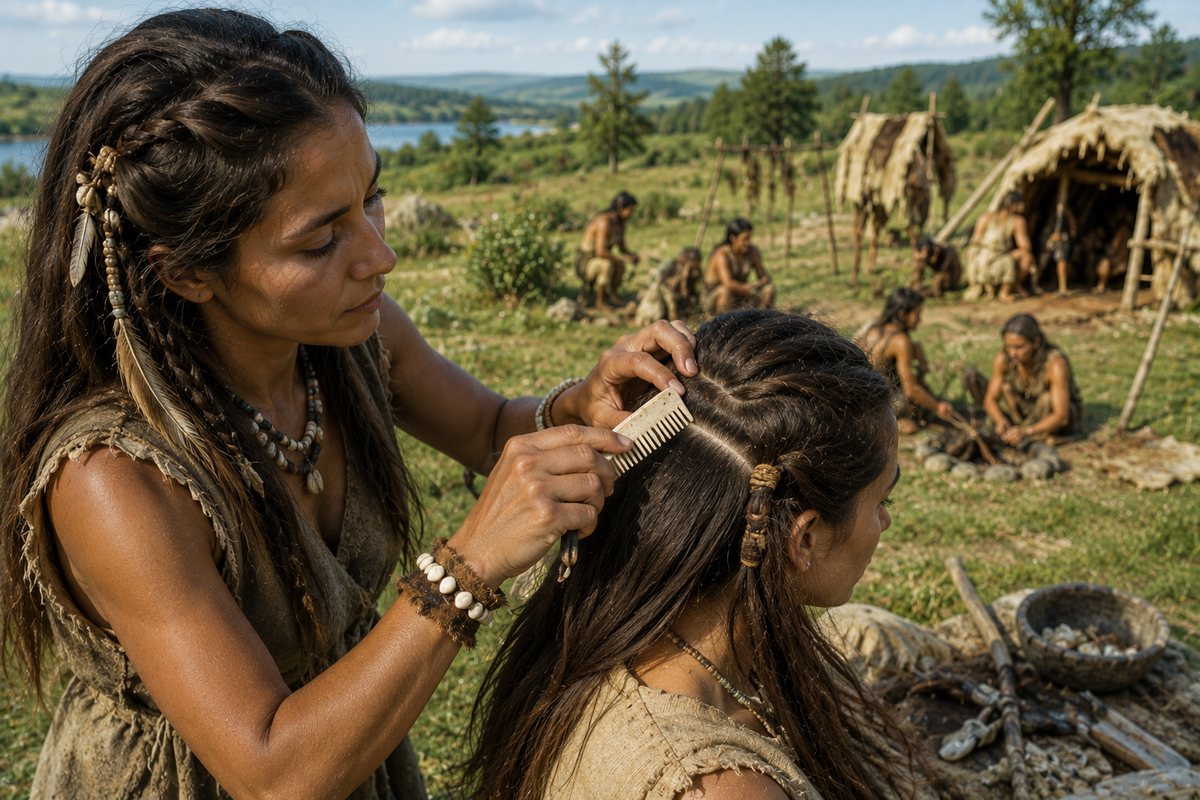
From Grooming Tool to the History of Hairdressing
The origins of combs represent more than the history of a familiar object.
They reveal a stage in which humans began developing specialised technologies for managing their own appearance.
Earlier hair care could be accomplished with hands and improvised materials. Cutting introduced another level of intervention. Purpose-made hair tools pushed grooming further toward controlled technique.
The comb sits at the centre of this development because it combines extraordinary simplicity with enormous versatility.
Its early history remains incomplete. We do not know the first maker, the first community or the exact date of invention. Some prehistoric toothed artefacts remain difficult to interpret, and countless objects made from perishable materials may have vanished completely.
Yet by the fourth millennium BCE, the evidence becomes strikingly clear: sophisticated combs existed, skilled craftspeople produced them, and some were decorated far beyond the minimum requirements of function.
The story of the comb therefore captures a larger transformation.
Humans were no longer simply living with their hair.
They were developing tools to control it, maintain it and increasingly make it part of how they presented themselves to the world.
Next in the History of Hairdressing: The Origins of Shaving, Before the Metal Razor
The comb allowed humans to separate, arrange and care for hair with a level of control that fingers alone could not provide. But another ancient grooming practice followed a very different principle: instead of organising hair, humans deliberately removed it.
Long before the precision steel razor, people had access to sharp stone, flint and other materials capable of cutting hair close to the skin.
More from History for Hairdressers
 Chapter 1Before the Hairdresser: The Prehistoric Origins of Hair CarePrehistory & OriginsLong before salons, scissors and professional hairdressers, humans were already managing and transforming th...Read chapter →
 Chapter 2The First Haircut: How Prehistoric Humans Cut Their HairPrehistory & OriginsThousands of years before scissors and metal razors, humans already possessed edges sharp enough to cut hair...Read chapter →
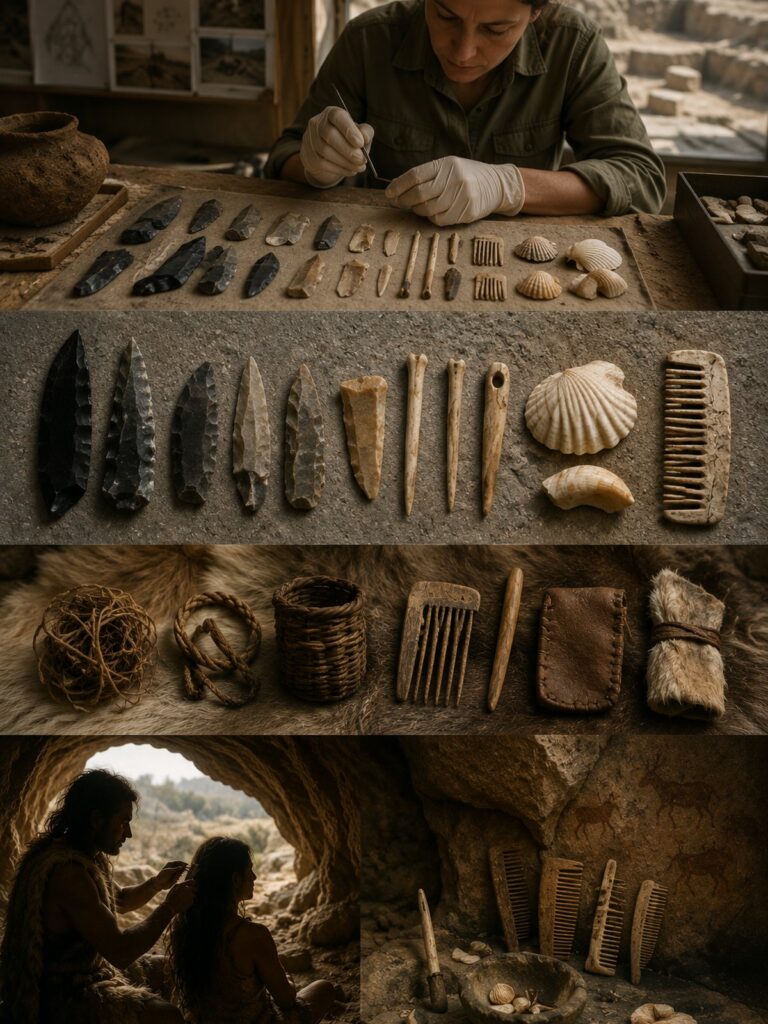 Chapter 3The First Hair Tools: Stone, Flint, Shell and BonePrehistory & OriginsDiscover the earliest materials prehistoric humans could use for hair care, from sharp flint and stone to sh...Read chapter →
 Chapter 5The Origins of Shaving: Before the Metal RazorPrehistory & OriginsExplore the origins of shaving and how sharp stone and flint may have allowed prehistoric humans to remove h...Read chapter →
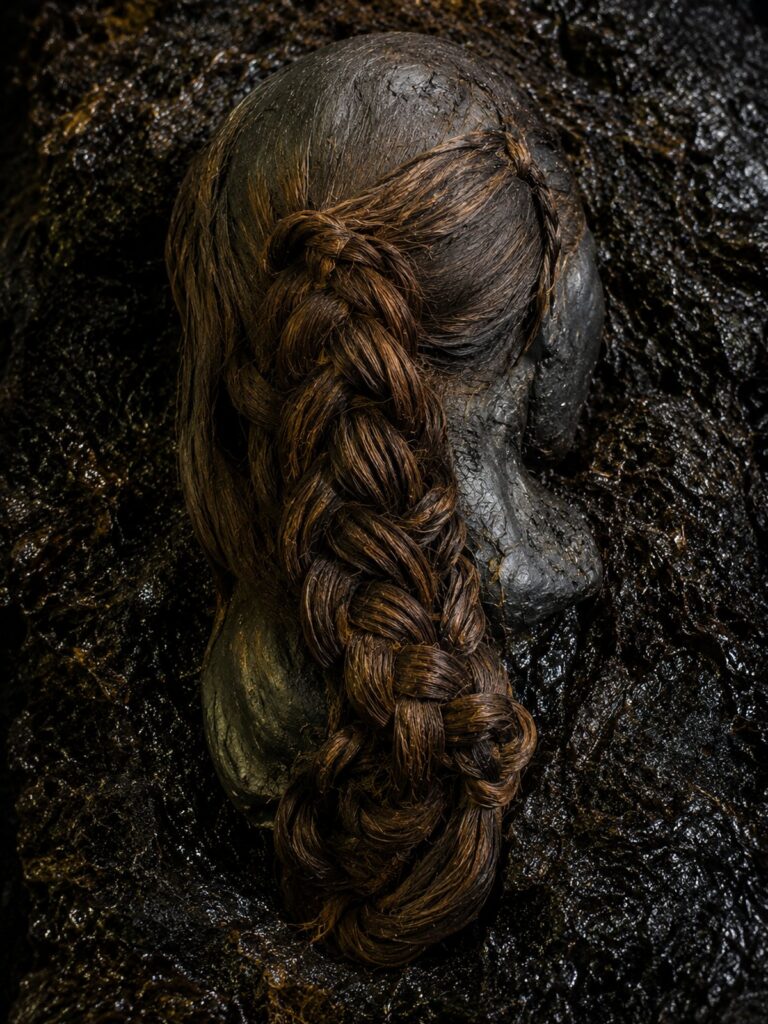 New chapterHair and Human Identity in Prehistoric SocietyPrehistory & OriginsExplore prehistoric hair identity and how hairstyles, grooming and hair representation may have expressed in...Read chapter →