
The First Hair Tools: Stone, Flint, Shell and Bone
History of Hairdressing · Prehistory & Origins · Chapter 3
Long before scissors, razors and manufactured combs existed, humans already possessed materials capable of cutting, scraping, separating, holding and arranging hair.
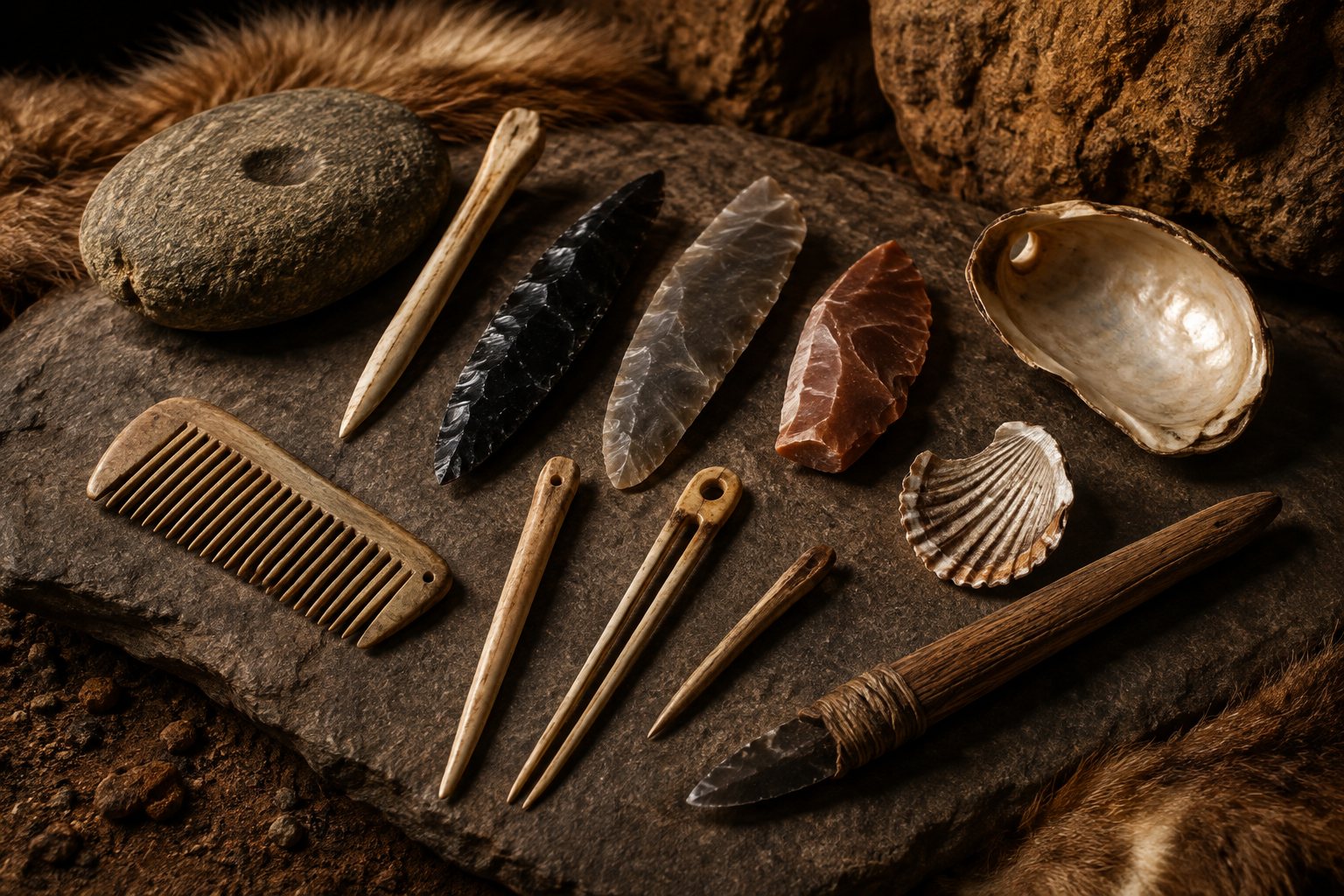
Stone could become a cutting edge. Flint could produce an exceptionally sharp blade. Shell could cut or scrape. Bone could be shaped into points and narrow implements.
But identifying the first hair tools is much more difficult than finding an ancient sharp object.
A flint blade could cut human hair, but it could also process animal tissue, hides, plants or wood. A shell edge could scrape, but that does not mean it was used on a human scalp. A bone point might separate strands of hair, pierce leather or perform another practical task.
The earliest objects used for hair care may therefore have been ordinary prehistoric tools temporarily given another purpose.
The object survives.
Its relationship with hair often does not.
This is the archaeological problem at the centre of the first hair tools.
To understand them, we have to distinguish between materials that were capable of working with hair, objects that prehistoric humans genuinely used as tools and objects that can confidently be identified as specialised grooming equipment.
Before a Hair Tool Became a Hair Tool
Modern hairdressing equipment is highly specialised.
Scissors cut. Combs separate and organise. Razors shave. Hairpins hold hair in position.
Prehistoric technology did not necessarily work according to such clearly separated categories.
A useful object could perform several functions.
A sharp stone flake might process animal tissue during one task and plant material during another. A pointed bone implement might pierce hides, manipulate fibres or work other organic materials.
The first object ever applied to human hair may therefore never have been designed specifically for grooming.
Imagine a prehistoric person discovering that an existing cutting edge could also shorten hair.
For those few moments, an ordinary tool became a hair tool.
Thousands of years later, archaeologists would still recover only the blade.
Unless microscopic traces, residues or archaeological context revealed its unusual function, there might be nothing to show that it had ever touched human hair.
This means that the history of hair tools may have begun not with invention, but with adaptation.
Humans already possessed tools.
At some unknown point, they began turning some of those tools toward themselves.
Stone: The Material That Changed Human Hands
Stone technology reaches extraordinarily deep into human prehistory.
Its importance was not limited to hunting or food preparation.
Learning how to select, fracture and shape stone gave prehistoric humans the ability to transform other materials with a degree of control that bare hands and teeth could never provide.
Different stones offered different possibilities.
Some were useful for pounding or grinding.
Others could be fractured deliberately to produce cutting edges.
Over enormous periods of time, prehistoric toolmakers became increasingly skilled at controlling the shapes and edges they created.
Modern archaeology can sometimes reconstruct how these objects were used.
Microscopic use-wear analysis examines polish, scratches, edge damage and other traces created when a tool repeatedly interacts with particular materials.
Such research has helped archaeologists recognise activities involving hides, animal tissues, plants, wood and other substances.
Hair presents a much more difficult problem.
Cutting a small amount of hair may leave little distinctive evidence capable of surviving thousands of years.
Stone therefore gives us strong evidence for technological capability.
It rarely gives us direct evidence for an individual haircut.
Flint: A Cutting Edge Before Metal
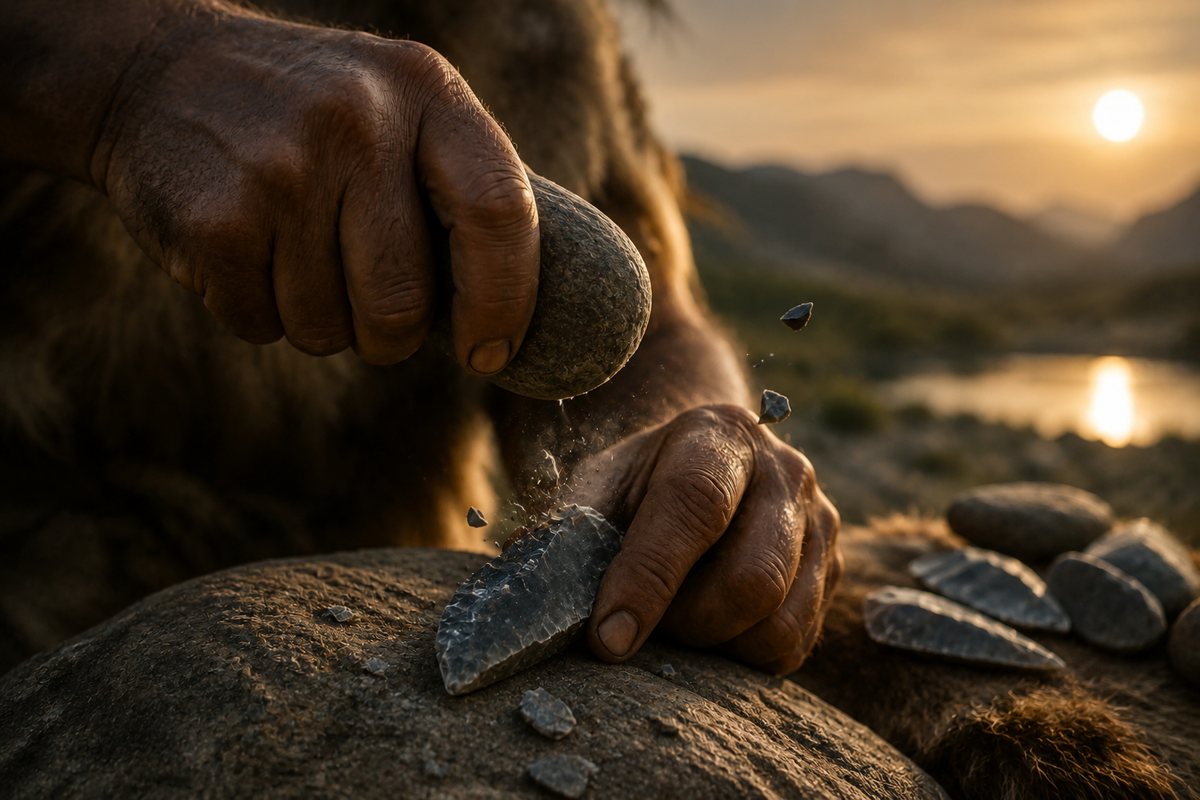
Among prehistoric cutting materials, flint became especially important because of the way it fractures.
When struck correctly, suitable flint can produce a thin and extremely sharp edge.
For people living thousands of years before steel scissors and razors, this represented sophisticated cutting technology.
A sufficiently sharp flint edge is physically capable of cutting human hair.
But this does not make every prehistoric flint blade a razor.
A blade recovered from an archaeological site may have been used for animal processing, hide working, woodworking, plant cutting or craft production.
It may also have performed several different tasks during its working life.
Hair cutting could have represented only a tiny part of that use.
This is why flint is so important to the earliest history of hairdressing.
Humans did not need to invent a dedicated hair-cutting instrument before they could shorten hair.
The necessary cutting technology already existed.
The crucial change came when somebody recognised that the same edge capable of transforming materials around the body could also transform hair growing on the body.
Obsidian: When Nature Produced an Extraordinary Blade
Flint was not the only prehistoric material capable of producing a highly effective cutting edge.
Obsidian offered something exceptional.
Obsidian is volcanic glass formed when lava cools rapidly. When fractured, it can produce extremely fine edges.
Its sharpness made it a valuable raw material in regions where it was available.
For hair history, obsidian is especially interesting because later historical and ethnographic observations demonstrate that sharp obsidian or glass flakes can genuinely be used for shaving and cutting hair.
This does not prove that every prehistoric obsidian blade was a grooming instrument.
Nor does later ethnographic practice automatically prove identical behaviour in deep prehistory.
But it answers an important technological question.
Metal is not required to cut or shave human hair.
A naturally fractured stone or glass edge can perform the task.
Prehistoric people who had access to obsidian therefore possessed a material capable of remarkably precise cutting.
Whether a particular archaeological blade touched hair remains another question entirely.
Once again, the material proves possibility.
Its exact prehistoric use requires evidence.

Shell: A Tool Hidden in Plain Sight
Stone was not the only natural material prehistoric humans transformed into tools.
Shell could also become part of the technological toolkit.
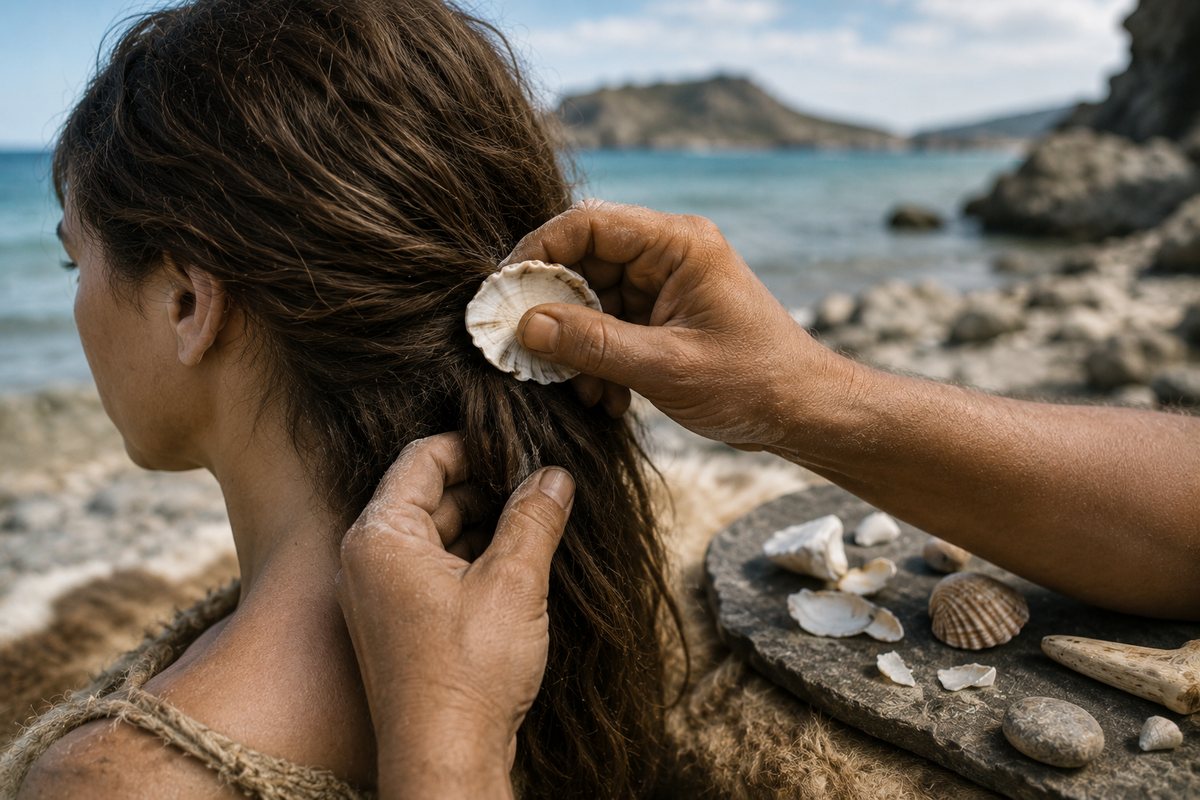
For communities living near coasts, rivers and lakes, mollusc shells were readily available. Depending on their species, thickness and fracture, shells could provide hard surfaces and useful edges.
Archaeological research has demonstrated that prehistoric people deliberately used and modified shells as tools.
Microscopic use-wear studies have identified shell implements associated with practical activities including scraping and the processing of different organic materials.
This is important because shells can easily be underestimated archaeologically.
A broken shell discovered at a prehistoric site may appear to be food waste or a natural fragment unless its edges are examined carefully.
Some were genuinely tools.
For the history of hair care, this opens another possibility.
A shell edge could mechanically cut or scrape certain materials and may therefore have been physically capable of participating in grooming.
But we must stop where the evidence stops.
The existence of prehistoric shell tools does not prove that a particular shell was used to cut hair.
It demonstrates that prehistoric technology was more diverse than a toolkit made only from stone.
Could Shell Really Have Been Used on Hair?
Mechanically, the possibility is reasonable.
A suitably sharp shell edge can cut or scrape organic material.
Some shell surfaces are also naturally smooth, while others can be deliberately modified.
But there are three separate questions.
Could shell function as a tool?
Yes.
Did prehistoric humans actually use shells as tools?
Yes. Archaeological and use-wear evidence demonstrates that they did.
Can we therefore identify shell as one of humanity’s first proven hairdressing tools?
Much more cautiously.
To make that final claim, we would need evidence connecting a particular object with hair or grooming.
Without it, shell remains part of the technological environment from which early grooming could have developed rather than a universally proven prehistoric hair tool.
This distinction may seem restrictive.
It is necessary.
The history of hairdressing becomes less reliable when every sharp prehistoric object is automatically transformed into a razor and every pointed object into a hairpin.
What matters is not what we can imagine prehistoric humans doing.
What matters is how closely that reconstruction follows the evidence.
Bone: From Animal Remains to Precision Tool
Bone offered prehistoric toolmakers very different properties from stone.
It could be shaped into long, narrow and relatively smooth forms.
Prehistoric bone technologies eventually produced points, awls, needles and numerous other specialised objects.
This made bone particularly interesting for activities requiring precision.
For hair care, its potential was not limited to cutting.
A pointed bone object could theoretically separate strands.
A smooth narrow implement could manipulate sections of hair.
A longer point could potentially help hold an arrangement in position.
Eventually, bone unquestionably became a material used for dedicated grooming objects, including combs and hairpins.
But that later certainty should not automatically be pushed backwards into earlier prehistory.
A pointed bone object is not necessarily a hairpin.
A bone awl is not automatically a hairstyling instrument.
Its shape alone cannot tell us everything about its function.
This is where archaeological context becomes essential.
The question is no longer simply what the object could do.
The question becomes what evidence survives to tell us what prehistoric people actually did with it.
When Does a Bone Point Become a Hairpin?
Imagine two prehistoric bone points of similar size and shape.
One was repeatedly used to pierce hides.
The other was placed through arranged hair to hold it in position.
Thousands of years later, both are recovered from the ground.
How would archaeologists distinguish them?
Context matters.
Where was the object discovered?
Was it found in a settlement or burial?
If it came from a burial, where was it positioned in relation to the body?
Was it located near the head?
Does microscopic wear suggest repeated contact with a particular material?
Are similar objects shown in surviving representations?
Do comparable finds from better-preserved contexts help explain its function?
The more evidence that converges on grooming, the stronger the interpretation becomes.
Without such evidence, calling a pointed bone object a hairpin can be misleading.
This problem explains why the origins of dedicated hair fasteners deserve their own chapter later in this series.
Before archaeologists can confidently identify a hairpin, humans first had to discover that a pointed object could manipulate or secure hair.
The idea probably existed before the evidence becomes clear.
The Hair Tools Archaeology May Have Lost
The prehistoric archaeological record is not a complete inventory of prehistoric life.
It is a collection of what survived.
Stone survives extraordinarily well.
Bone and shell can also survive under favourable conditions.
Wood, plant fibres, leather, cord and other organic materials often disappear.
For the history of hair care, this preservation bias may be extremely important.
A simple wooden point could manipulate hair.
A carved wooden object might help separate strands.
Plant fibres could tie hair.
Leather strips could bind it.
Thorns or wooden splinters could potentially hold sections in position.
Flexible materials could assist wrapping or braiding.
Most such objects would have little chance of surviving for tens of thousands of years under ordinary archaeological conditions.
This creates a distorted picture.
Because archaeologists find large numbers of stone tools, it is easy to imagine a prehistoric world dominated entirely by stone.
The people who lived in that world almost certainly used a much wider range of materials.
Some of humanity’s earliest grooming tools may therefore be missing not because they never existed, but because they decomposed.
From Multipurpose Object to Specialised Grooming Tool
There is an important difference between a tool used on hair and a hair tool.
A multipurpose blade applied occasionally to hair belongs to the first category.
An object deliberately manufactured or selected because of its grooming function belongs increasingly to the second.
The transition between them was probably gradual.
Imagine that one particular type of edge worked especially well for shortening hair.
People might begin selecting that shape when grooming.
If a certain point separated strands effectively, it might be smoothed or modified.
If a simple fastener held hair securely, its form might gradually become better suited to the task.
Repeated behaviour creates opportunities for specialisation.
This is how an ordinary object can begin moving toward a dedicated tool.
The change does not require one prehistoric inventor suddenly deciding to create a complete hairdressing kit.
It can happen through generations of small improvements.
An object works.
People remember.
The object is selected again.
Its shape is refined.
Eventually, the relationship between tool and task becomes unmistakable.
The Comb Changes the Evidence
At some point in hair history, the archaeological problem begins to change.
A generic sharp blade can have dozens of possible functions.
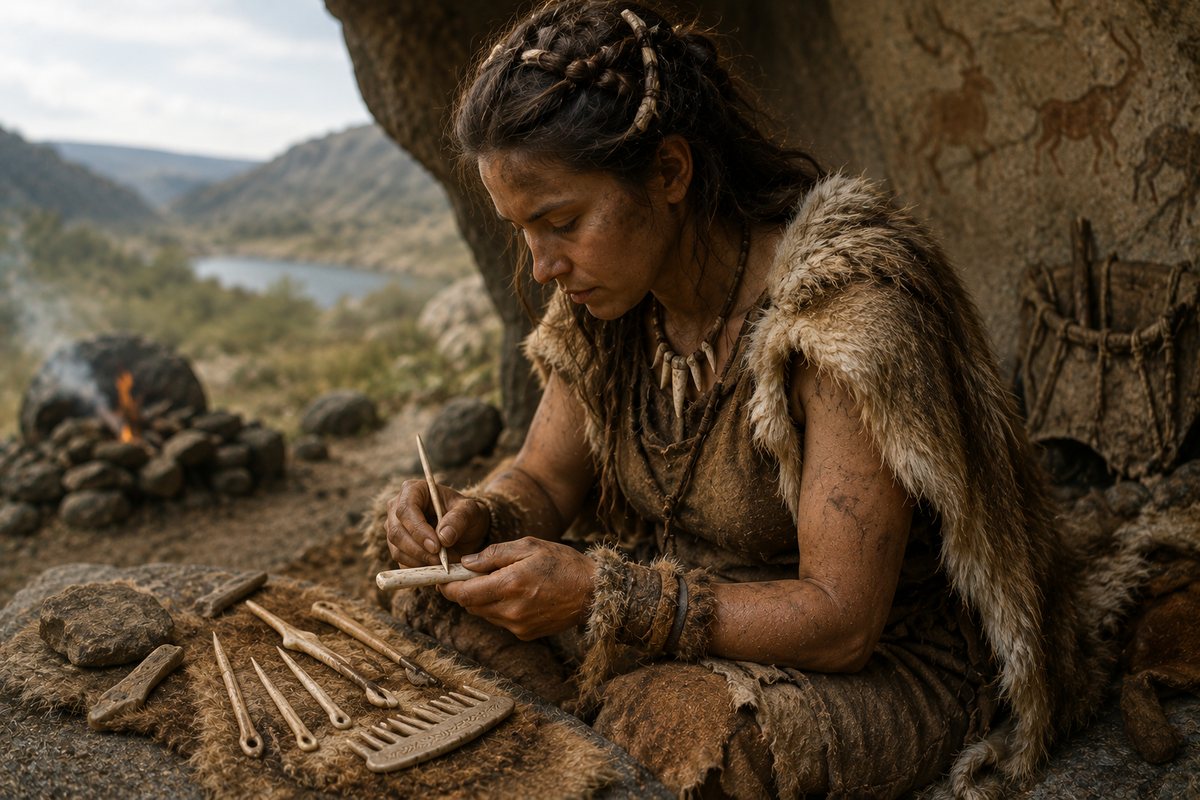
A carefully manufactured object with a row of regularly spaced teeth is much more specialised.
The comb represents an important technological turning point.
Its form creates an efficient mechanical solution for separating strands, organising hair and removing tangles or unwanted material.
Once recognisable combs appear, the connection between object and grooming becomes much stronger.
Surviving examples from later prehistory demonstrate that bone and other materials could be transformed into clearly specialised grooming equipment.
This is fundamentally different from interpreting a single flint blade or bone point.
The object itself begins to reveal its intended relationship with hair.
That does not mean grooming began when the first surviving comb was manufactured.
Quite the opposite.
The existence of a specialised tool suggests that humans had already been managing hair long enough for a dedicated technological solution to become useful.
The comb belongs to a later stage of a much older story.
The Difference Between Possible, Probable and Proven
The first hair tools require the same archaeological discipline as the first haircut.
PROVEN: Prehistoric humans manufactured sophisticated stone and flint tools with sharp cutting edges.
PROVEN: Flint, obsidian and other suitable sharp materials are physically capable of cutting human hair.
PROVEN: Prehistoric communities manufactured and used shell tools for practical activities involving organic materials.
PROVEN: Bone was deliberately shaped into specialised prehistoric tools including points, awls and other precision implements.
PROVEN: By later prehistory, recognisable specialised grooming objects such as combs existed.
PROBABLE: Some multipurpose prehistoric cutting tools were used to shorten or remove human hair.
PROBABLE: Organic materials such as wood, fibre, cord and leather participated in prehistoric hair management but are poorly represented because of preservation.
POSSIBLE: Some shell and bone implements were used directly in hair care before clearly specialised grooming tools became common.
UNKNOWN: Which surviving object was humanity’s first dedicated hair tool.
UNKNOWN: When humans first manufactured an object specifically for hair rather than adapting an existing tool.
UNKNOWN: How much of the earliest grooming toolkit has disappeared completely from the archaeological record.
These limits do not make the story weaker.
They reveal how the story must be reconstructed.
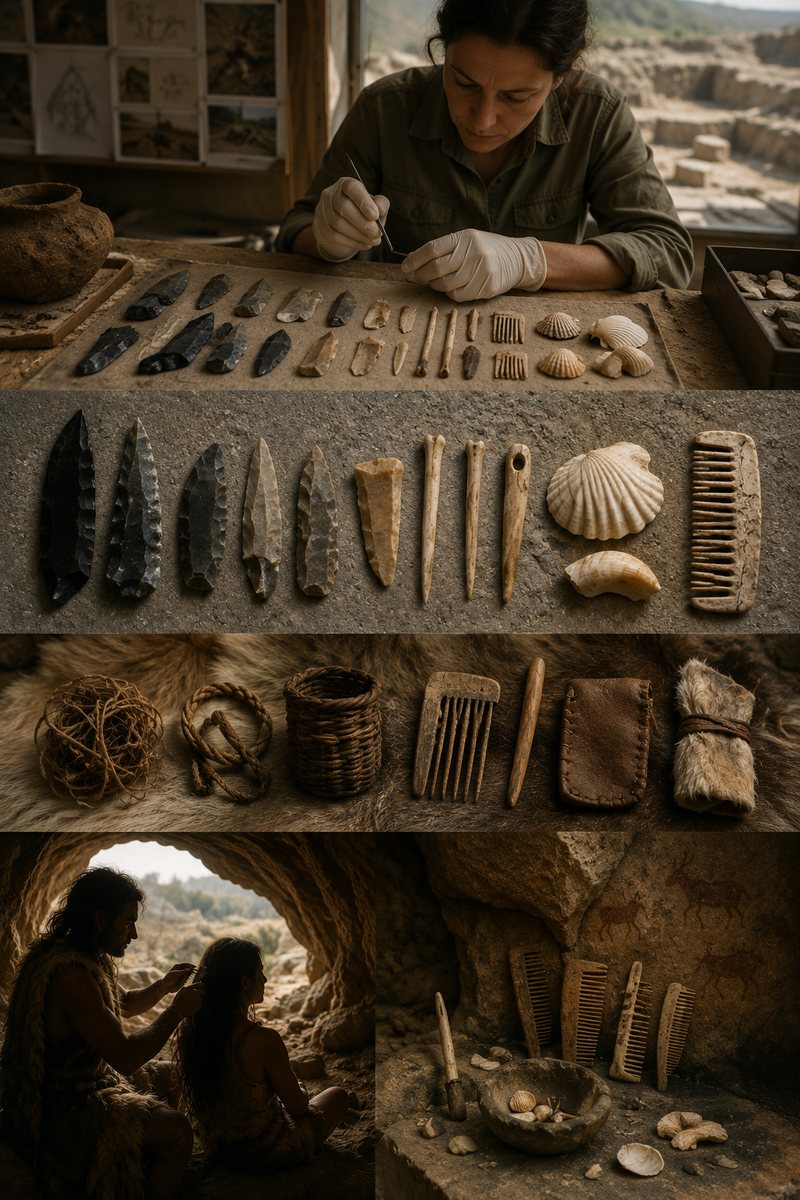
From Toolmaking to Hairdressing Technology
The most important development was not the discovery of stone, flint, shell or bone.
Humans already used these materials for many practical purposes.
The transformation occurred when technology began to interact deliberately with personal appearance.
A sharp edge could determine where hair ended.
A point could help manipulate where it remained.
A cord could hold hair in a chosen position.
A specialised comb could eventually separate and organise it with repeated precision.
This is the beginning of hairdressing technology.
Not because prehistoric humans possessed anything resembling a modern salon toolkit, but because they had begun using manufactured objects to control hair intentionally.
The progression from multipurpose implement to specialised grooming tool represents something larger than technological development.
It shows changing human behaviour.
Once appearance becomes a repeated reason for selecting, adapting or manufacturing a tool, grooming is no longer simply an accidental use of technology.
It begins developing its own material culture.
The tool starts to belong to the practice.
Why the First Hair Tools Matter
Modern hairdressing is inseparable from its tools.
Scissors control length.
Combs organise sections.
Razors remove hair precisely.
Pins and clips hold it exactly where the professional needs it.
Prehistoric grooming began at the opposite end of this technological journey.
There were no professional manufacturers producing specialised equipment.
There were materials.
Stone.
Flint.
Shell.
Bone.
And almost certainly many organic materials that archaeology has lost.
What connected them was human ingenuity.
The same ability that allowed prehistoric humans to reshape the physical world eventually allowed them to reshape their own appearance.
That is why the first hair tools matter.
They were not simply primitive ancestors of modern salon equipment.
They represent an important change in the relationship between technology and the human body.
A tool originally created to transform the environment could now transform the person holding it.
Somewhere in prehistory, an ordinary cutting edge became useful for hair.
A point became useful for arranging it.
A binding material helped control it.
Eventually, specialised grooming objects emerged.
The journey from stone flake to professional hairdressing equipment would take thousands of years.
But its foundation had already been established.
Humans had learned to make tools.
Then they discovered that those tools could also change the way humans looked.
Next in the History of Hairdressing: The Origins of Combs, Humanity’s First Hair-Care Tool
The next chapter moves from multipurpose prehistoric implements to one of the earliest objects whose relationship with grooming becomes unmistakable. We will examine the origins of combs, the materials from which early examples were made, what archaeology can tell us about their function and why the comb became one of the most enduring tools in the entire history of hair care.
More from History for Hairdressers
 Chapter 1Before the Hairdresser: The Prehistoric Origins of Hair CarePrehistory & OriginsLong before salons, scissors and professional hairdressers, humans were already managing and transforming th...Read chapter →
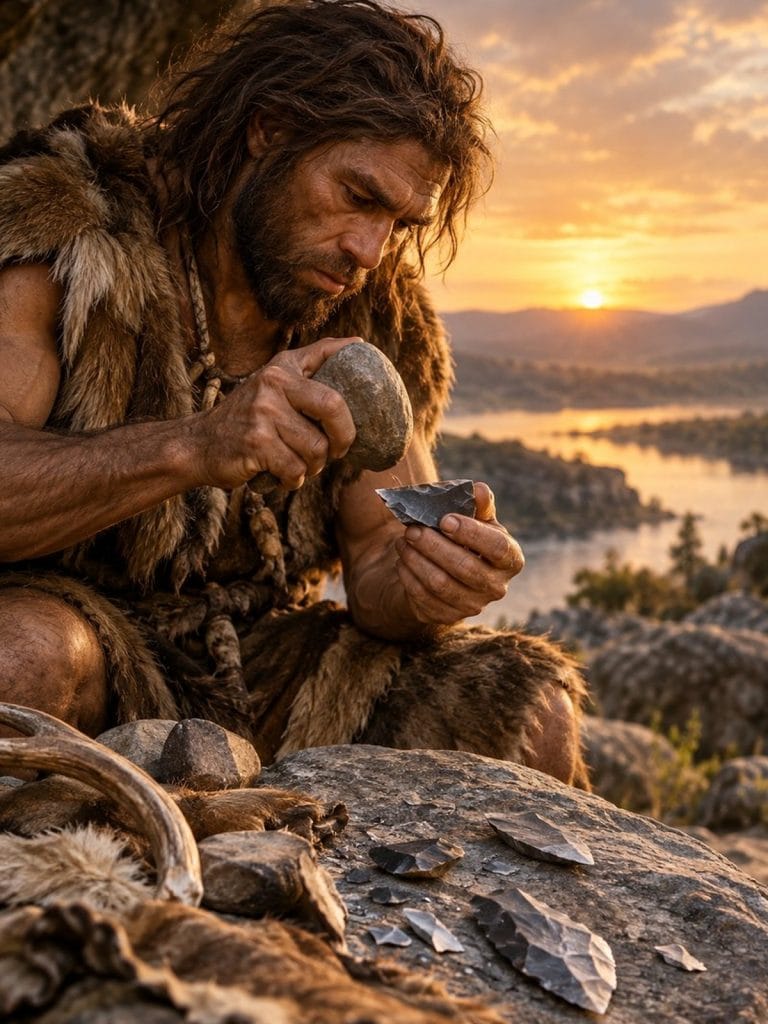 Chapter 2The First Haircut: How Prehistoric Humans Cut Their HairPrehistory & OriginsThousands of years before scissors and metal razors, humans already possessed edges sharp enough to cut hair...Read chapter →
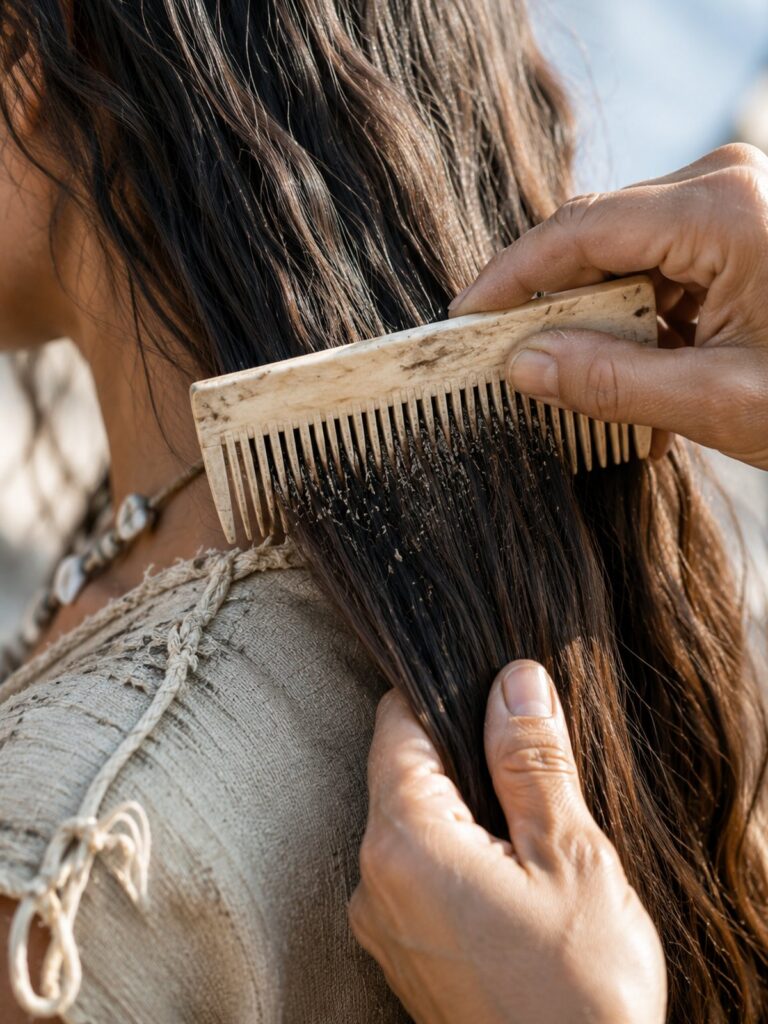 Chapter 4The Origins of Combs: Humanity’s First Hair-Care ToolPrehistory & OriginsDiscover the origins of combs, from prehistoric toothed tools to ancient bone and ivory combs that reveal th...Read chapter →
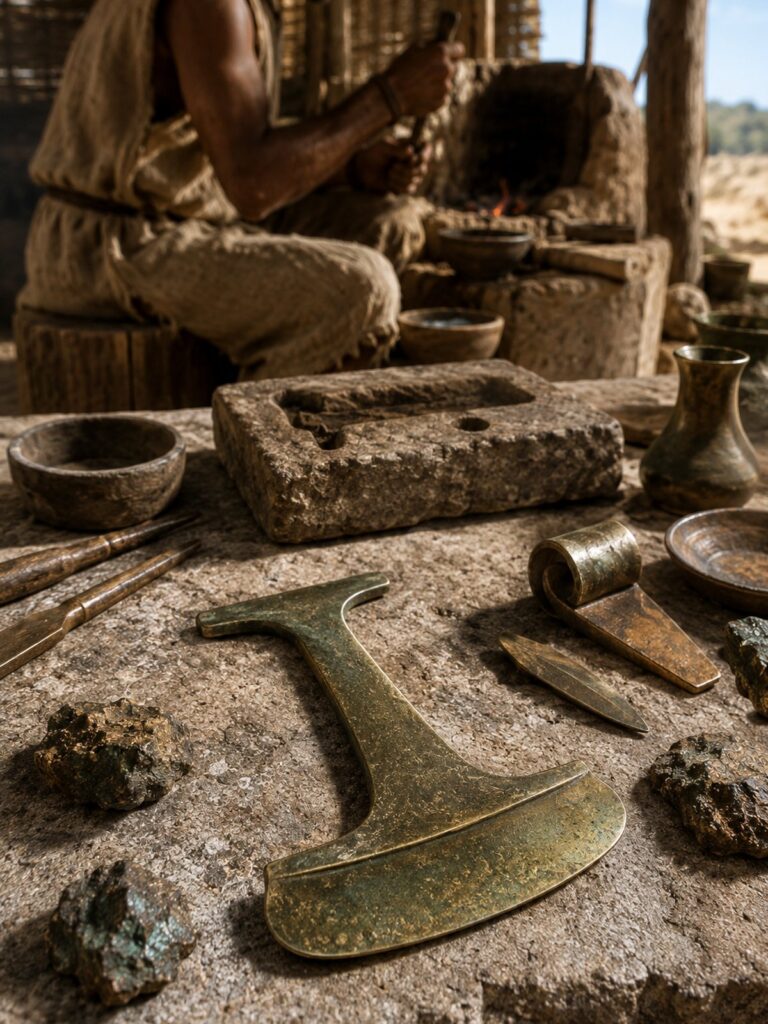 Chapter 5The Origins of Shaving: Before the Metal RazorPrehistory & OriginsExplore the origins of shaving and how sharp stone and flint may have allowed prehistoric humans to remove h...Read chapter →
 New chapterHair and Human Identity in Prehistoric SocietyPrehistory & OriginsExplore prehistoric hair identity and how hairstyles, grooming and hair representation may have expressed in...Read chapter →