Hair and Human Identity in Prehistoric Society
History of Hairdressing · Prehistory & Origins · Chapter 6
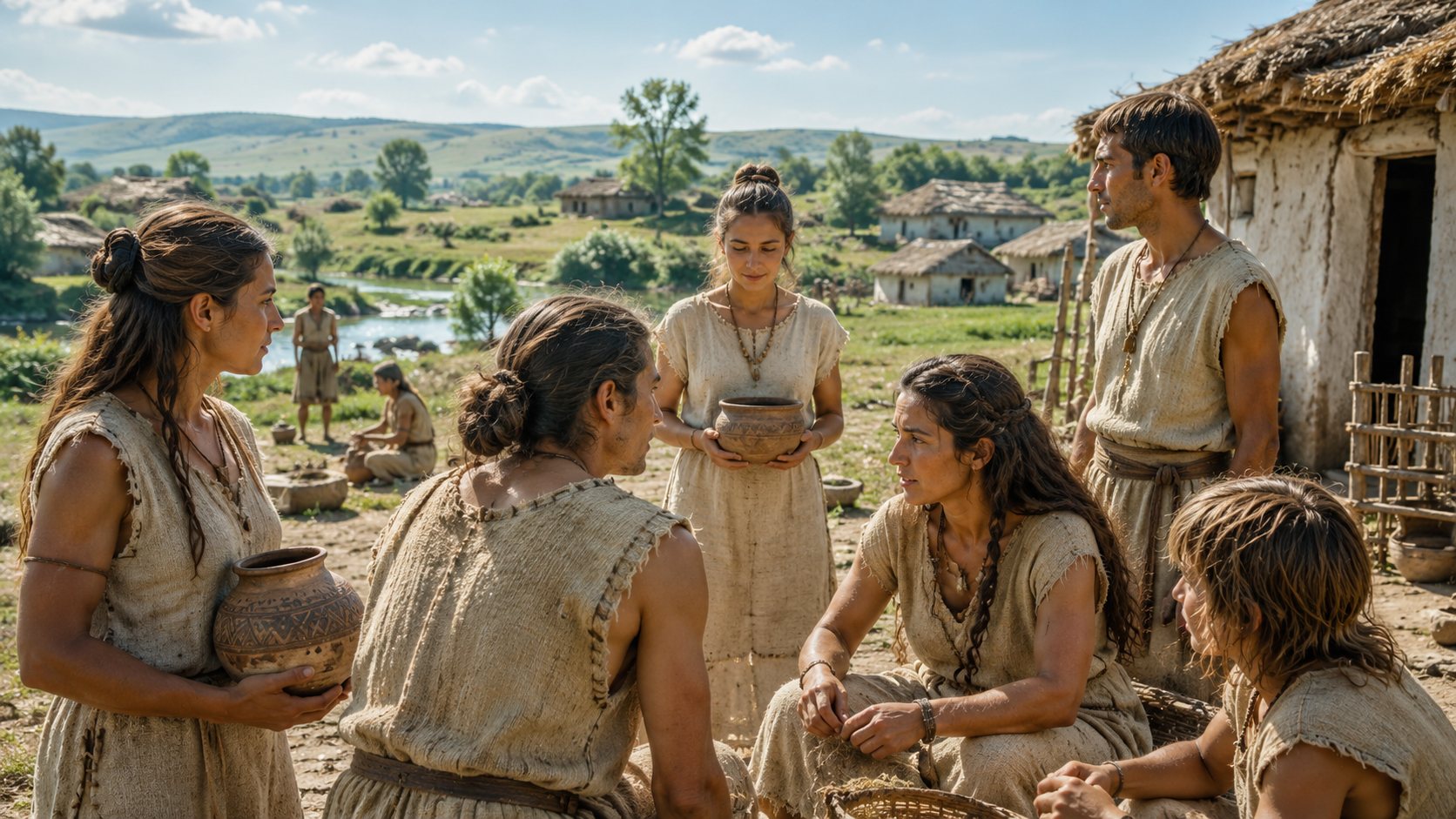
Hair is one of the most visible parts of the human body, but unlike many physical characteristics, it can be changed repeatedly.
It can be grown, shortened, removed, arranged, divided, tied, braided or decorated. A person can alter the appearance of their hair without permanently altering the body itself. That simple characteristic may have made hair important to human appearance long before written history.
For prehistoric societies, however, understanding what hair meant is far more difficult than recognising that people deliberately changed it.
Hair rarely survives in the archaeological record. Written explanations do not exist, and prehistoric images of people cannot simply be interpreted using the social meanings of hairstyles familiar to us today.
Yet archaeology provides important clues.
Tools associated with grooming, rare examples of preserved hair, representations of people and especially prehistoric figurines demonstrate that hair was not always left entirely to natural growth. Different ways of representing and managing hair appear across prehistoric communities.
This opens an important chapter in the history of hairdressing.
The story is no longer only about how humans learned to cut, comb or remove hair. It is also about the possibility that changing hair changed the way a person appeared to others.
Prehistoric hair identity therefore sits at the meeting point between grooming, appearance and social life.
We can demonstrate that prehistoric people altered and represented hair.
Understanding exactly what those changes meant is much harder.
Hair Is Different From Most Parts of the Human Body
The human body offers relatively few features that can be dramatically changed without permanent modification.
Hair is different.
It grows continuously. It can be cut and grow again. It can be allowed to become long, kept short, partially removed or arranged into different forms.
That makes hair an unusually flexible element of appearance.
A person with long loose hair can look significantly different after that hair is shortened, bound or arranged. Facial hair can similarly transform the visible shape of the face.
This does not prove that prehistoric people understood hair through the concept of identity in exactly the way modern societies do.
But it establishes something more fundamental.
Once people intentionally managed their hair, they possessed a way of changing their visible appearance.
The transformation could be temporary or repeated throughout life.
Unlike clothing, hair is also part of the body itself. Yet unlike many bodily features, its visible form can be deliberately controlled.
That combination may help explain why hair eventually became such a powerful cultural medium across human societies.
Before hair could become fashion, profession or documented social symbolism, it was already a remarkable human material: biological, visible and changeable.
From Natural Growth to Deliberate Appearance
There is an important difference between having hair and creating an appearance with hair.
All humans experience natural hair growth.
Deliberate grooming begins when people intervene in that process.
The earlier articles in this series examined technologies that made such intervention possible. Sharp stone edges could cut hair. Combs could separate and organise it. Hair could potentially be removed, shortened or arranged.
Together, these actions represent more than technological development.
They created choices.
Should hair remain long or become shorter? Should it be loose or controlled? Should facial hair remain untouched or be altered? Should different parts of the hair be treated differently?
We cannot reconstruct the answers for most prehistoric individuals.
But the existence of deliberate hair management means that natural growth was no longer the only possible appearance.
This distinction is fundamental to the history of hairdressing.
The moment humans began repeatedly modifying hair, appearance became something that could be actively produced.
That does not yet give us fashion in the modern sense.
It gives us something older: intentional presentation of the human body.
Prehistoric Hair Identity: What Can Archaeology Actually See?
Identity does not fossilise.
Archaeologists find bodies, objects, structures and images. They do not excavate a person’s thoughts about who they were.
For that reason, discussions of prehistoric hair identity require caution.
A hairstyle visible on a figurine may have been meaningful, but the image does not come with an explanation.
A comb demonstrates grooming technology, but it does not tell us whether its owner used a particular hairstyle to communicate age, membership or social position.
Even preserved human hair does not automatically explain why it was arranged in a particular way.
Archaeologists therefore work through patterns and context.
Repeated representations may indicate that certain ways of arranging hair were recognisable within a community. Differences between representations may also be significant.
But significance is not the same as translation.
We cannot simply look at an unusual prehistoric hairstyle and assign a modern label to it.
This is one of the most important principles of this article:
Archaeology may reveal that hair was deliberately different without revealing what that difference meant.
The distinction allows us to take prehistoric appearance seriously without turning interpretation into invented history.
The Human Image Enters the Archaeological Record
One of the most fascinating sources for prehistoric appearance is the human figure itself.
Across different prehistoric periods and regions, people created representations of the human body in clay, stone and other materials.
Some are highly abstract.
Others contain visible details of faces, bodies, clothing, ornaments and hair.
These representations are valuable because they show how prehistoric people chose to depict human appearance.
But they also create interpretive problems.
Lines on a head might represent hair, a headdress, ornamentation or another feature. Stylised patterns may simplify reality rather than reproduce an exact hairstyle.
Even when hair is clearly represented, we cannot assume that the image is a portrait of a specific individual.
Nevertheless, variation matters.
When prehistoric artists repeatedly devoted attention to the head and represented it in different ways, those differences become relevant to the history of appearance.
The archaeological record begins to show not simply humans with hair, but humans represented with deliberately differentiated appearances.
This is where the study of hairstyles begins to overlap with the study of identity.
Neolithic Hairstyles in the Balkans
The Neolithic Balkans provide an especially interesting case.
Anthropomorphic figurines from prehistoric communities in the region sometimes contain carefully represented details around the head. Archaeologists studying these objects have examined whether different patterns could represent hairstyles, head coverings, ornaments or combinations of these features.
Particularly relevant to this discussion are figurines associated with the Anzabegovo-Vršnik and Velušina-Porodin cultural milieus in the territory of present-day North Macedonia.
Research into these Neolithic representations has drawn attention to the diversity of hairstyles or hair-related patterns depicted on anthropomorphic figures.
This is important evidence.
It tells us that the appearance of the head was worthy of representation and that it was not necessarily shown in one uniform way.
What it does not provide is a dictionary of Neolithic hairstyles.
We cannot safely say that one pattern belonged to a married woman, another to a leader and another to a particular profession unless independent evidence establishes those meanings.
The differences may reflect social identity, gender, age, status, community tradition, individual appearance, artistic convention or several factors simultaneously.
Some possibilities are stronger than others in particular archaeological contexts.
But the exact meanings frequently remain uncertain.
For the history of hairdressing, the significance lies precisely in that diversity.
Hair had become visible not merely on human bodies, but within the way humans represented themselves.
Individual Appearance or Group Belonging?
Hair can make someone look different.
It can also make people look similar.
These two functions create an important relationship between individuality and belonging.
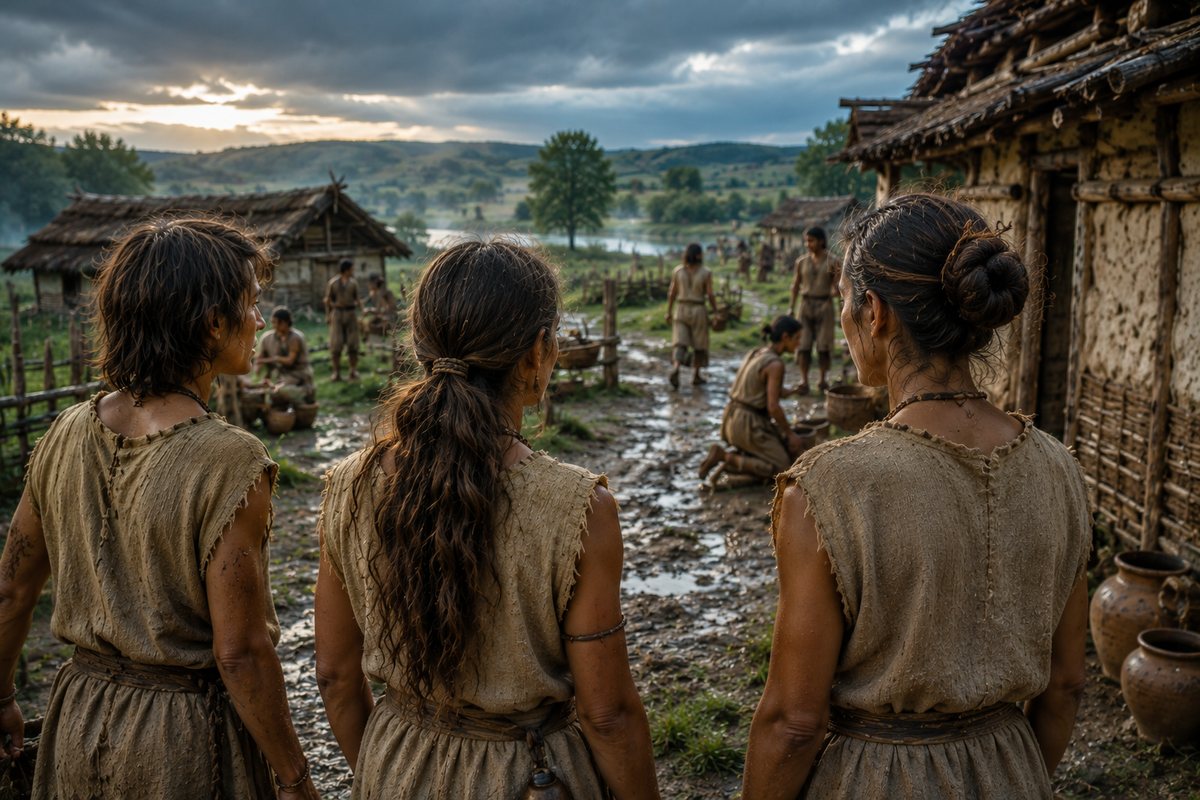
Imagine a community in which several people arrange their hair in comparable ways. Such similarity could potentially contribute to a shared visual appearance.
Conversely, differences in hair could distinguish individuals or categories of people.
This principle is familiar from historically documented societies, but applying specific historical meanings directly to prehistory would be unsafe.
We cannot assume that a particular prehistoric community had hairstyles corresponding to modern ideas of nationality, profession, class or fashion.
What archaeology allows us to ask is more basic.
Could visible hair differences have helped people recognise similarity and difference?
Probably.
Humans are intensely visual social beings. Hair surrounds the face and head, two of the areas most immediately noticed when people interact.
A deliberately maintained hairstyle can therefore become a highly visible characteristic.
Whether it communicated family, age, gender, position, personal preference or something entirely different depends on cultural context that archaeology may no longer preserve.
Hair could have been both personal and social without those two dimensions being separate.
Could Hair Mark Age, Gender or Social Position?
This is where popular histories of prehistoric hairstyles often become too confident.
It is tempting to assign every hairstyle a meaning.
Long hair becomes status. Braids become marriage. Shaved hair becomes warfare. Elaborate arrangements become leadership.
Such interpretations may sound plausible.
Plausibility is not evidence.
Age, gender, life stage and social position are all legitimate questions for archaeological research because human societies frequently organise themselves through such distinctions.
Hair may have participated in some of those systems.
Certain recurring differences in prehistoric representations can therefore be investigated as possible social markers.
But a hairstyle alone rarely provides enough evidence to establish the meaning.
Context is essential.
Archaeologists may compare burial treatment, associated objects, biological information, artistic representation, settlement context and patterns across many finds before suggesting an interpretation.
Even then, conclusions may remain provisional.
The responsible position is therefore not that prehistoric hair had no social meaning.
It is that social meaning was culturally specific, while much of the cultural code has been lost.
When Real Prehistoric Hair Survives
Most prehistoric hairstyles disappeared with the people who wore them.
Hair is organic material and normally decomposes.
Occasionally, exceptional environmental conditions preserve human remains well enough for hair to survive. Such discoveries provide a dramatically different kind of evidence from stone tools or figurines.
European bog bodies are among the best-known examples.
Waterlogged, acidic and oxygen-poor environments can preserve soft tissues, skin and hair that would normally vanish.
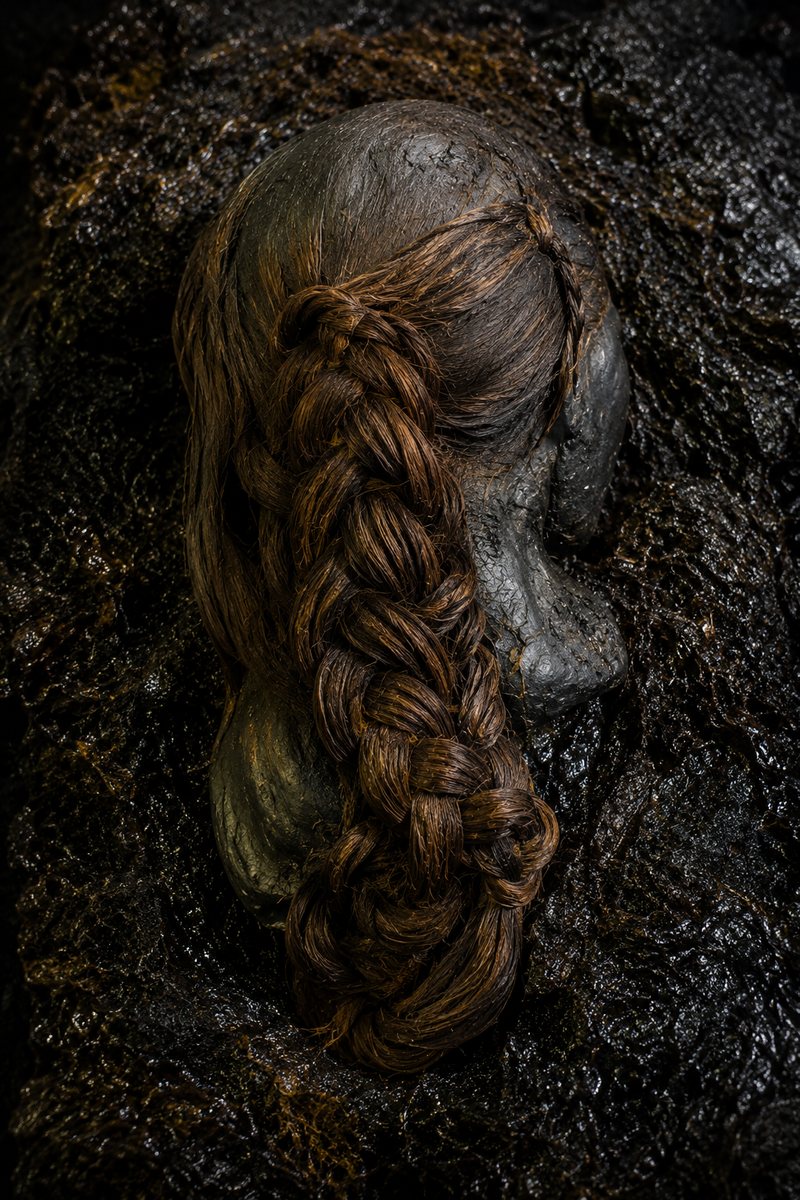
The Elling Woman, an Iron Age bog body from Denmark, is particularly relevant because her preserved hair was arranged in a complex braided form.
Here archaeology is no longer interpreting a carved line as possible hair.
The hair itself survives.
Examples such as this prove that carefully arranged hairstyles existed in later European prehistory.
But even exceptional preservation has limits.
A preserved braid tells us how hair was arranged at or near the time of death.
It does not automatically tell us why.
Was it ordinary daily grooming? A style associated with a particular group? A special preparation? A personal preference?
The physical hairstyle may survive while its social explanation does not.
That difference between appearance and meaning remains central.
Hair, Belonging and Difference
Archaeological research into later prehistoric Europe has increasingly treated hair as part of a broader visual language of the body.
This is useful because identity is rarely expressed through one feature alone.
Hair can interact with clothing, ornaments, body modification, jewellery and other visible elements.
Together, these characteristics can contribute to the way individuals present themselves and recognise others.
Hair is particularly interesting because it sits between nature and culture.
It grows biologically, but humans can reshape it culturally.
It belongs to the individual body, yet other people can see it.
It can express continuity when a style is maintained and transformation when that style changes.
This makes hair potentially powerful in societies without written identity documents, photographs or digital profiles.
We should not imagine prehistoric communities as visually anonymous populations in which everyone simply allowed hair to grow without thought.
Archaeological evidence increasingly challenges such simplistic images.
People groomed themselves.
They created objects for grooming.
They represented differences in human appearance.
And in exceptional cases, their carefully arranged hair survives.
The precise language may be lost, but the visual distinctions were real.
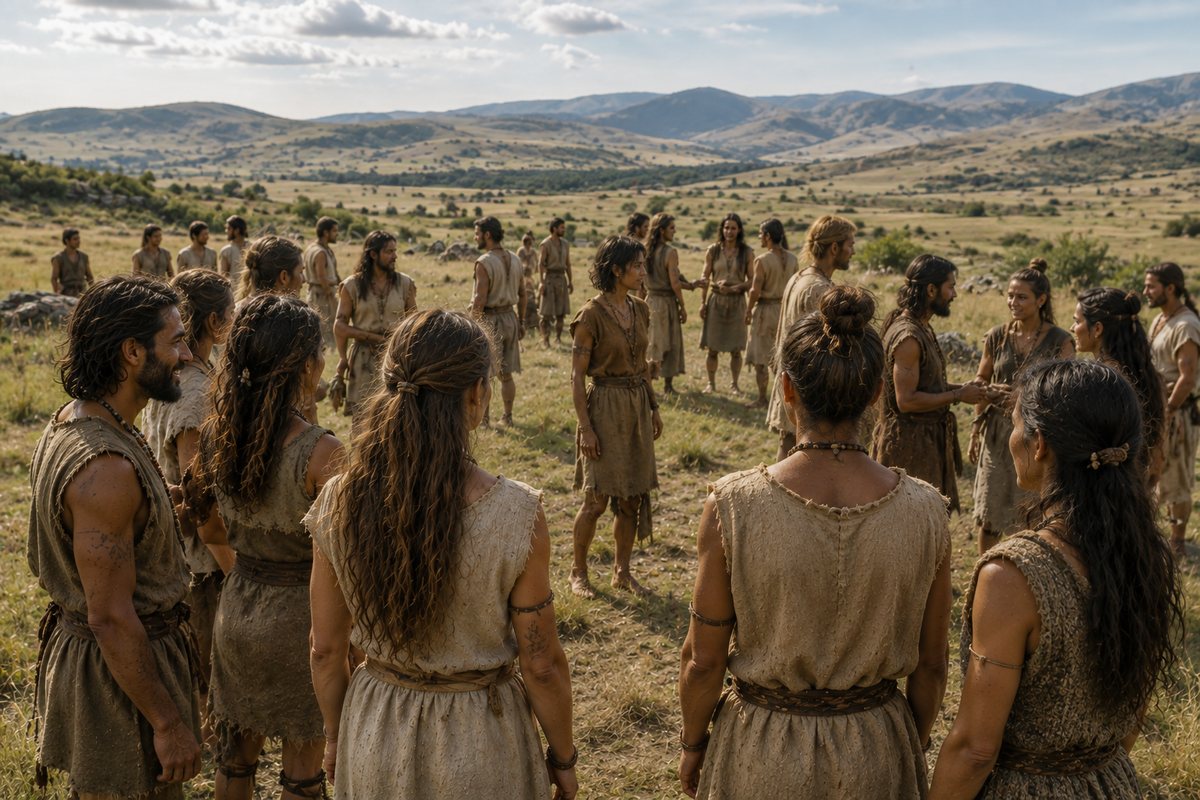
Changing Hair, Changing the Person
One reason hair can become associated with identity is that changing it can produce an immediate transformation.
The biological individual remains the same.
The visible person can look remarkably different.
Cut long hair short and the outline of the head changes. Remove facial hair and the face changes. Arrange loose hair into a controlled form and the person’s silhouette changes again.
This transformative quality may have mattered in prehistory just as it mattered in later societies.
But we must again separate a general human possibility from a specific prehistoric claim.
We cannot state that prehistoric people universally changed hairstyles during marriage, mourning, adulthood, warfare or ritual unless evidence exists for the community being discussed.
What we can say is that hair provided the technological and visual possibility for such transformations.
A person could alter an immediately recognisable feature without permanently altering the underlying body.
That makes hair particularly suited to changes in presentation over a lifetime.
The history of hair is therefore connected not only with beauty.
It is connected with the human discovery that appearance itself can be changed.
Grooming as a Social Activity
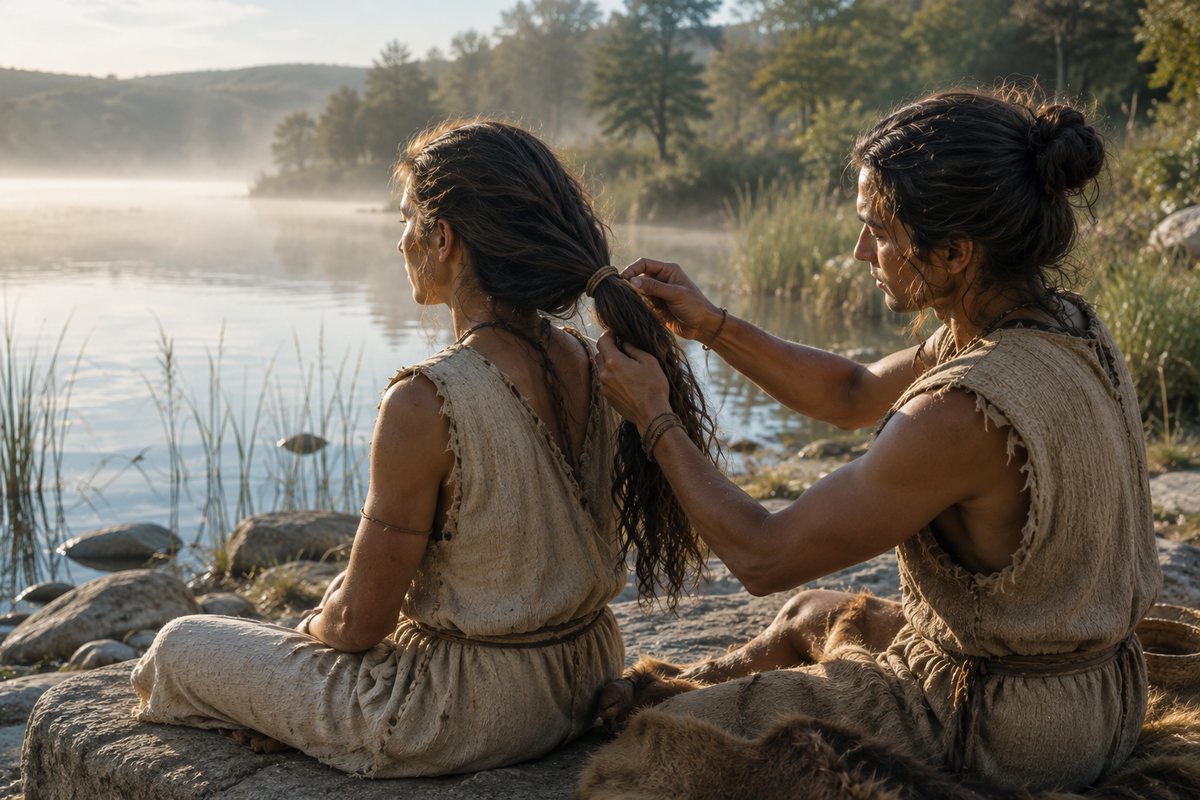
Hair management does not always happen alone.
Some tasks are easier when another person performs them.
Complex arrangements, work on the back of the head and certain forms of cutting or braiding can involve cooperation.
This introduces another dimension to prehistoric grooming.
If people helped one another manage their hair, grooming could also become a social interaction.
We must not turn this possibility into an unsupported prehistoric salon.
There is no evidence that every community had designated hair specialists, nor can interpersonal grooming by itself prove the existence of professional hairdressers.
But cooperation matters.
Knowledge about hair can be learned, shared and transmitted.
A technique for dividing, binding or arranging hair can pass between people and generations. Repeated practices can become traditions even without written instructions.
This offers a plausible pathway from individual grooming toward culturally shared ways of managing appearance.
The profession of hairdressing belongs later in our history.
The social transmission of grooming knowledge may be far older.
The Beginning of a Visual Language
By this point in our journey through prehistoric hair care, several developments have begun to connect.
Humans possessed tools capable of cutting hair.
They developed combs and other grooming technologies.
Hair could be shortened, removed and arranged.
Prehistoric representations show variation around the head and hair.
Exceptional archaeological preservation demonstrates that elaborate arrangements such as braiding were physically practised in later prehistory.
Together, these strands suggest something larger.
Hair was becoming part of the visual human body that could be intentionally managed.
That does not mean there was one universal prehistoric language of hairstyles.
There were countless communities across different environments and thousands of years. Their practices and meanings could have been radically different.
There was no single “prehistoric hairstyle.”
There was no single prehistoric meaning of long hair, short hair, braids or shaving.
Instead, there was a fundamental human capacity to use hair as a changeable component of appearance.
From that capacity, countless later traditions could develop.
Hair Before Written Identity
Written history eventually gives us names, laws, descriptions, social titles and explicit accounts of appearance.
Prehistory gives us none of these directly.
Yet the absence of writing does not mean the absence of identity.
People still recognised themselves and others. They belonged to families and communities. They experienced age, relationships and social differences. They decorated bodies, wore objects and altered appearance.
Hair belonged within this visible world.
The evidence does not allow us to translate every prehistoric hairstyle.
But it does allow us to reject the idea that hair was merely an unmanaged biological feature waiting for civilization to discover it.
Long before written fashion, salons or professional hairdressers, humans had already begun manipulating one of the body’s most visible characteristics.
That is the deeper importance of prehistoric hair identity.
The history of hairdressing begins not when someone first opened a salon, and not even when someone first invented a specialised tool.
Its foundations were established when humans discovered that hair could be changed – and that changing hair could change human appearance.

Next in the History of Hairdressing: The Ancient Origins of Braiding
Once hair could be deliberately altered, it could also be arranged into increasingly complex forms.
Among the oldest and most enduring of those possibilities is the interlacing of strands into braids.
But determining when humans first braided hair presents another archaeological challenge: the hairstyle itself rarely survives, while prehistoric art and rare preserved remains provide only fragments of the story.
More from History for Hairdressers
 Chapter 1Before the Hairdresser: The Prehistoric Origins of Hair CarePrehistory & OriginsLong before salons, scissors and professional hairdressers, humans were already managing and transforming th...Read chapter →
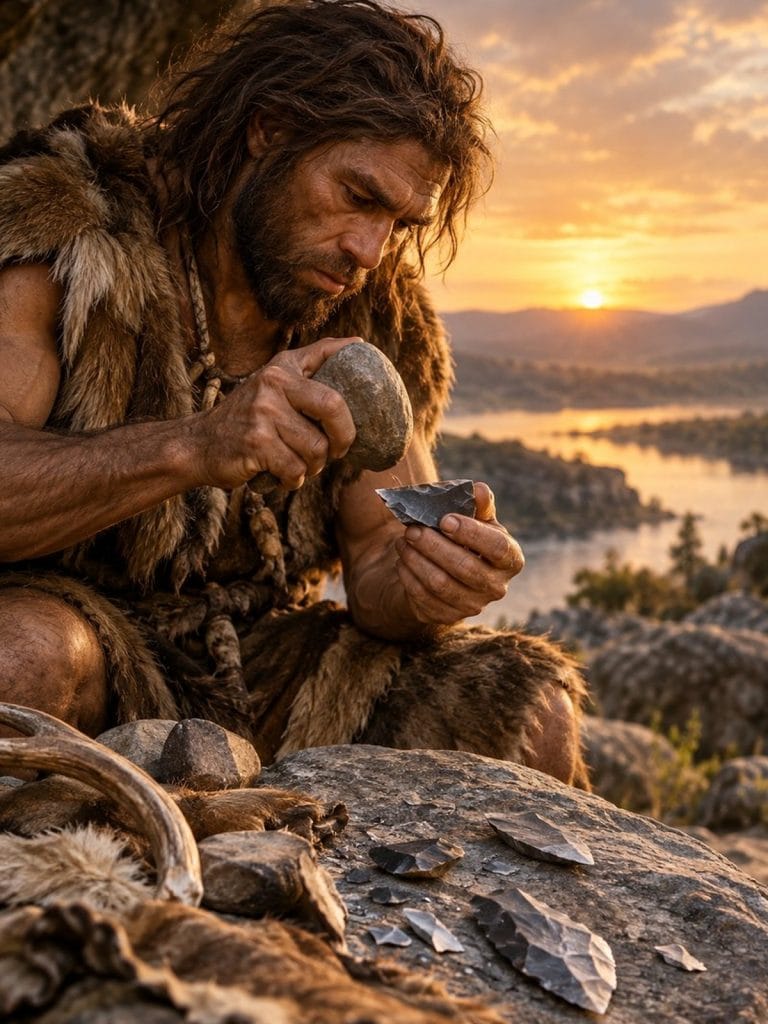 Chapter 2The First Haircut: How Prehistoric Humans Cut Their HairPrehistory & OriginsThousands of years before scissors and metal razors, humans already possessed edges sharp enough to cut hair...Read chapter →
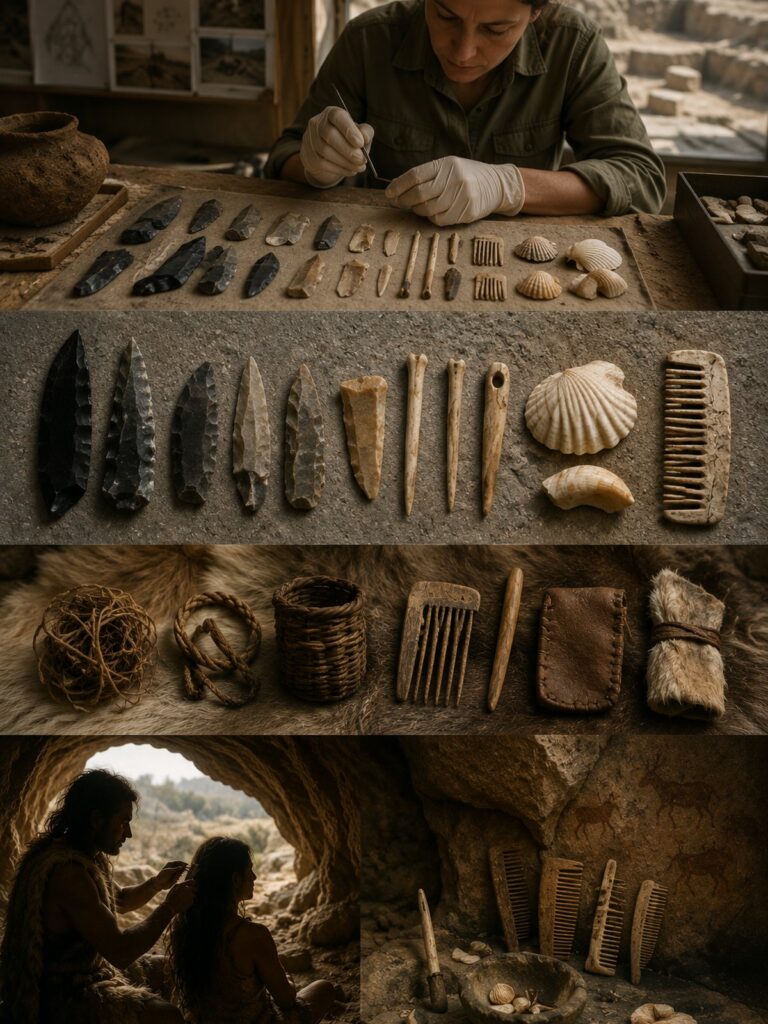 Chapter 3The First Hair Tools: Stone, Flint, Shell and BonePrehistory & OriginsDiscover the earliest materials prehistoric humans could use for hair care, from sharp flint and stone to sh...Read chapter →
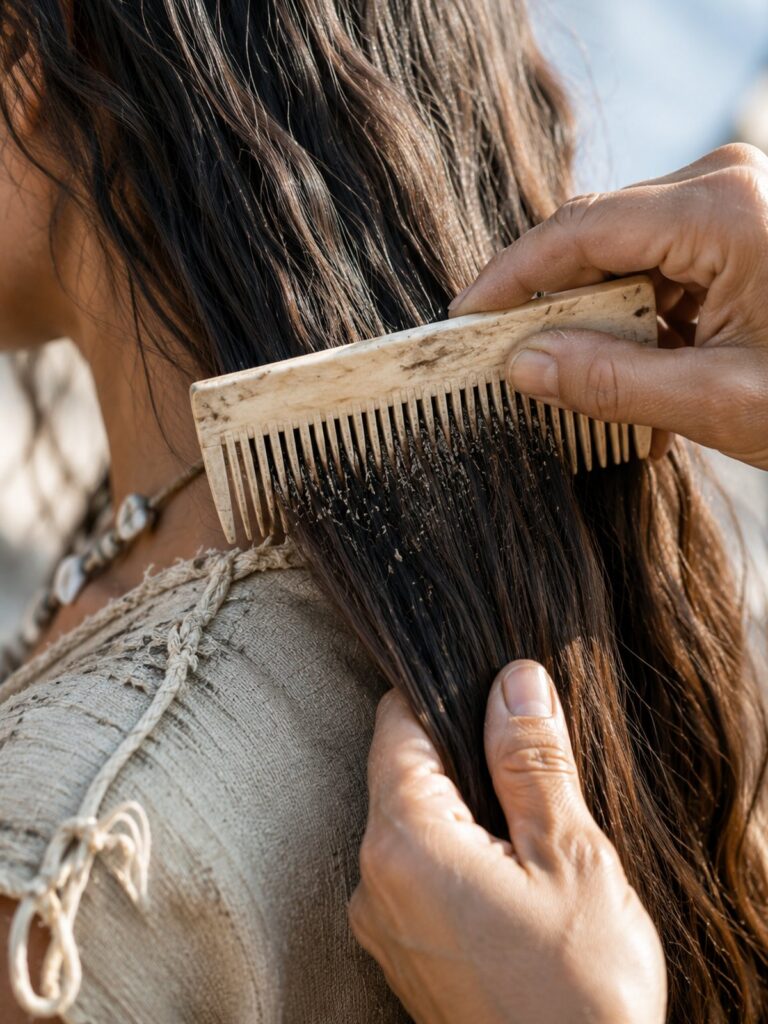 Chapter 4The Origins of Combs: Humanity’s First Hair-Care ToolPrehistory & OriginsDiscover the origins of combs, from prehistoric toothed tools to ancient bone and ivory combs that reveal th...Read chapter →
 Chapter 5The Origins of Shaving: Before the Metal RazorPrehistory & OriginsExplore the origins of shaving and how sharp stone and flint may have allowed prehistoric humans to remove h...Read chapter →