Hair, Ritual and Spiritual Meaning Before Written History
History of Hairdressing · Prehistory & Origins · Chapter 8
Hair can be cut, removed, grown again and separated from the human body.
That simple biological fact gives hair an unusual position in human life.
A stone ornament remains an object. A piece of clothing can be removed and exchanged. Hair is different. It grows from the body, forms part of a person’s appearance and can then be deliberately cut away while the person continues to live.
For prehistoric communities, this may have created possibilities that extended far beyond practical grooming.
Archaeology provides evidence that hair was sometimes treated in unusual ways. It could be carefully arranged on the body, deliberately removed, separated from a person, preserved under exceptional conditions or deposited alongside human remains.
Such discoveries immediately raise questions.
Was the cutting of hair simply grooming?
Could removing hair mark a change in a person’s life?
Why would cut hair sometimes be placed with the dead?
Could a hairstyle have been prepared for a ceremony?
Did people believe that separated hair retained some connection with the person from whom it came?
These are fascinating questions.
They are also dangerous questions if possibility is mistaken for fact.
Prehistoric people left no written explanations of their beliefs. An unusual haircut does not automatically prove ritual activity. A lock of hair in a burial does not tell us exactly what mourners believed. A body placed in a wetland cannot automatically be described as a sacrifice.
The archaeology of prehistoric hair rituals therefore requires an unusual balance.
We must recognise evidence of deliberate and sometimes exceptional treatment of hair while accepting that the ideas behind those actions may remain unknown.
This is where the history of hairdressing begins to intersect with something larger.
Hair was not only something humans could cut, comb, remove or braid.
Under certain circumstances, changing hair may also have changed how a person was presented, remembered or understood.
Why Hair Could Become More Than Appearance
Hair occupies an unusual boundary between the body and the outside world.
It belongs to a person, but it can be removed without destroying the body.
It changes naturally over time, but people can control that change.
Hair can grow long and then disappear within minutes through cutting or shaving. It can be divided, tied, braided and rearranged. After removal, a lock of hair can remain physically recognisable even though it is no longer attached to the person.
These characteristics make hair especially interesting when studying human identity.
A hairstyle can alter appearance.
Removing hair can alter it again.
Regrowth can make that transformation temporary.
This creates possibilities that many other parts of the body do not offer.
A person could look different during a particular period and later return to another appearance.
In historical and modern societies, such changes have been connected with countless social practices.
But those later examples cannot simply be projected backwards into prehistory.
The archaeological question is narrower.
Did prehistoric communities sometimes treat hair in ways that suggest it mattered beyond ordinary maintenance?
For some later prehistoric contexts, the answer appears to be yes.
The more difficult question is what that special treatment actually meant.
The Problem of Finding Spiritual Meaning in Prehistory
Archaeologists can excavate actions more easily than beliefs.
A cut lock of hair is physical evidence.
A belief about that lock of hair is not.
This distinction is fundamental.
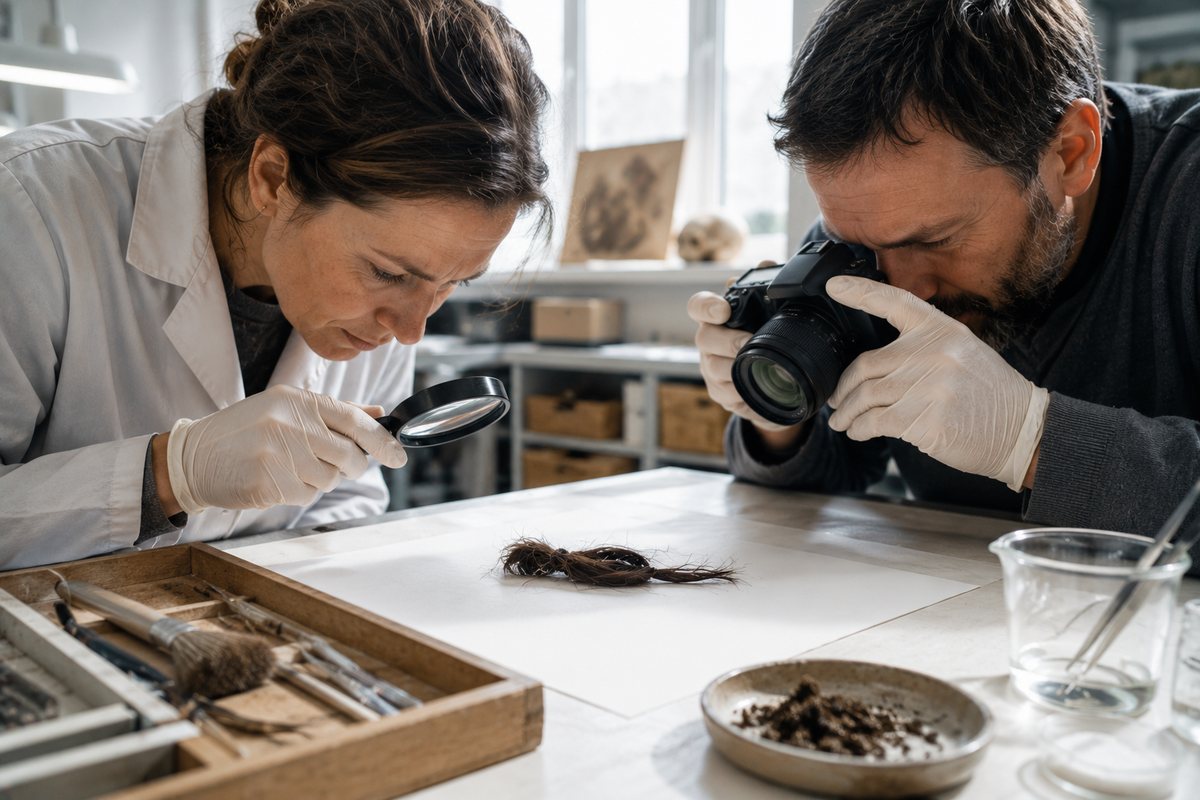
If hair is found separately from a body, researchers can investigate where it was placed, what objects surrounded it, whether it was deliberately arranged and how the wider archaeological context was formed.
Those observations can demonstrate unusual treatment.
They cannot automatically reveal the thoughts of the people involved.
Words such as ritual, sacred, spiritual and magical therefore require caution.
Ritual does not simply mean strange.
An object does not become sacred because archaeologists cannot explain it.
A prehistoric person with an unusual hairstyle does not automatically become a priest, shaman or ritual specialist.
The same warning applies to human remains found in wetlands.
Bog bodies have often been interpreted through stories of sacrifice, punishment and supernatural belief. Some cases may indeed involve ritualised violence or deliberate deposition. Others may have very different explanations.
Context matters.
The strongest historical reconstruction begins with what happened physically and only then considers what the action may have meant.
With prehistoric hair, that means starting with cutting, shaving, arranging, separating and depositing.
Spiritual meaning comes later, and sometimes it cannot be recovered at all.
When Hair Becomes a Separate Object
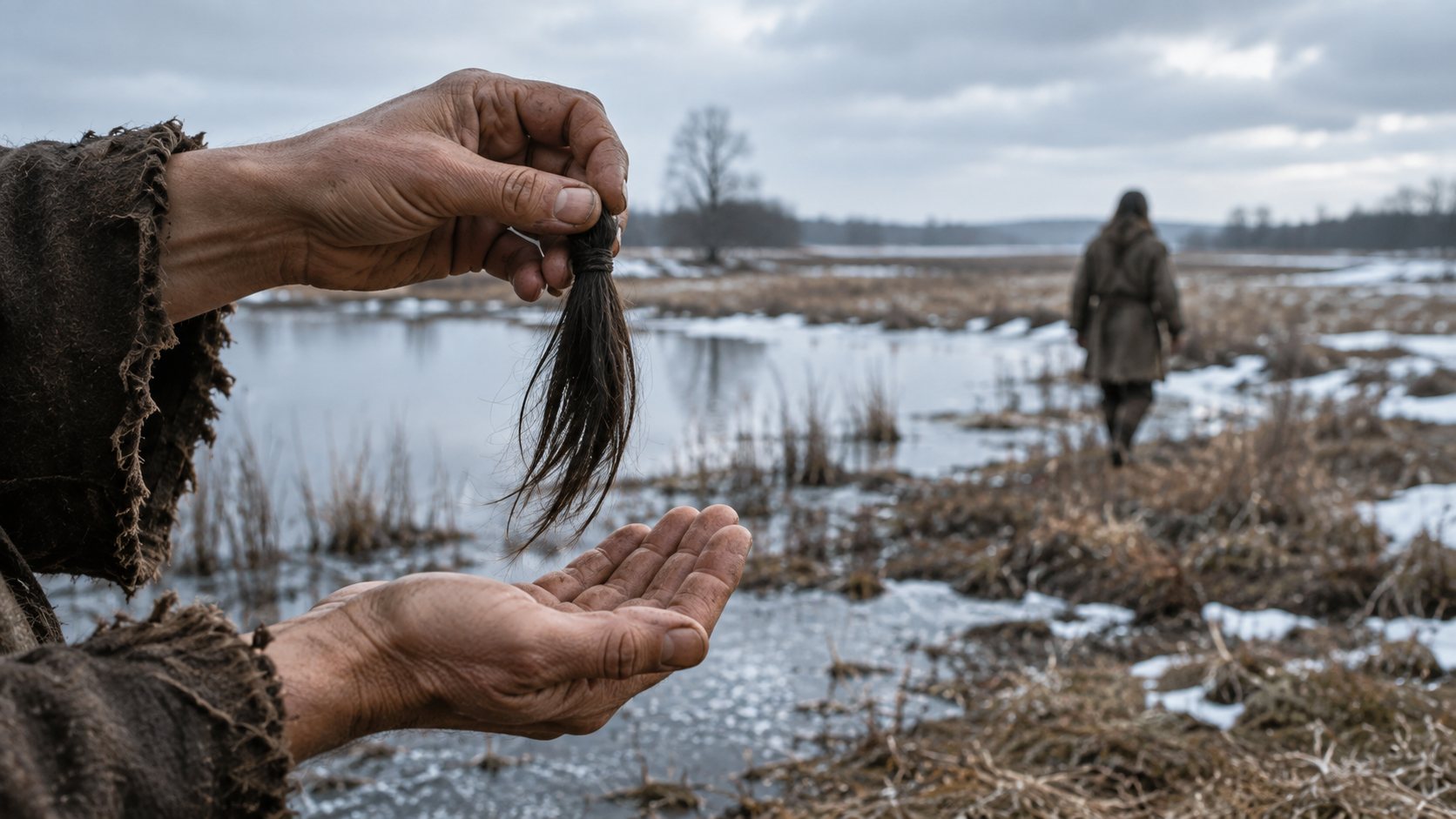
A major transformation occurs when hair is removed from the body but is not simply discarded.
At that moment, hair can become an object in its own right.
This is archaeologically important.
Loose hair could disappear easily. If deliberately collected, tied, placed or deposited, however, it may enter a context that suggests intentional treatment.
Later prehistoric archaeology contains examples in which human hair appears separately from the body.
Such finds force us to think differently about grooming.
The act of cutting may have been only the beginning of the process.
What happened to the removed hair could also matter.
Was it kept?
Was it given to another person?
Was it deposited with the dead?
Was it placed in a wetland?
Was it discarded in a location that later appears significant?
The archaeological record cannot answer all these questions in every case.
But deliberate placement is different from accidental loss.
Once separated hair is treated as material worthy of placement, preservation or association with other objects, it enters a wider world of human action.
That does not automatically make it sacred.
It does demonstrate that hair could continue to matter after leaving the body.
Cut Hair in the Archaeological Record
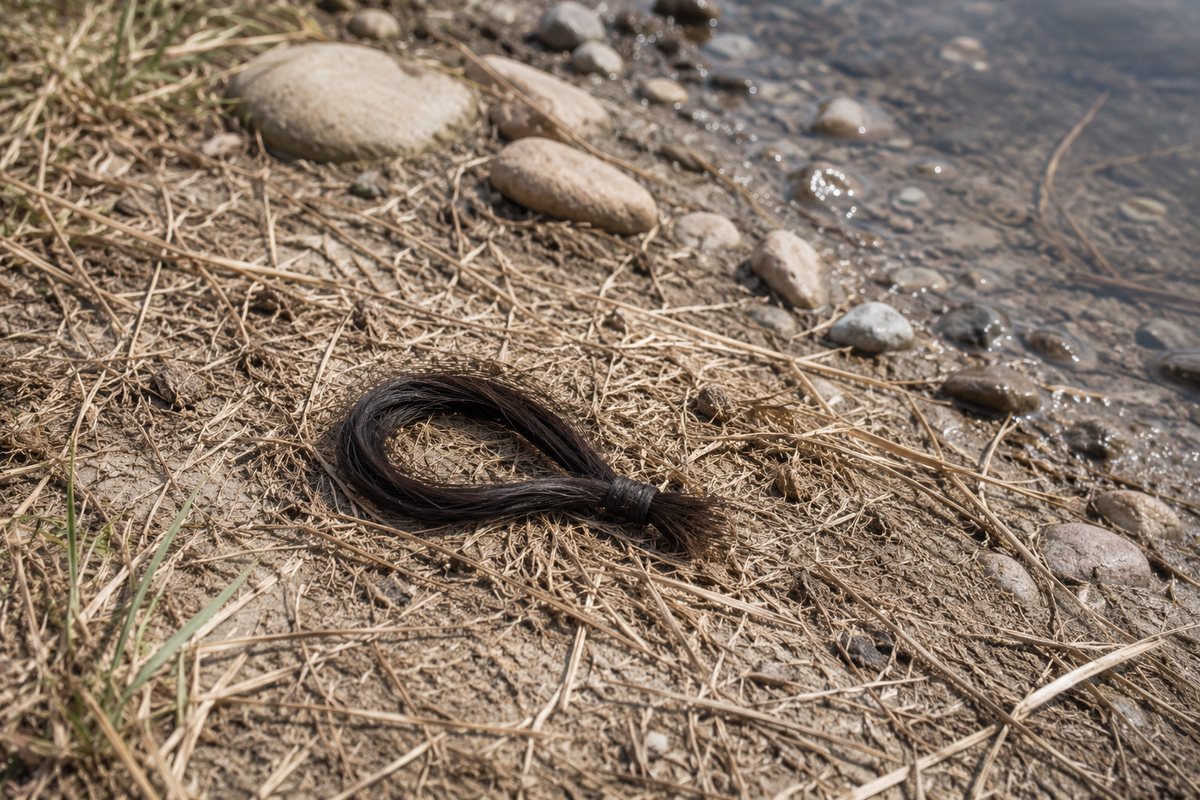
Exceptional preservation gives us rare opportunities to see what normally disappears.
Northern European peat bogs have preserved human skin, nails and hair under conditions that slow ordinary decomposition.
Some bog bodies retain hairstyles.
Others provide evidence that hair was cut.
One particularly important example is Huldremose Woman from Denmark.
Her hair had been cut and was found placed alongside her body.
This is striking because the removed hair remained associated with the person after death.
The physical relationship can be observed.
The reason for it cannot.
The cutting may have occurred before death, around the time of death or as part of the treatment of the body.
Its placement may have carried symbolic meaning.
But archaeology does not provide a surviving explanation.
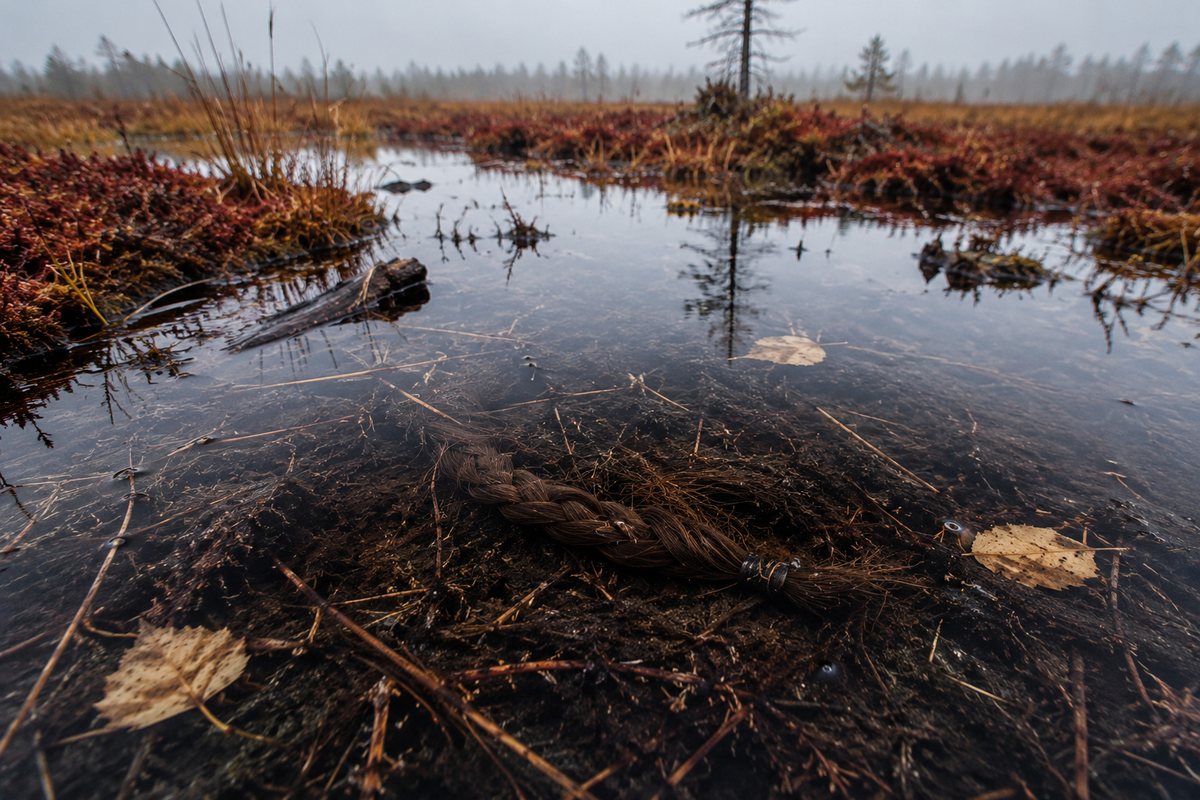
Other discoveries of separated hair and cut plaits from wetland contexts demonstrate that Huldremose Woman is not the only case in which hair appears as more than an attached biological feature.
These discoveries give us evidence for action.
Hair was cut.
Hair was separated.
Hair was placed.
Those facts are stronger than any single interpretation of why it happened.
Hair, Death and Prehistoric Burial
Death transforms the meaning of the human body.
The person no longer participates in grooming, but the living may continue to arrange, dress, move and prepare the body.
Hair can become part of that process.
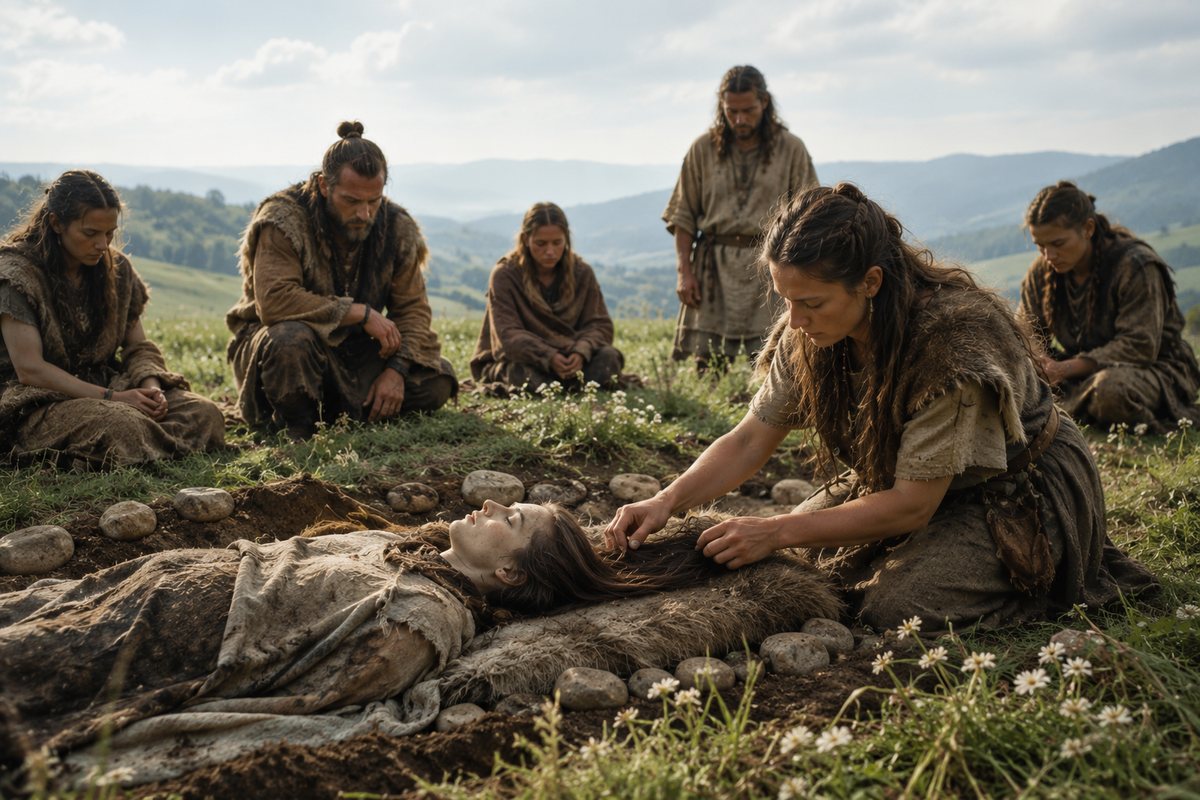
Later prehistoric burial evidence occasionally suggests that hair or hair-related actions formed part of how the dead were treated.
This may involve the hair of the deceased.
It may also involve hair belonging to the living.
A lock cut from a mourner could theoretically represent separation, memory, transformation or participation in funerary practice.
A lock placed with the dead could have connected two people.
It could have marked farewell.
It could have served another purpose that is no longer recoverable.
These interpretations are possibilities, not universal explanations.
The archaeological strength comes from context.
Hair deliberately associated with a burial deserves different consideration from hair accidentally lost in a settlement.
Its position matters.
Its relationship with the body matters.
Other objects in the deposit matter.
The treatment of the burial as a whole matters.
Only by combining these details can archaeologists begin to ask whether hair participated in funerary behaviour.
Even then, the emotional and spiritual meaning may remain beyond reach.
Could Hair Have Been an Offering?
Cut hair discovered in unusual contexts creates an obvious possibility.
Could the hair itself have been offered?
Later prehistoric wetland archaeology contains examples of deliberately deposited objects, animals and human remains.
In such landscapes, separated hair may have participated in practices of deposition.
Some cut plaits recovered from wetland contexts have been discussed as possible deliberate deposits or offerings.
This interpretation is plausible in particular contexts.
It is not automatically proven by the presence of hair in a wetland.
Hair could enter a bog for many reasons.
The person might have died there.
Hair could have been cut from a body.
A lock could have been deliberately deposited.
Material could have been moved or disturbed.
Different events can produce superficially similar archaeological results.
For this reason, the word offering must be used carefully.
The evidence may demonstrate deliberate deposition more securely than it demonstrates the intended recipient of that deposition.
We cannot automatically say that hair was given to a god, spirit or supernatural force.
What we can say is that prehistoric people sometimes placed human material in contexts that appear deliberate and exceptional.
Hair may have been part of that practice.
The spiritual interpretation remains a question rather than a certainty.
Hair Cutting and Moments of Transition
Hair has one property that makes it particularly suitable for visible transformation.
It grows back.
A permanent body modification remains.
A haircut changes again with time.
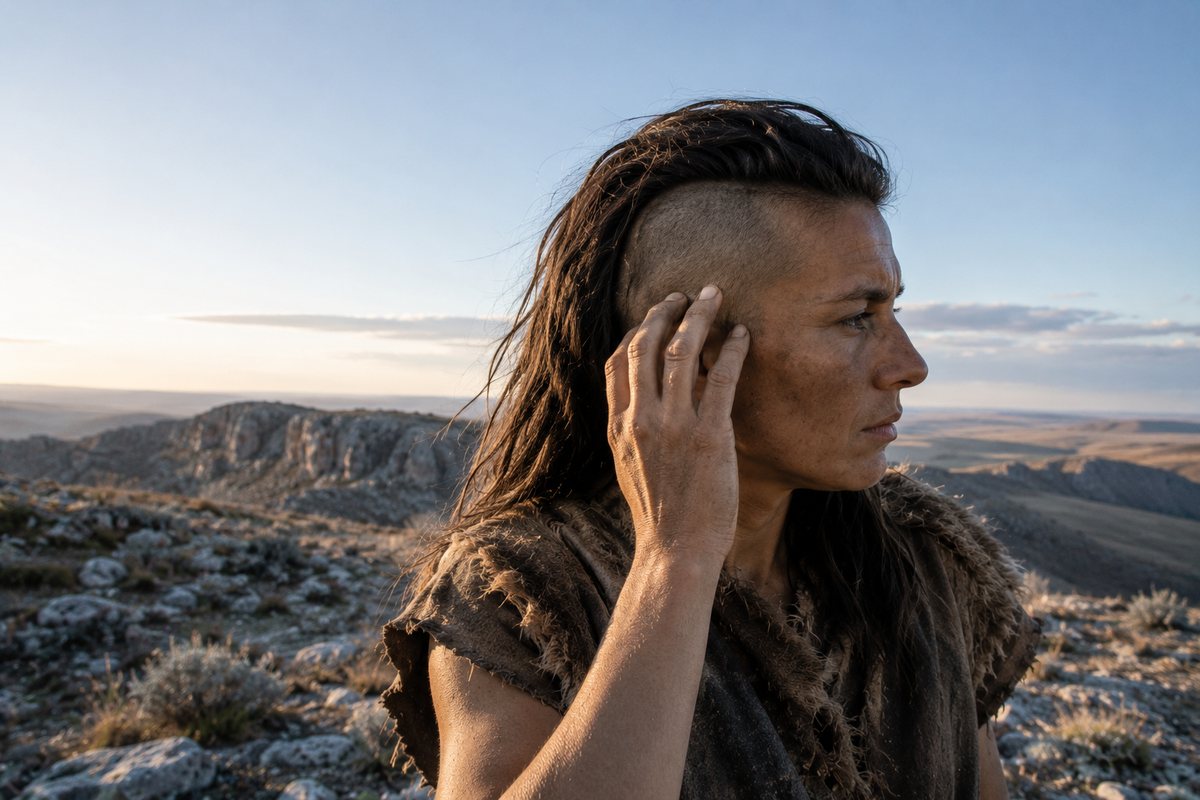
This means that cutting or shaving can create a temporary appearance associated with a particular period.
Could prehistoric communities have used this characteristic during important transitions?
Possibly.
A person entering a new stage of life might change their hair.
A mourner might cut it.
Someone undergoing a ceremony might be shaved or styled differently.
A person returning to ordinary life might allow the hair to regrow.
These possibilities are familiar from many documented societies.
But analogy is not proof of prehistoric practice.
Without supporting archaeological evidence, we cannot assign a specific haircut to initiation, marriage, adulthood, mourning or religious status.
What archaeology can sometimes identify is deliberate change.
If hair has clearly been cut, shaved or arranged in an unusual way, that alteration forms part of the person’s presentation.
If the change occurs in a special depositional or funerary context, a connection with transition becomes worth considering.
The important distinction remains the same.
Transformation can be observed.
Its exact social meaning may not be.
Changing Appearance, Changing Identity
Hair does not need to be spiritual to be meaningful.
Changing appearance can alter how a person is recognised by others.
Long hair and short hair create different silhouettes.
Shaving exposes parts of the head that were previously covered.
Braiding changes loose hair into an organised structure.
Cutting can remove a hairstyle completely.
These transformations make hair part of the visible construction of identity.
In some prehistoric communities, appearance may have communicated belonging, difference, age, status or social role.
Under particular circumstances, changing the hair may therefore have participated in changing the person’s public identity.
But again, archaeology rarely provides a translation.
We cannot look at a shaved prehistoric head and confidently identify punishment.
We cannot look at long hair and identify high status.
We cannot look at a braid and identify marriage.
The same physical hairstyle could have different meanings in different communities.
This is why hair is so powerful as archaeological evidence and so dangerous as a source of speculation.
It shows us deliberate difference.
It does not always explain that difference.
Hair, Mourning and the Dead
Among the most compelling possibilities is the relationship between hair and mourning.
Hair can physically connect memory with the body.
A lock can survive after separation.
It can be held, transported or deposited.
Later historical societies provide many examples of hair being preserved as a remembrance of another person.
For prehistory, however, we must return to archaeological context rather than assume the same customs existed.
Some later prehistoric deposits have been interpreted as involving hair removed in connection with death or mourning.
One possibility is that mourners cut their own hair and placed it with the deceased.
Another is that hair belonging to the deceased was separated and deposited during treatment of the body.
Both actions could produce meaningful relationships between hair, death and memory.
Yet the surviving material rarely identifies whose hair was cut or what emotion the act expressed.
Mourning is therefore sometimes a plausible interpretation.
It is not an automatic explanation.
The deeper significance lies in the fact that hair could participate in the physical actions surrounding death.
Grooming, cutting and deposition could become part of how the living responded to the dead.
Bog Bodies and the Problem of Ritual Interpretation
Bog bodies are among the most extraordinary human remains from European prehistory.
Their preservation can be so remarkable that skin, facial features and hair survive.
This intimacy has encouraged powerful stories about the individuals.
Some were violently killed.
Some were placed deliberately in wetlands.
Some show unusual treatment of the body or hair.
For generations, these discoveries have been associated with sacrifice, execution, punishment and ritual death.
Modern archaeology is more cautious.
A large study of human remains from northern European wetlands shows that people entered these environments under different circumstances across thousands of years.
Some deaths may have involved ritualised killing or sacrifice.
Others may represent unusual burial practices, criminal acts or accidents.
These explanations can overlap.
There is no single explanation for every bog body.
Hair must be interpreted with the same caution.
A cut braid may be significant.
A shaved scalp may be significant.
Carefully arranged hair may be significant.
But none of these features alone proves sacrifice.
The complete archaeological context must come first.
When Archaeologists Can Go Too Far
Few examples demonstrate the danger of attractive interpretation better than Windeby I.
The bog body was once widely interpreted as female.
The apparently shaved hair contributed to stories of punishment and humiliation, including comparisons with historical accounts of women punished for sexual behaviour.
Later research challenged this picture.
Windeby I was reidentified as male.
Researchers also questioned whether the apparent shaving was entirely ancient. Treatment during excavation or conservation may have contributed to the appearance of the hair.
The story changed because the evidence changed.
This example is extremely important for the history of hairdressing.
Hair invites interpretation because hairstyle is visually powerful.
Modern observers immediately notice whether hair is long, short, shaved, braided or arranged.
We then search for meaning.
But meaning can be imposed too quickly.
A dramatic hairstyle does not justify a dramatic story.
This applies especially to prehistoric spirituality.
Terms such as priest, shaman, sacrifice, punishment and sacred hairstyle should never be used simply because an archaeological discovery looks unusual.
Evidence must lead interpretation.
Interpretation must not manufacture evidence.
From Grooming to Symbolic Action
The earliest history of hair care began with practical possibilities.
Hair could be cut.
It could be removed.
It could be divided and braided.
But once humans could deliberately change hair, those actions could enter other areas of social life.
A haircut could change appearance.
A braid could create a recognisable form.
Shaving could temporarily transform the head.
A removed lock could become a separate object.
Hair could potentially accompany the dead or be deposited elsewhere.
At that point, grooming and symbolic behaviour no longer need to be opposites.
The same physical action can be practical in one situation and socially significant in another.
Cutting hair does not inherently constitute ritual.
Braiding is not inherently spiritual.
Shaving is not inherently punishment.
Context creates meaning.
This is perhaps the most important lesson prehistoric archaeology can offer the history of hairdressing.
Technique gives humans the ability to transform hair.
Culture gives those transformations meaning.

What Prehistoric Hair Rituals Can Actually Tell Us
We will probably never reconstruct the complete spiritual world surrounding prehistoric hair.
The evidence is too fragmentary.
Hair rarely survives.
Beliefs leave even fewer physical traces.
Written explanations do not exist.
Yet the surviving archaeology still reveals something important.
Hair was sometimes treated in ways that went beyond simply allowing it to grow.
It was cut, shaved, arranged and braided.
Under exceptional circumstances, removed hair was preserved.
In some archaeological contexts, hair appears to have been deliberately placed alongside human remains or deposited separately.
These actions show that hair could participate in relationships between the body, appearance, identity and death.
They also demonstrate the limits of what we can know.
We may recognise deliberate treatment without understanding its purpose.
We may identify deposition without knowing whether it was an offering.
We may see transformation without knowing whether it marked mourning, transition, punishment, status or something entirely different.
Prehistoric hair rituals therefore should not be reconstructed as a single ancient belief system.
There was no universal prehistoric meaning of hair.
Different communities across enormous distances and thousands of years could have understood it in very different ways.
What connects them is a more fundamental human discovery.
Hair could be changed.
Hair could be removed.
Hair could remain after separation from the body.
And under certain circumstances, what people did with hair may have mattered as much as the hairstyle itself.
Next in the History of Hairdressing: Decorating the Hair, The First Hair Ornaments
Once hair had become something humans could deliberately cut, arrange, braid and sometimes treat as a meaningful part of the person, another possibility developed.
Hair could also carry objects.
Shells, beads, pins, fibres, bone and other materials could transform the head through decoration while also helping control the hairstyle itself.
Archaeology preserves these objects far more readily than it preserves hair.
They provide the next important clues in our journey through prehistoric hairstyling.
More from History for Hairdressers
 Chapter 1Before the Hairdresser: The Prehistoric Origins of Hair CarePrehistory & OriginsLong before salons, scissors and professional hairdressers, humans were already managing and transforming th...Read chapter →
 Chapter 2The First Haircut: How Prehistoric Humans Cut Their HairPrehistory & OriginsThousands of years before scissors and metal razors, humans already possessed edges sharp enough to cut hair...Read chapter →
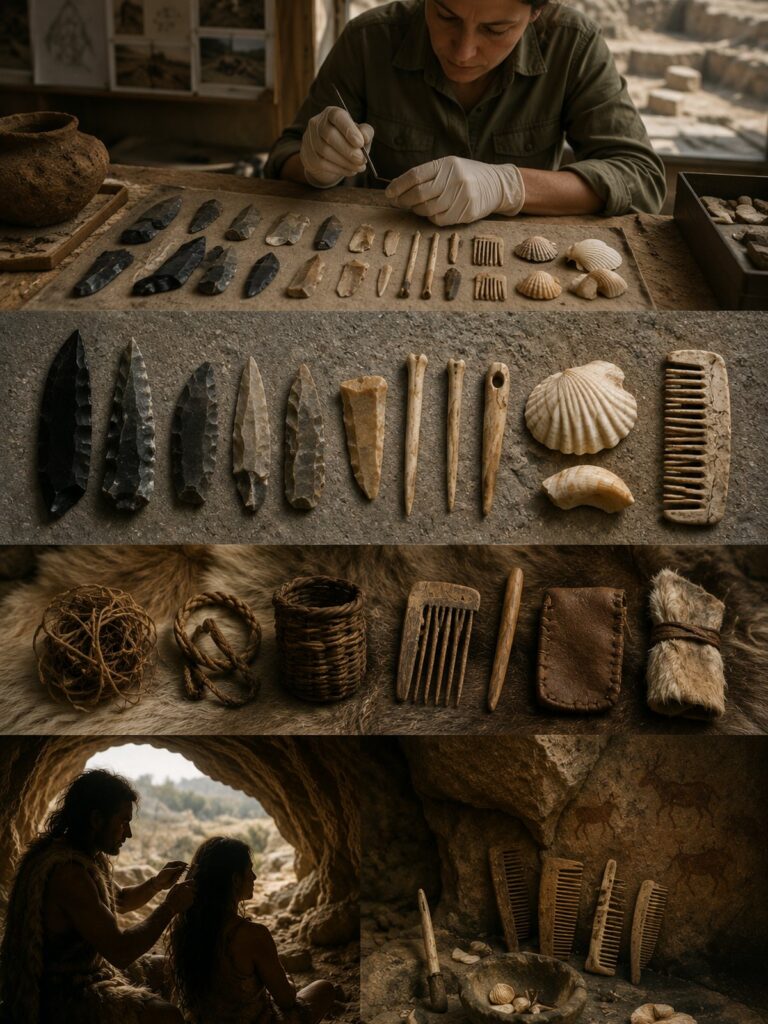 Chapter 3The First Hair Tools: Stone, Flint, Shell and BonePrehistory & OriginsDiscover the earliest materials prehistoric humans could use for hair care, from sharp flint and stone to sh...Read chapter →
 Chapter 4The Origins of Combs: Humanity’s First Hair-Care ToolPrehistory & OriginsDiscover the origins of combs, from prehistoric toothed tools to ancient bone and ivory combs that reveal th...Read chapter →
 Chapter 5The Origins of Shaving: Before the Metal RazorPrehistory & OriginsExplore the origins of shaving and how sharp stone and flint may have allowed prehistoric humans to remove h...Read chapter →
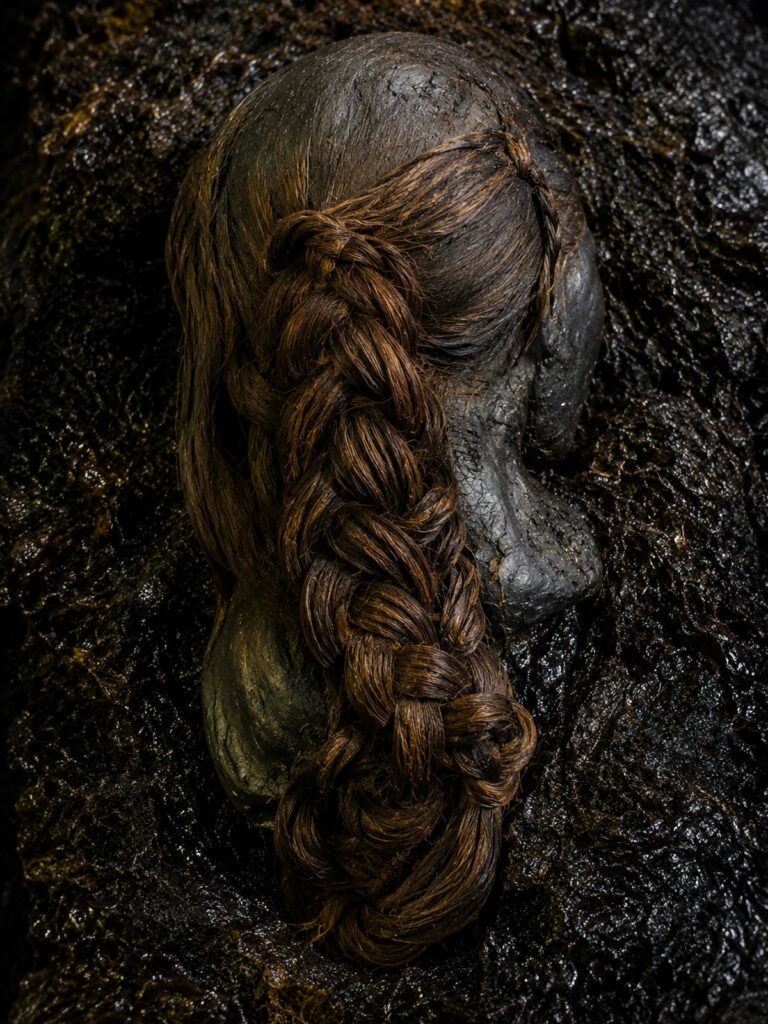 Chapter 6Hair and Human Identity in Prehistoric SocietyPrehistory & OriginsExplore prehistoric hair identity and how hairstyles, grooming and hair representation may have expressed in...Read chapter →
 Chapter 7The Ancient Origins of BraidingPrehistory & OriginsExplore the origins of braiding, from possible Paleolithic representations of complex hairstyles to preserve...Read chapter →