From Grooming to Beauty: When Hair Became More Than a Necessity
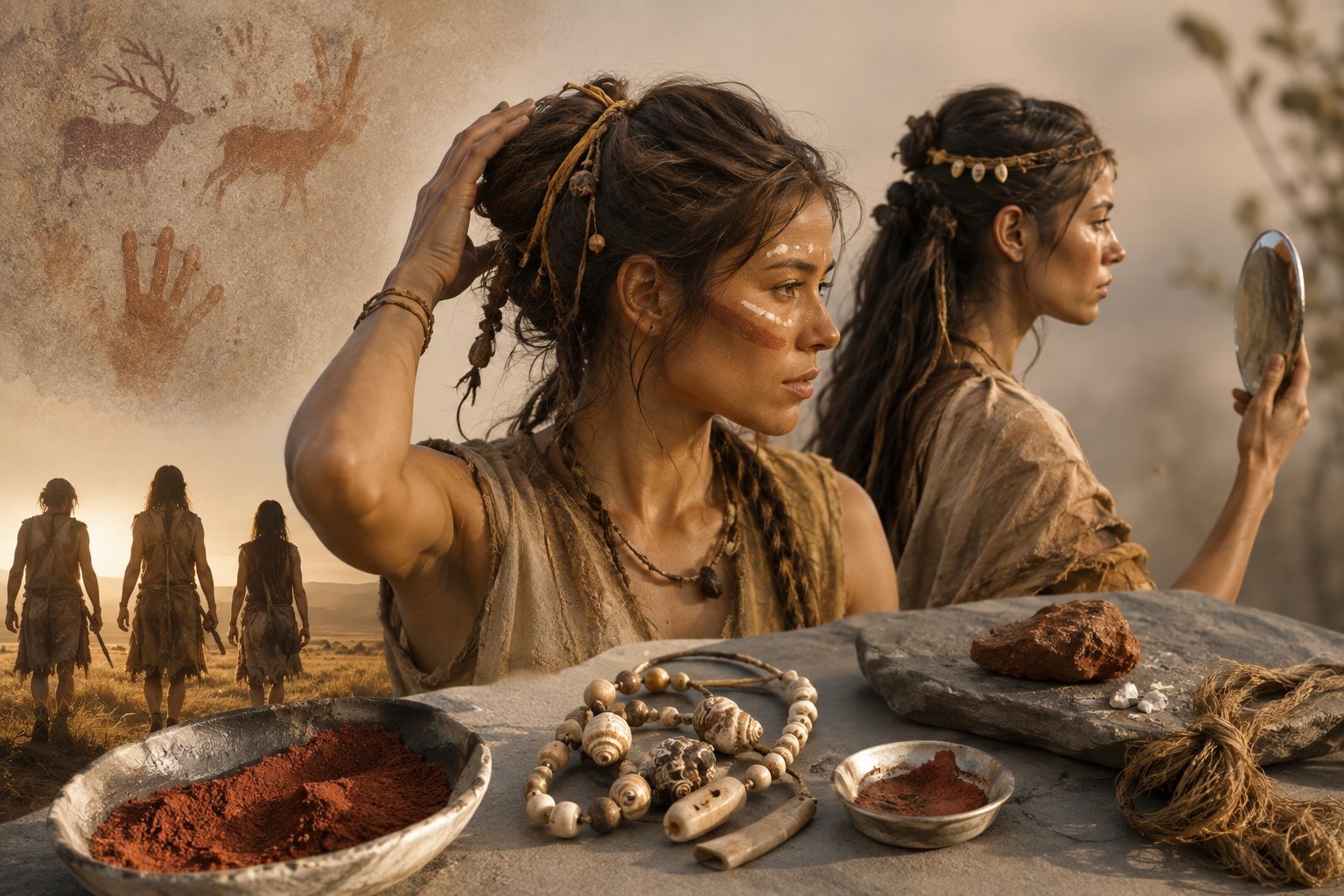
History of Hairdressing · Prehistory & Origins · Chapter 11
For the earliest humans, hair was first a practical reality.
It grew. It became wet. It collected dirt. Long hair could fall across the face, interfere with movement and become difficult to manage. In cold environments it could provide some protection, while in other circumstances controlling it may have made everyday activity easier.
At this level, grooming needs no concept of beauty.
Cutting, pulling back, separating or cleaning hair can all be explained by comfort and practicality.
But at some point in prehistory, appearance became more complicated.
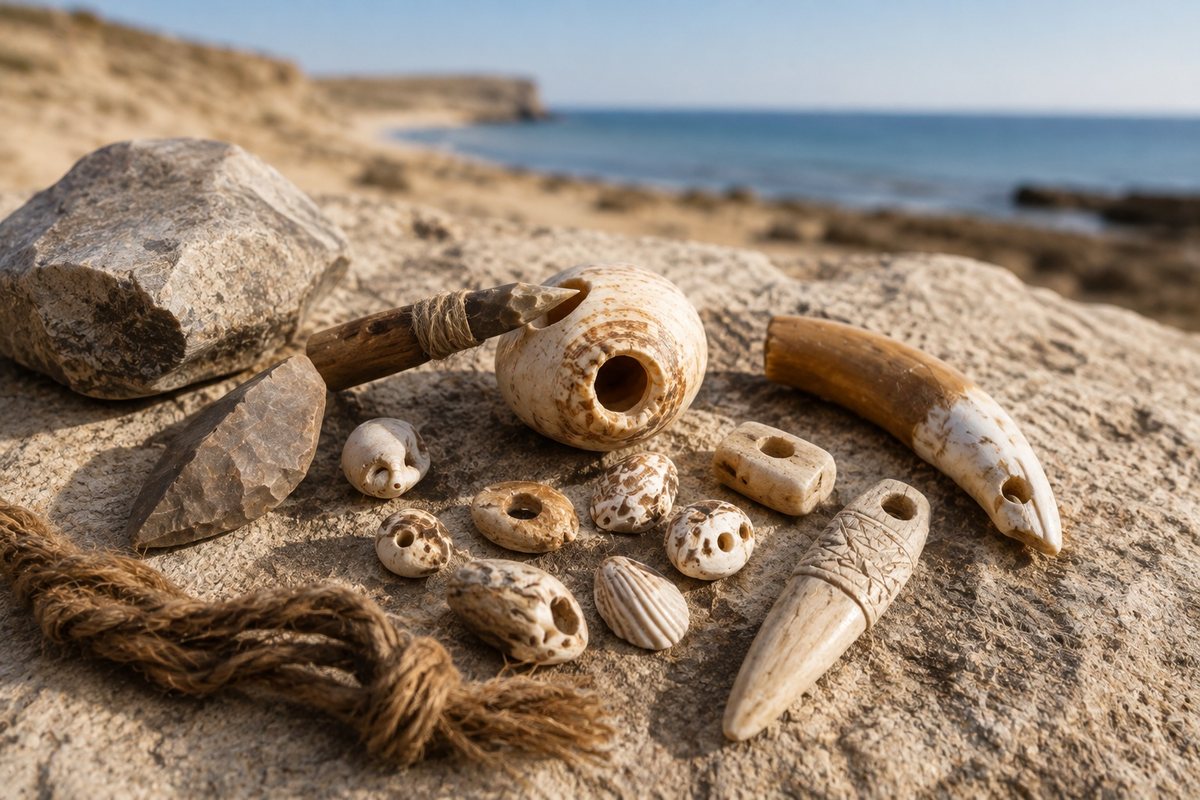
Archaeology begins to reveal people who collected unusual shells, perforated teeth, shaped bone and ivory, transported pigments, manufactured beads and deliberately placed decorative objects on the body. Some ornaments travelled considerable distances from their natural sources. Others required time, technical knowledge and repeated labour to manufacture.
These behaviours cannot always be explained by practical necessity.
The human body had become a surface that could be deliberately changed.
Hair was part of that surface.
This does not mean that prehistoric people suddenly invented beauty in the modern sense. We cannot recover their aesthetic vocabulary, their personal preferences or the meanings they attached to a particular appearance.
What archaeology can show is something more fundamental.
Humans were no longer concerned only with maintaining the body.
They were constructing how the body looked.
That transition created the cultural environment in which prehistoric hair beauty could begin.
Grooming Came Before Beauty
Basic grooming is much older than anything we would confidently call fashion or beauty culture.
Primates groom themselves and one another. Human ancestors inherited a biological world in which touching, cleaning and inspecting the body already had practical and social functions.
Humans, however, eventually added technology.
Sharp stone edges provided the ability to cut. Scrapers and blades could process materials with remarkable precision. Plant fibres, sinew and leather could bind or secure things. Bone and wood could be shaped into implements.
Hair could therefore be shortened, gathered, separated, twisted and controlled long before specialized hairdressing tools existed.
Most of these actions may initially have had practical benefits.
Keeping hair away from the eyes improves visibility. Gathering long hair can make physical work easier. Cutting tangled or damaged sections may improve comfort. Removing or shortening body hair may also have been useful in particular circumstances.
Yet practicality does not explain everything humans eventually did to their appearance.
The archaeological record gradually introduces objects whose principal value seems to have involved display, symbolism or communication.
That changes the story.
When Practicality Stops Explaining the Evidence
Imagine a simple fibre cord holding long hair away from the face.
Its function is easy to understand.
Now imagine someone collecting a visually distinctive shell, carrying it far from the coast, perforating it carefully and wearing it on the body.
The practical explanation becomes much weaker.
Personal ornaments are among the most important archaeological indicators that human appearance had acquired meanings beyond physical necessity.
Shell beads appear very early in the archaeological record. Evidence from North Africa demonstrates that humans were using perforated or naturally pierced shells as personal ornaments more than 100,000 years ago.
Later prehistoric societies expanded the range dramatically.
Shell, animal teeth, bone, ivory, stone and other materials were transformed into beads and pendants. Objects could be suspended, attached to clothing or arranged around different parts of the body.
Producing them consumed time and energy.
Their survival tells us that appearance mattered enough for people to invest resources in changing it.
Hair existed within this increasingly decorated human body.
The Body Became a Surface for Communication
A decorated body does more than look different.
It can communicate.
In societies without written documents, visual appearance can carry information immediately. Clothing, ornaments, pigments and hairstyles can potentially distinguish individuals or groups before a word is spoken.
Archaeologists are understandably cautious about assigning specific meanings to prehistoric objects.
A particular bead cannot automatically be labelled as a symbol of marriage, adulthood, rank or profession.
Those interpretations usually cannot be demonstrated.
But patterns in personal ornamentation show that prehistoric communities repeatedly selected particular materials and forms. Different regions developed recognizable ornament traditions, and some objects moved through networks extending across considerable distances.
Appearance was therefore not necessarily random.
It could participate in shared cultural systems.
This is one of the most important developments in the long history of beauty.
The body had become not merely something people lived inside, but something they could deliberately present to other people.
Hair offered one of its most visible and changeable surfaces.
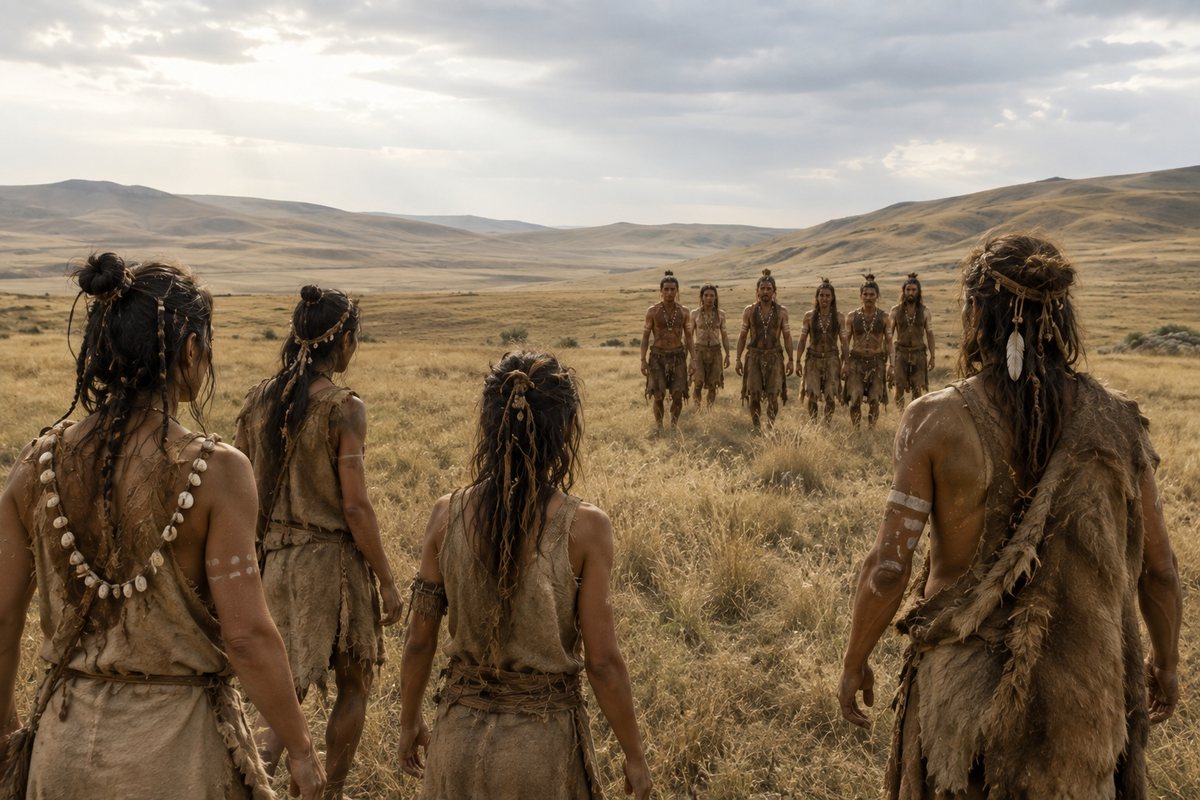
Prehistoric Hair Beauty Did Not Require Modern Cosmetics
The phrase prehistoric hair beauty can easily create the wrong image.
There were no commercial shampoos, styling sprays, electric tools or modern salons.
None were necessary.
Beauty begins with intention, not with industrial products.
A person who deliberately changes the arrangement of hair because a particular appearance is preferred has already moved beyond purely functional grooming.
The technologies required can be extremely simple.
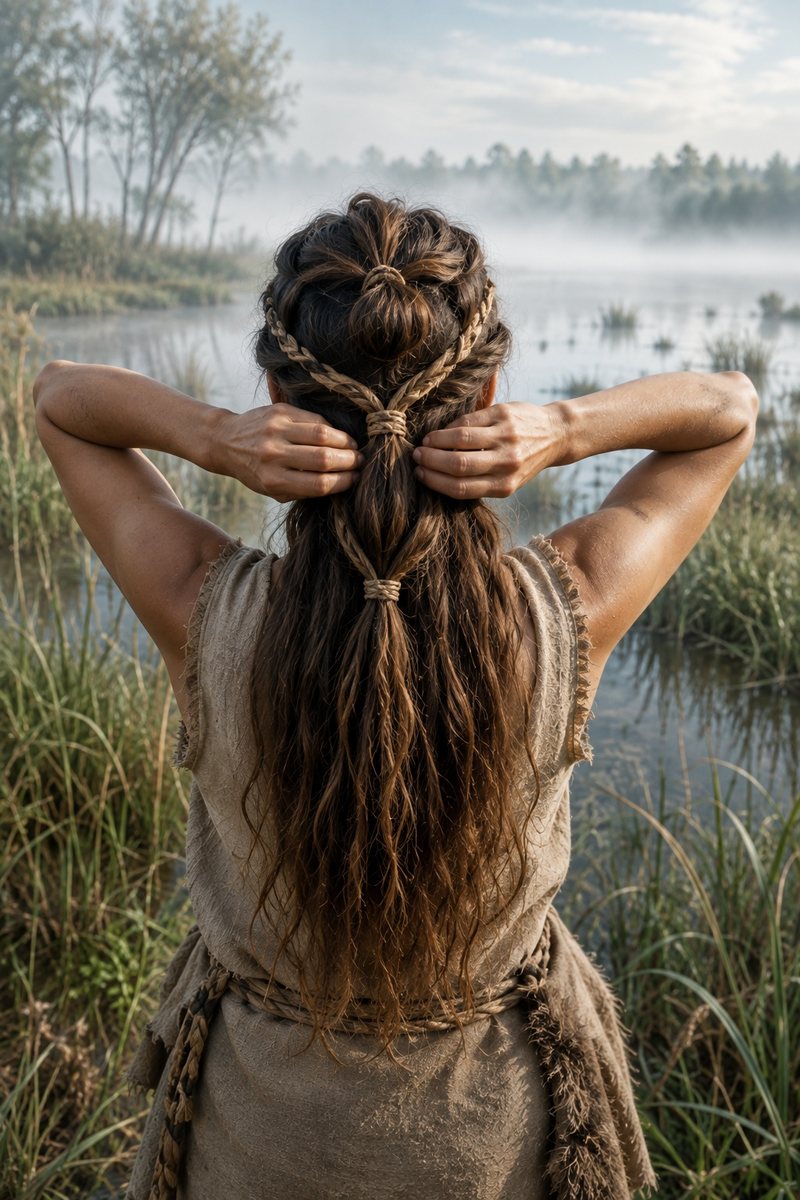
Hair can be divided with the fingers.
A section can be twisted.
Three sections can be braided.
A strip of leather can secure a gathered length.
Plant fibre can function as a tie.
Pigment or other substances could potentially alter the visual appearance of hair, although direct evidence for prehistoric hair colouring is much more difficult to establish than evidence for pigment use on objects and bodies.
Decorative objects could also interact with hair, headbands, caps or other head coverings.
The technical barrier between unmanaged hair and deliberately styled hair was therefore very small.
The cultural barrier was more important.
Someone had to care how the finished arrangement looked.
Pigments Changed the Human Appearance
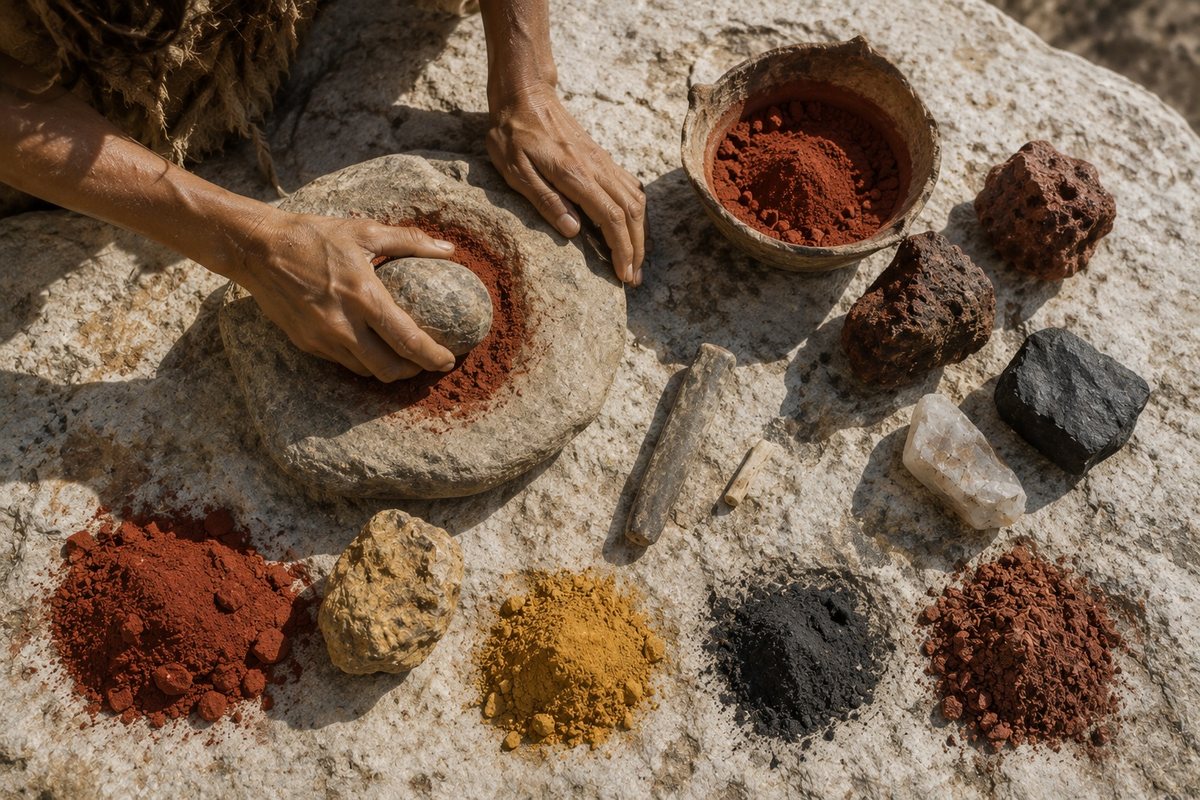
One of the strongest lines of evidence for deliberate modification of appearance comes from pigments.
Ochre and other mineral pigments occur at prehistoric archaeological sites across enormous periods of time.
Their uses were varied.
Pigments could participate in practical activities, material processing, artistic production and other behaviours. Not every fragment of ochre represents cosmetics or body painting.
That distinction is essential.
But evidence from prehistoric contexts demonstrates that colour became an important part of human material culture.
Once pigments were deliberately selected, processed and applied, people possessed another technology for changing visible surfaces.
The body was one possible surface among many.
Body painting is difficult to demonstrate directly because skin does not usually survive. Hair creates the same preservation problem.
We should therefore avoid imagining specific painted faces or coloured hairstyles without evidence.
What can safely be said is that prehistoric humans developed a sophisticated relationship with colour.
Appearance was no longer determined entirely by biology.
Humans could modify it.
Personal Ornaments Made Appearance Portable
Pigment can disappear.
A shell bead can survive.
That difference explains why personal ornaments are so important to archaeologists studying prehistoric appearance.
A bead is a small object, but it contains several decisions.
Someone selected the raw material.
Someone recognized that it had visual or cultural value.
Someone collected or acquired it.
In many cases someone modified or perforated it.
Someone developed a method for suspending or attaching it.
Finally, someone wore it.
The object transformed appearance wherever its wearer travelled.
This made personal adornment portable.
Unlike decoration placed on a cave wall or an object left at a particular location, an ornament moved with the human body.
The person became the display surface.
This concept has major implications for hair history.
Hair moves with the body as well.
It can be rearranged repeatedly, modified without permanently altering the body and combined with portable decorative elements.
Long before written descriptions of hairstyles existed, humans already understood the cultural power of changing personal appearance.
Hair Was an Ideal Material for Self-Presentation
Hair possesses characteristics that make it unusually useful for human visual culture.
It grows naturally, yet its form can be changed.
It can be shortened without permanently damaging the body.
It can be allowed to grow again.
It can be gathered for one activity and released for another.
It can be divided, twisted, braided or bound.
Its outline can dramatically change the appearance of the head.
And unlike a necklace or pendant, hair is already present.
This makes it one of humanity’s most accessible materials for personal transformation.
A prehistoric person did not need rare ivory or shells from a distant coast to modify hair.
Hands and a simple fibre tie could be enough.
That creates another archaeological paradox.
Some of the easiest forms of prehistoric beauty may be the hardest to detect.
An ivory pendant can survive for tens of thousands of years.
A beautifully arranged hairstyle secured with plant fibre can vanish completely.
The archaeological record may therefore exaggerate the importance of durable ornaments while hiding everyday hair practices.
Beauty and Identity Probably Overlapped
Modern culture often separates beauty from identity.
We may describe one hairstyle as attractive and another as expressing membership in a group.
In prehistoric societies, such categories may not have been separate.
An appearance can be visually pleasing and socially meaningful at the same time.
Personal ornaments provide an important comparison.
Archaeologists have used differences in ornament traditions to investigate cultural connections, mobility and group identities. Certain forms appear repeatedly within particular archaeological contexts, while materials and styles can vary between regions and periods.
This suggests that choices about appearance could participate in collective traditions.
Hair may have worked in similar ways, although its poor preservation makes this much harder to demonstrate.
A hairstyle could potentially communicate familiarity, difference, age, personal preference or belonging.
But we cannot assign those meanings to specific prehistoric hairstyles without evidence.
The responsible conclusion is broader.
Once appearance becomes culturally organized, hair becomes available as a powerful part of that system.
Looking Different Could Require Real Work
Beauty is often labour.
That was probably true long before written history.
A simple tied hairstyle can be created quickly.
More complex arrangements require time.
Braiding long hair takes patience. Producing multiple sections takes longer. Incorporating cords, bands or ornaments adds additional steps.
Personal ornaments required even greater investment.
Shells had to be collected or exchanged. Teeth had to be obtained. Ivory and bone required working. Holes had to be produced without modern drills. Beads sometimes had to be manufactured repeatedly in large numbers.
Some prehistoric burials demonstrate extraordinary quantities of decorative objects associated with individuals.
The amount of labour represented by such assemblages is substantial.
This matters because labour reveals value.
People repeatedly spent time creating objects and appearances that were not necessary for basic biological survival.
Appearance had become worth working for.
That principle lies close to the foundations of every later beauty profession.
Appearance Could Connect People Across Distance
Prehistoric personal adornment was not always local.
Shells found far from coastlines and materials transported across landscapes demonstrate that decorative objects could participate in wider networks.
People moved.
Objects moved.
Ideas probably moved with them.
An ornament could therefore communicate more than individual preference. Its material, shape or manufacturing tradition could connect a wearer with a broader cultural world.
This gives prehistoric appearance a geographical dimension.
Different communities did not necessarily develop identical forms of adornment.
Regional preferences could emerge.
Some decorative traditions continued over generations. Others changed.
Hair itself leaves too little evidence for us to map prehistoric hairstyle traditions with the same confidence.
Nevertheless, the broader system is important.
Once communities shared ideas about how bodies should be presented, hair could participate in traditions transmitted between people.
A technique does not have to fossilize in order to be taught.
Other People May Have Helped Create the Hairstyle
Some forms of grooming can be performed alone.
Others are much easier when another person helps.
This simple observation may be important for the origins of hairdressing.
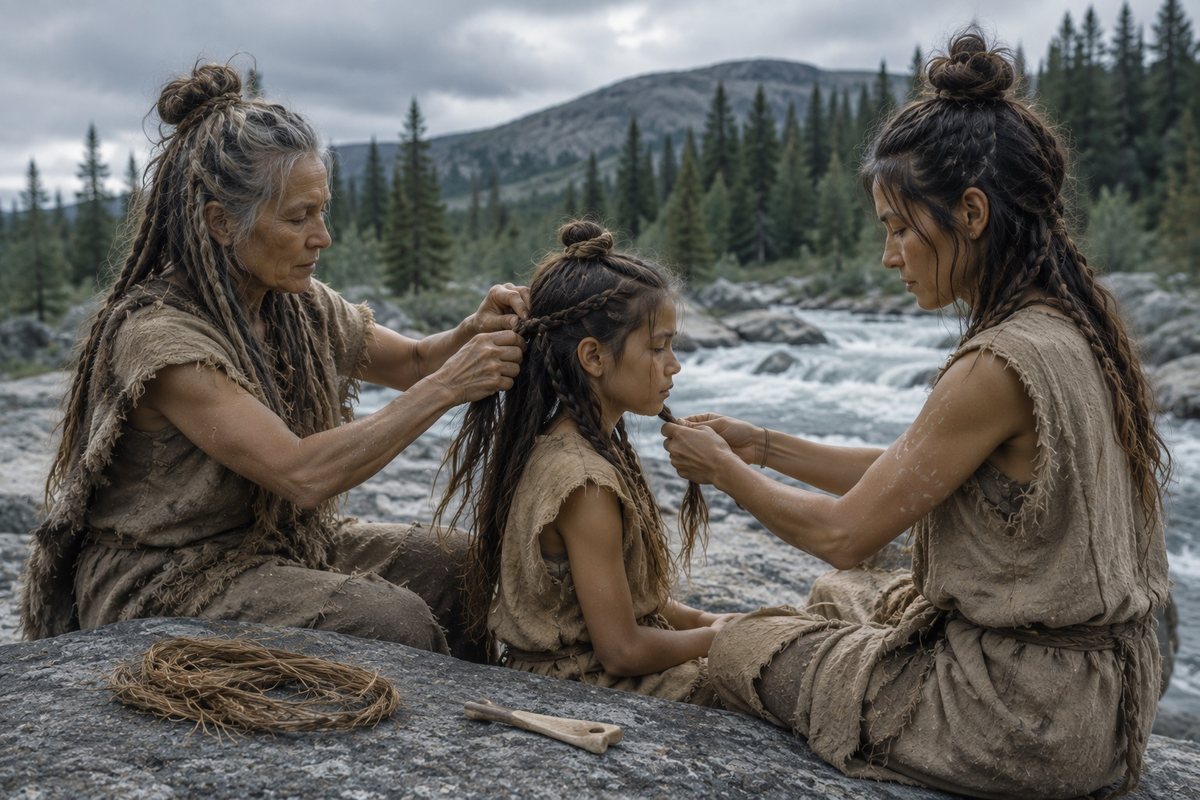
Complex braiding, arranging the back of the head or attaching multiple decorative elements can be difficult without assistance.
Prehistoric people lived socially.
Knowledge was shared through observation, imitation and teaching. Technologies involving stone, fibre, bone, food preparation and ornament production all depended on learned skills.
Hair techniques could have been transmitted in exactly the same way.
We cannot identify the first person who became particularly skilled at arranging another person’s hair.
Archaeology cannot preserve that moment.
But once hairstyles became sufficiently complex, differences in individual skill would naturally have mattered.
One person could know how to create an arrangement more effectively than another.
Another might understand how to secure it.
Someone else might manufacture the ornaments or cords used with it.
At this point we are still far from a documented professional hairdresser.
But an important foundation has appeared.
Hair care can become knowledge shared between people.
Was This Really “Beauty”?
This is the question that requires the greatest caution.
Beauty is a modern word carrying modern assumptions.
When we look at a perforated shell, a decorated burial or a patterned prehistoric figurine, we cannot ask the maker what they considered beautiful.
Something we interpret aesthetically may have carried a completely different meaning.
An ornament could communicate identity.
It could mark a relationship.
It could carry personal memory.
It might have been associated with age, social position or a tradition whose meaning has disappeared.
It could also simply have been visually desirable.
Several meanings could coexist.
For this reason, prehistoric archaeology is stronger when it demonstrates deliberate appearance modification than when it claims to reconstruct prehistoric standards of beauty.
We know people decorated themselves.
We know they invested labour in personal ornaments.
We know colour mattered.
We know the head could become an important area of visual presentation.
We know hair could be technologically manipulated.
Together, these facts show that human appearance had moved far beyond biological necessity.
Whether prehistoric people would have called the result beautiful is something archaeology cannot tell us.
From Survival to the Culture of Appearance
The earliest history of hair does not contain a single moment when grooming suddenly became beauty.
The transition was probably gradual.
Practical maintenance remained important.
Hair still had to be controlled, cleaned and cut.
But those practical actions existed alongside a rapidly expanding human capacity to communicate through appearance.
Pigments introduced colour.
Ornaments introduced portable decoration.
Fibres and bindings provided ways to construct forms around the body and head.
Hair provided a natural material that could be changed again and again.
Eventually, the distinction between maintaining hair and designing its appearance became meaningful.
A cut can be practical, but its shape can also be intentional.
A tie can control hair, but its placement can also change the silhouette of the head.
A braid can secure long hair, but the pattern itself can become part of the appearance.
An ornament can be worn for cultural reasons while simultaneously transforming how the wearer looks.
This is where the deeper history of beauty begins.
Not with a salon.
Not with a mirror.
Not with metal scissors.
It begins when human beings realize that appearance is something they can construct.
Hair Had Become More Than a Necessity
By later prehistory, the archaeological evidence for deliberate personal adornment is impossible to dismiss.
Humans were selecting materials for display, manufacturing ornaments, transporting decorative objects, using pigments and developing visual traditions that could distinguish people and communities.
Hair rarely survives beside this evidence.
But it occupied the most visible part of the body and possessed exactly the qualities needed for repeated transformation.
It could be cut.
It could grow.
It could be tied.
It could be twisted.
It could be braided.
It could interact with bands, cords, ornaments and coverings.
Most importantly, it could be changed intentionally.
That is the decisive step.
The history of hairdressing does not begin only when someone creates a specialized profession.
Its foundations appear much earlier, when hair stops being merely something the human body produces and becomes something people deliberately shape.
Practical grooming had opened the door.
Human culture walked through it.
Hair had become part of appearance, identity and visual expression.
It had become more than a necessity.
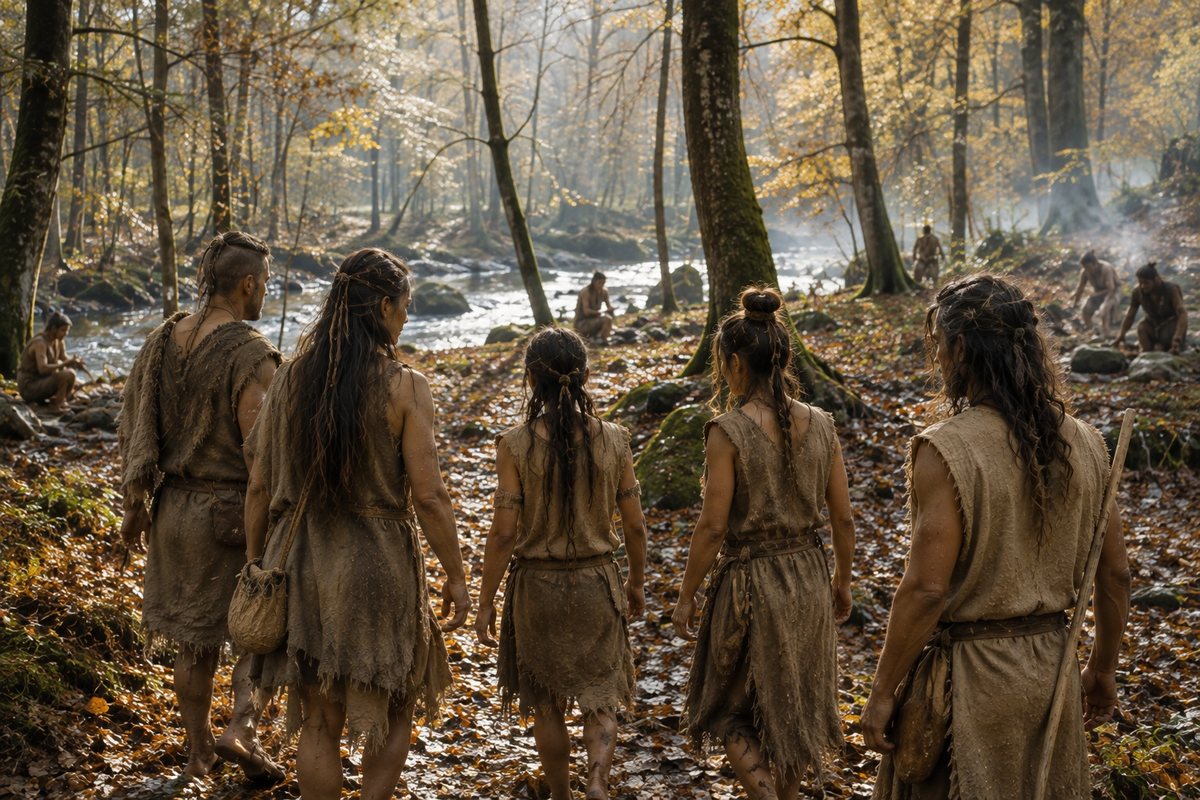
Next in the History of Hairdressing: From Prehistory to the First Hairdressers, The Birth of a Profession
Once hair could be deliberately cut, arranged, decorated and used as part of personal appearance, another transformation became possible.
Repeated techniques could become learned skills.
Knowledge could pass from one person to another.
Some individuals could become better at grooming and arranging hair than others.
The next stage in the History of Hairdressing follows that development as prehistoric hair care moves closer to the foundations from which specialized grooming and, eventually, the first hairdressers could emerge.
More from History for Hairdressers
 Chapter 1Before the Hairdresser: The Prehistoric Origins of Hair CarePrehistory & OriginsLong before salons, scissors and professional hairdressers, humans were already managing and transforming th...Read chapter →
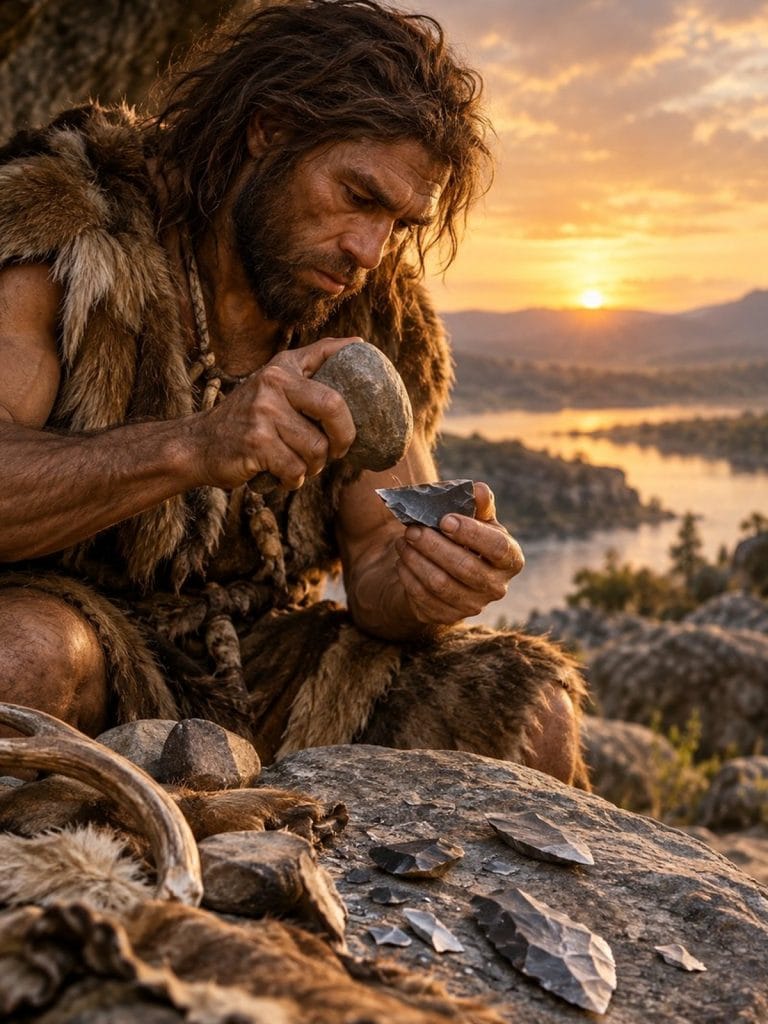 Chapter 2The First Haircut: How Prehistoric Humans Cut Their HairPrehistory & OriginsThousands of years before scissors and metal razors, humans already possessed edges sharp enough to cut hair...Read chapter →
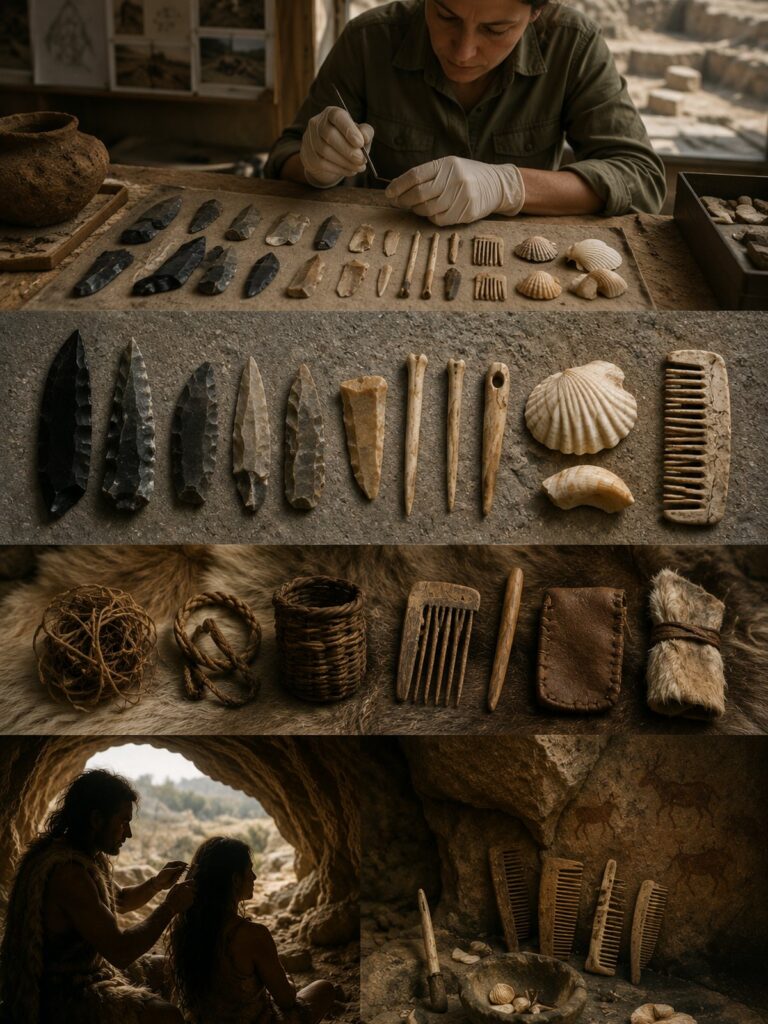 Chapter 3The First Hair Tools: Stone, Flint, Shell and BonePrehistory & OriginsDiscover the earliest materials prehistoric humans could use for hair care, from sharp flint and stone to sh...Read chapter →
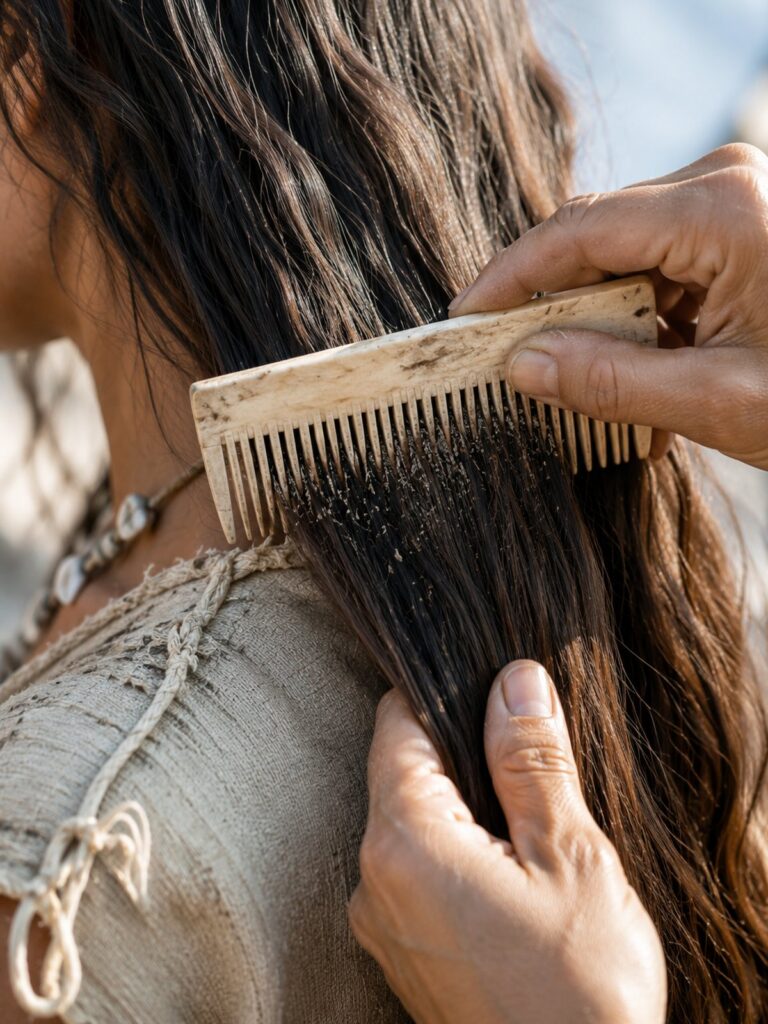 Chapter 4The Origins of Combs: Humanity’s First Hair-Care ToolPrehistory & OriginsDiscover the origins of combs, from prehistoric toothed tools to ancient bone and ivory combs that reveal th...Read chapter →
 Chapter 5The Origins of Shaving: Before the Metal RazorPrehistory & OriginsExplore the origins of shaving and how sharp stone and flint may have allowed prehistoric humans to remove h...Read chapter →
 Chapter 6Hair and Human Identity in Prehistoric SocietyPrehistory & OriginsExplore prehistoric hair identity and how hairstyles, grooming and hair representation may have expressed in...Read chapter →
 Chapter 7The Ancient Origins of BraidingPrehistory & OriginsExplore the origins of braiding, from possible Paleolithic representations of complex hairstyles to preserve...Read chapter →
 Chapter 8Hair, Ritual and Spiritual Meaning Before Written HistoryPrehistory & OriginsExplore prehistoric hair rituals and archaeological evidence for cutting, preserving and depositing hair, wh...Read chapter →
 Chapter 9Decorating the Hair: The First Hair OrnamentsPrehistory & OriginsDiscover the first hair ornaments and how prehistoric humans used shells, beads, bone and other materials to...Read chapter →
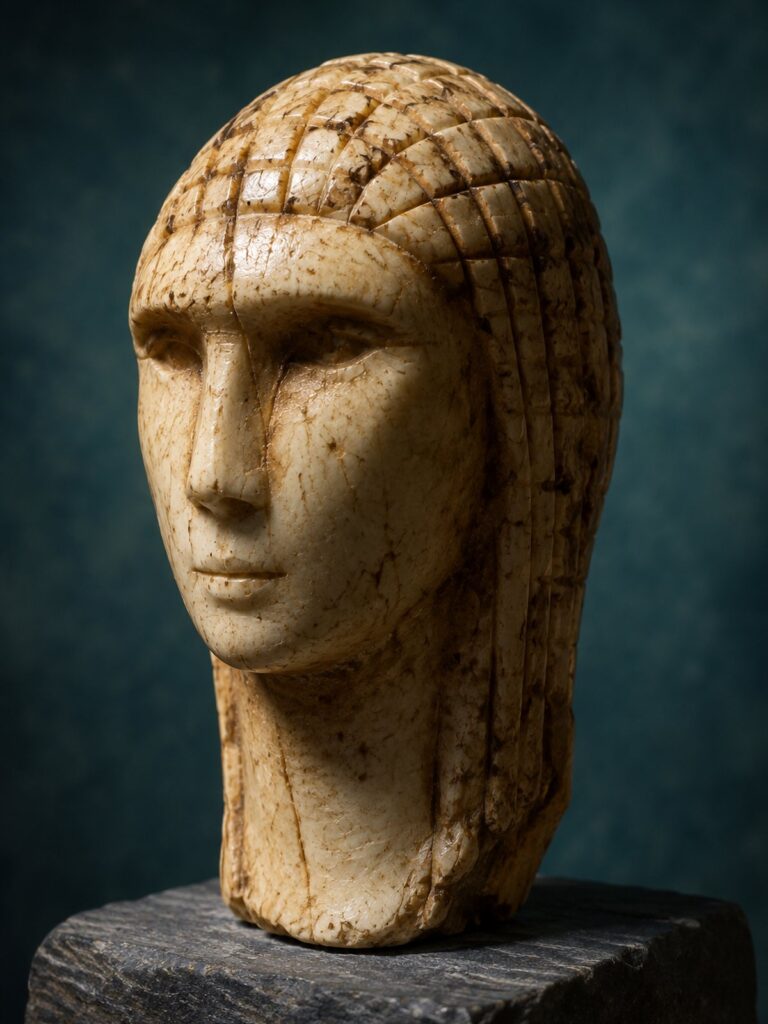 Chapter 10Prehistoric Hairstyles: What Archaeology Can Actually Tell UsPrehistory & OriginsDiscover what archaeology can really tell us about prehistoric hairstyles, from rare preserved hair and anci...Read chapter →